Showing posts with label sucralose. Show all posts

Tuesday, November 8, 2011

Diet Soda, Savior or Saboteur?

At some point or another, we've probably all hear how unhealthy soda can be.  Perhaps you've heard the story that coca-cola can dissolve a tooth in a night, or that it's the same stuff used to pick up chemical spills.  Maybe you've heard that it eats away at your stomach lining, causing ulcers and other very painful, damaging conditions.  Whether these claims are true or not, you'd be right to think that soda definitely is not a health drink.  The sugar content alone should make most people steer clear.


But what about diet soda?  All those nasty sugars have been replaced by artificial sweeteners, such as Aspartame and Sucralose.  And the nice little nutrition label reads a satisfying "0 calories."  That must mean it's not like it's big brother, caustic and destructive.....right?  I'm sure my mom is on her knees begging right now for me to just end the article with a big, fat "RIGHT!!!" And shut down my computer.  Diet Pepsi is her life.

Well mom, I hate to say it, but that's not the whole story.  Diet soda has quite a few little quirks about it that would inevitably make it a snack you might want to skip...unfortunately.  The thing is, these little devious side effects aren't easily noticeable, and therefore might sabotage your clean eating diet without you even realizing it.  Here's what to watch out for when it comes to diet soda:

Increased Appetite:  Because you're not putting any real calories in your system, diet soda isn't going to save you from the hunger pains.  It's not a legitimate "snack", and if your hunger continues to be ignored you're more likely to binge on that fat bag of pretzels in that long car ride.  If you're hungry, don't expect much out of a diet pepsi.  Grab an apple, a banana, or maybe an orange (after all it is cold season.)

Linked to Obesity:  Hold on there, I didn't say diet soda CAUSED obesity, but it certainly has some frightening statistics associated with it.  Here's a good display of obesity percentages that I found multiple places on the web.


For regular soft-drink drinkers, the risk of becoming overweight or obese was:
  • 26% for up to 1/2 can each day
  • 30.4% for 1/2 to one can each day
  • 32.8% for 1 to 2 cans each day
  • 47.2% for more than 2 cans each day.
For diet soft-drink drinkers, the risk of becoming overweight or obese was:
  • 36.5% for up to 1/2 can each day
  • 37.5% for 1/2 to one can each day
  • 54.5% for 1 to 2 cans each day
  • 57.1% for more than 2 cans each day.
For each can of diet soft drink consumed each day, a person's risk of obesity went up 41%.

That's pretty ridiculous, though in my opinion it's not diet soda which is causing obesity.  I believe these people who are obese diet soda addicts have switched to diet soda in an attempt to feel a little better, but instead have replaced the lost calories with an extra large fries at McDonald's (one of the most popular places diet soda is sold.)  Diet soda isn't a miracle cure, and usually the food it is accompanied by is extremely detrimental to any sort of benefits that might be obtained by drinking it.

Metabolic Syndrome:  For a long time, there has been evidence that diet soda is linked to this condition.  "MetSyn" is a combination of many smaller symptoms that end up drastically increasing your risk for type 2 diabetes, stroke, and coronary artery disease.  Personally I find it hard to lump diet soda in equally with: low amounts of exercise, a horrible diet, and excessive body fat, but nonetheless the evidence seems to exist that it can be a contributor.  Again, this may be because the majority of people who drink diet soda are obese already, but it's a little nugget of knowledge you should definitely keep in the back of your mind.  

Destructive Chemicals:  Some people will complain about the large amount of aspartame sweetener in diet soda.  I don't jump on the "aspartame =bad" train so easily.  Studies have proven that artificial sweeteners are not NEARLY as dangerous as claimed, and by all means will NOT cause cancer.  I believe that diet soda's more destructive chemical happens to be phosphoric acid.  This chemical is infused with soda to add a "tangy" flavor, and will end up destroying both teeth and esophagus alike.  It's powerful stuff, and I should know.  I don't drink soda, I use it as a rust removal tool when sanding and repainting sheet metal.  The stuff works, and every time I see that shiny steel, once orange with rust, I think "how can people drink this stuff?"  Watch out for that phosphoric acid, it can do more damage than you think.


But wait.  I'm not here to completely destroy diet soda.  No, I believe it does have it's place.  Some people just "need" soda for whatever reason, and I know that I could argue with them all day and they'd never even consider chucking the stuff (and believe me I've tried.)  So here's my little note of encouragement.

Diet soda, if it's going to be enjoyed, should be enjoyed in moderation.  Don't take it for anything else than it is.  It's not a weight loss tool, it's not a justification for sweet snacks, it's not an accompaniment to a dirty, fat filled meal, and above all, it's NOT VERY GOOD FOR YOU.  Diet soda is diet soda, and should be enjoyed merely as that and nothing more.  While this may seem obvious, it's clear to me that to a lot of people it's not obvious at all, especially judging by those obesity statistics.  Sure, if you're going to drink a soda, make it diet.  You could definitely do without all that sugar. But please, whenever possible, have a glass of water, milk, or juice instead of that coke zero.  You'll feel better, believe me.

Drink up, stay clean, and as always, good luck!


Tuesday, November 1, 2011

Zero Calorie Sweeteners


Sugar substitutes have become very popular these days, and many people use them day in and day out in things like coffee and iced tea.  I believe zero calorie sugar substitutes to be a very smart idea to work into one's diet, not only for the calorie reducing effect, but also because in theory sugar substitutes will not spike blood insulin levels, and therefore your body won't be as eager to store that food as fat.  It's a win win, right?

But as you've probably figured out, there are many choices for sugar substitutes out there, and not all are created equal.  Which one should you choose?  This article will give you a little background on each kind you can find at the grocery store, and how each can be used best and might effect you.

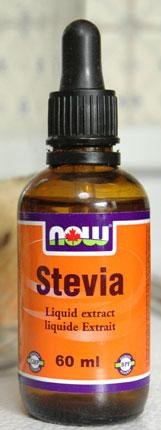
Stevia-  This zero calorie sweetener has become EXTREMELY popular these days, especially because of it's "natural" aura.  Stevia extract comes from, you guessed it, the Stevia plant!  Stevia is extremely sweet as well, coming it at around 300 times sweeter than natural cane sugar.  WOW!!!  It comes in liquid form, usually in a dropper bottle that will allow you to add small, precise amounts to your desired food.

I really like Stevia, not only because it's a natural solution, but because there is a lot of evidence out there that Stevia helps to regulate your blood sugar levels, which is basically the opposite of what cane sugar does.  This basically means it reduces your blood insulin level, and you'll be a leaner you because of that.

Downsides to Stevia?  It has been known to cause a little bit of a stomach upset, and it shouldn't be taken with certain medications.  All in all though, I personally believe this is your best choice for a sugar substitute!

You can bake with Stevia, however you need to modify the recipe to include the much sweeter nature of stevia extract.


Truvia-  This zero calorie sweetener is basically granulated Stevia, mixed with an extra sugar alcohol called erythritol.  If you look on the package of truvia, you'll see that it has zero calories, but three net carbs.  How does this make sense?  Well the carbs come from the erythritol, and are not digested the same way as normal, food sourced carbohydrates, and therefore the total calorie amount is still EXTREMELY CLOSE to zero.  No it's not quite zero, but it's so negligable that the makers of Truvia are allowed to label the product as zero calorie.

Truvia is my personal favorite, and I use it every morning in my oatmeal.  It, like Stevia, is MUCH sweeter than regular cane sugar, so you won't need as much.

Because Truvia is basically granulated Stevia, it has similar side effects, such as the possibility for stomach upset/digestive upset, as well as the medication incompatibility.

You can cook with Truvia, however it's a similar thing to Stevia in that you must have a premodified recipe to include Stevia Powder, or you must modify the recipe yourself.  I found a bit of good info on another forum regarding Truvia's baking ability:

Baked goods do not rise quite as much as when made with sugar, and do not brown quite as well. You need to test for "springiness" and/or use toothpick to test for doneness. 

Convert the amount of sugar you need into the appropriate amount of Truvia. For a recipe calling for 1 cup of sugar, use 1/3 cup plus 1 1/2 tbsp., or 24 packets, of Truvia, the company advises. To replace 1/4 cup of sugar, use 1 tbsp. plus 2 tsp. of Truvia, or six packets. The Truvia equivalent of 1/3 cup of sugar is 2 tbsp. plus 1 tsp., or eight packets. For 1 tbsp. of sugar, use 1 1/4 tsp. of Truvia, or 1 1/2 packets. A teaspoon of sugar amounts to 3/8 of a tablespoon of Truvia, or half of a packet.

Read more: http://www.livestrong.com/article/427911-how-to-cook-with-truvia/#ixzz1cSwiwXY6


Truvia is unfortunately expensive, but you go through so little at a time that I suggest you take the splurge and try a little where you'd normally have sugar.  It's a great natural substitute and will keep that blood insulin nice and low.


Aspartame- This sweetener has been used for quite a while in soft drinks and other similar products.  The very famous "Crystal Light" Lemonade uses aspartame for their sweetening agent.  In scientific terms (if any of you are interested), Aspartame is a methyl ester of the aspartic acid or phenylalanine dipeptide.  Aspartame sweetener is generally known as being Nutrasweet's and Equal's main ingredient.  Again, Aspartame is much sweeter than sugar (around 200 times sweeter) and therefore tiny amounts can be used in sugar's place.

There have been rumors that Aspartame is dangerous carcinogen, and even now people sometimes refer to the little packets of artificial coffee sweetener as "cancer"  There have been many studies done on the carcinogenic nature of aspartame, and none has found that there is any link between Aspartame and increased risk of cancer.

Aspartame is not the best choice for baking because the heating process causes the chemical to break down and lose it's flavor, becoming bitter.  However there are recipes that allow for the usage of Nutrasweet, which is slightly more stable.


Saccharin- This sugar substitute can be found under the name "Sweet-N-Low", and is probably the most famous artificial coffee sweetener of all time.  Every restaurant I've ever been in has mounding of those little pink packets lining the sides of its booths.  Saccharin is technically benzoic sulfimine, and like other sugar substitutes, is MUCH sweeter than natural cane sugar.  The downside to Saccharin is that many people believe it to have a bitter aftertaste, therefore it's less preferred over some of the other substitutes listed in this article.

Like Aspartame, there have been claims that Saccharin causes increased risk of cancer.  There have been many studies done regarding this claim, and while Saccharin was found to cause bladder cancer in male rats when consumed in large dosages, it was later discovered that the cancer was caused by a specific protein produced by the rat (that human's don't possess) which reacted with the Saccharin.  Many people still remember the warning labels that once were required to be put on Saccharin sweeteners after this initial study, so the aura around Saccharin style sweeteners is still one of caution.  Again though, there has been no proof that Saccharin causes cancer in humans, and it is by all means quite safe to consume.

Saccharin is like Aspartame also in the fact that it breaks down when heated, and therefore does not make a good baking ingredient.


Sucralose-  This sweetener is sold under the name Splenda, and is the second sweetest in this lineup coming in at around 600 times sweeter than natural cane sugar.  It is marketed as a very good baking sugar substitute, because it will NOT break down when heated, and will not lose its sweet taste.  This sweetener is also preferred to other zero calorie sugar substitutes because it has a very favorable taste, similar to that of real sugar, with no bitter or metallic aftertaste.

There have been cancer claims for Sucralose as well, and I'll put your mind at ease yet again saying that with study after study Sucralose has passed the FDA's tests and shows no correlation to increased cancer rates in humans.

Side effects to Sucralose are similar to those of Truvia, which include stomach upset, gas, and other small digestive troubles.


Acesulfame-Potassium- This one's quite a mouthful, though it's better known by the abbreviation "Ace-K".  This sweetener is used in many soft drinks combined with other sweeteners, because it is known for a very bitter aftertaste.  It's sold under the brand names "Sweet One" and "Sunette."  Ace-K is also stable under heat, so it's used in baking and the sweetening of mass processed food with the requirements of long, non-refrigerated storage.  Ace-K is also much sweeter than sugar, around 200 times more-so.  It's a main ingredient in most chewing gum and candy, because it can withstand the heat required to process such foods.

There was also a rat study done on Ace-K regarding increased rate of cancer and other risks associated with this artificial sweetener, and again all tests came up negative.  No cancer here!


Neotame- And last but not least, the sweetest of them all, Neotame.  This artificial sweetener is up to 13,000 time sweeter than natural sucrose.  HOLY MOLY!!!  That's pretty incredible in my opinion.  Because it's so much sweeter than natural sugar, many food companies use Neotame in many of their products because they need barely ANY of it compared to sucrose or other artificial sweeteners.  Neotame can help drastically cut the cost of food production.  It is also heat stable, so it can be used in baking.  It is very similar to, but much more stable than Aspartame.  Neotame is used anywhere and everywhere in the food industry, from soft drinks to baked goods to candy.  It really is the ultimate flavor enhancer, and many companies jump on the fact that it's so accessible and flexible.

Many, many studies have been done on the safety of Neotame, and it has come through each and every test easily.  The FDA has approved it for usage as a general sweetener, which means it can be used in mass produced food.


----------------------------------------------------------------------------------------------------------

So there you have it!  The ultimate lineup of zero calorie sugar alternatives.  They're safe, sweet, and ready to be used in your diet.  Some are still skeptical about the safety/health factors of these sweeteners, but with the battery of tests each one has gone through, I personally am not worried in the slightest.  It's hard to go wrong with an increased blood glucose tolerance, and these sweeteners just might help you lose those last stubborn pounds.  Try a few where you'd normally put sugar, see if you like them!

Be adventurous, stay sweet, and as always, good luck!