Showing posts with label powerful. Show all posts

Friday, July 13, 2012

Eating, The Manly Way

Let's face it.  Eating "healthy" sure doesn't sound manly.  It sounds like you're some pansy who's trying to watch their figure and stay trim.  Seriously, who wants to be all meek, skinny, and worst of all, weak?  Now there's nothing wrong with trying to lose a few pounds, but it just so happens that you're a man, and men should eat big, meaty, chunky meals that fill their belly and build big, strong, manly muscles.  How else are you going to move that massive weight?  The good news is that you can eat that masculine food you love, and still be lean, ripped, and BEASTLY.  


Oh, and to any women readers, there's no sexist nature intended in this article, it's all in good fun.  You can enjoy this food too, and get the exact same benefits, I promise.


So let's go over a list of the manliest, most heftily nutrient packed muscle building man foods we can find, and see if we can't figure out how to fill that plate with something big and meaty (and then maybe slip a few of those meager little veggies on the side...as if they'll even fit...HAR HAR.)


Beef:  Steak, ribs, burgers, veil, ground up, I don't care.  Beef is delicious, protein packed, and filled with so many nutrients that I won't be able to list them all here.  It's packed with B-12 and B-6, two vitamins that will aid in maintaining healthy metabolism and high energy levels, as well as assisting in central nervous system health.  We've already mentioned the protein, you'll get a LOT of it in every delicious, perfectly juicy bite.  Worried about the fat content?  Of course you're not!  And you shouldn't be, as every bit of fat in that beef is beneficial in some way.  Most of the fat is monounsaturated fat, the same stuff in olive oil!  The saturated fat is actually an EXCELLENT energy source, and may actually aid in losing weight, as it encourages your body to use fat as fuel instead of sugary carbs.  And contrary to popular belief, the saturated fat in beef isn't related to rising levels of bad cholesterol.  Pile a big fat steak on your plate and dig in, beef will make you BEEFY.


Whole milk:  That's right, we don't need none of that frilly "fat free" stuff, we want the whole, creamy, yummy, thick and refreshing kind of milk, the way nature intended it.  Every cup of whole milk is packed with 8 grams of protein from various sources including both whey and casein, and the natural sugars are great post workout to help those growing muscles suck up all those nutrients quick.  Mix in some whey protein and you've got yourself some of the most delicious drinkable stuff on earth.  And the fat?  It's the same deal here.  Saturated fat gets a bad rap, but when it's in its natural form it is actually quite healthy.  It will benefit blood lipid levels and is an AWESOME source of energy.  Pour a glass and be proud of that milk mustache.


Bacon:  OK....seriously...WHO DOESN'T LOVE BACON?  Thought you had to avoid it on a healthy diet???  WRONG-OH!!!!  Bacon is no less healthy than many cuts of chicken, turkey, beef, or any other meat you can think of off hand.  Sure it has some fat in it, but that fat, once again, is a great LOW CARB energy source that will both satiate you quickly and actually elevate your mood.  That's right, dietary fat makes you happy.  Before you complain that it can't be part of a clean diet, realize that there are thousands of people who've lost untold amounts of body fat while eating bacon almost every day.  Don't believe me?  Just do some online searching.  Bacon, like beef, is also packed with B vitamins, and DEM DER PROTEEEEEIIINNSSS.  I can hear those heavenly strips sizzling now, mmmmm.  Breakfast of the gods.


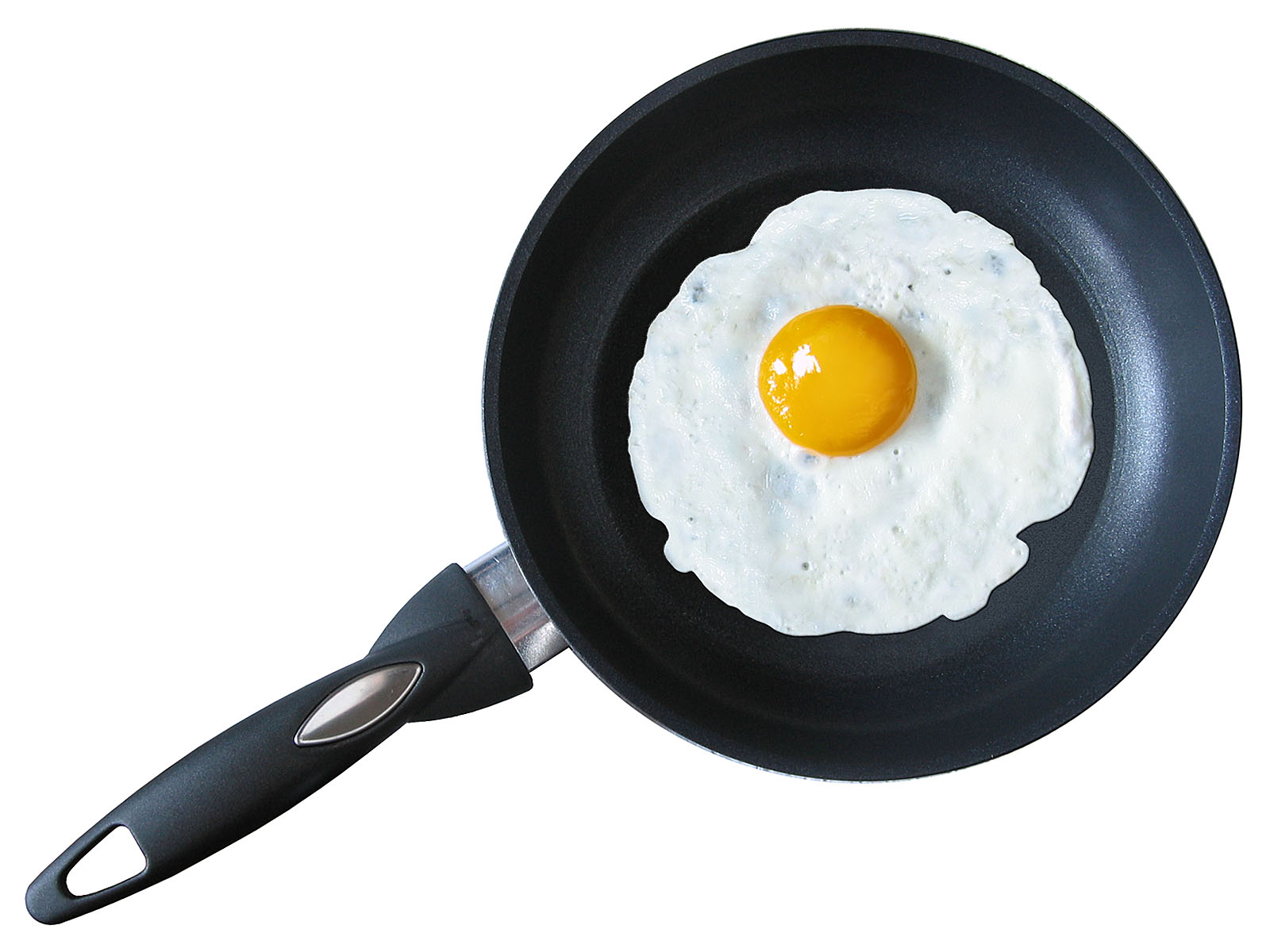
Eggs:  Fry 'em, scramble 'em, poach 'em, boil 'em, and PIG OUT.  Egg protein is one of the greatest sources of protein in the entire world, with a bio-availability in the high 90%'s when cooked.  That means your body can use almost all of the protein available in eggs with the upmost efficiency to build strong, lean muscle.  BUT, as manly as it may look, drinking raw eggs is a bad idea.  When left uncooked, egg protein only has a bio-availability of about 50%, so much of that protein is wasted in your body.  Plus, nobody wants salmonella.  You won't look too manly puking your guts out all night, right?  But seriously, eat those eggs.  Oh, and dietary cholesterol hasn't been proven to have nearly ANY effect on blood cholesterol, so don't worry about that either.  Sound good?  Great.


Sausage:  Awww yeah, brautwerst anyone?  Sausage comes in all shapes and sizes, with all sorts of fillings.  Sure, it's not the highest quality meat you can buy, but it's a great source of protein and has a lot of healthy fats in it as well.  Want something lean?  Go for the chicken or turkey sausage.  Want the tastiest thing this side of Neptune?  Get some biggun's packed with pork and beef, and pile them next to that big morning omelette.  I recommend eating sausage in moderation, but you definitely don't have to cut it out of your diet.  Just watch the sodium, as it can pile up quickly in certain kinds.  Also, look at the ingredients, and make sure as much of the stuff inside is stuff you can pronounce, preferably meat without additives.


Peanut Butter:  I eat this stuff by the spoonful.  Packed with healthy fats and Omega-6 fatty acids, peanut butter is the bomb.  It's an incredible source of healthy calories, especially when you get the natural, or "natty" stuff.  Natty PB brah...all the way.  In fact, the best peanut butter out there has the fewest ingredients.  While the general rule of thumb is to make sure there is NO trans fat in the peanut butter, you also generally want to avoid the stuff with "partially hydrogenated vegetable oils."  Those oils are used to make sure the peanut oil doesn't separate out of the butter itself, which is a pretty useless task unless someone is unbelievable lazy.  A little stirring might help those forearms develop anyway.  Brands I like are Teddie natural chunky, Smucker's natural, Jif Natural, Naturally More, and Power Butter.  Go ahead and have a couple tablespoons, and watch those muscles EXPLODE.


Spinach:  OK, you may be looking at me funny.  But hey, if it made Popeye a monster, it could do the same to you.  It's an aquired taste, but the aggressive flavor almost makes it manlier, right?  Try some light sauces or spices on it to make it more palletable, like mustard, salsa, cayenne pepper, curry powder, whatever floats your boat.  It's packed with vitamins and minerals, and will help you lose extra  body fat covering those shredded guns of yours.  Have a couple of forkfuls a day, and release your inner Popeye.


There you go you beastly dude you, eat up and get big, shredded, ripped, and NOTICED.  Enjoy your meat, your steak, your peanut butter, and those huge, giant, bacon filled omelettes.  Compliment any of these manly dishes with a side of veggies and you're in business.  You can eat healthy and retain your manhood, it's easy!  Now go eat some food, lift some weight, and growl at all the little meager folks cowering away from you.  You're a beast, and noone gets in your way.

GOOD LUCK DUDES!

Thursday, January 5, 2012

Brain Training For Muscle Gains


So, all you gym rats, all you muscle heads, you heavy hitters, big time lifters, and meat-heads, what do you think happens when you get stronger? What has actually changed in your body that has allowed you to lift more weight than previously?  Well, the obvious answer is that you've gained muscle mass, greater muscle density, or in other words, you've increased the amount of usable muscle fiber in your body.  But what if I told you that you, without ever lifting a single weight, have more muscle fiber in your body than you really know what to do with?

Well, maybe that's not exactly true, there is a limit to the "stock" amount of muscle fiber you have.  But without any sort of training, much of your muscle fiber will be wasted and doomed to inactivity.  You'll be unable to lift to your potential.  In fact, you may remember in my recent article regarding gorillas (yes, gorillas, quite fascinating actually, read it here: ), I mentioned that the human body with no training whatsoever is only able to use about 20% of the muscle fiber it has.  That's not much now, is it?  Four out of every five muscle fibers are unusable without any sort of training.    That means you have a lot more potential than you could believe.  The good news is, when you lift weights, you not only break down muscle fiber (and inevitably build it back up again), you create stronger connections between your brain and muscles, and can more actively engage greater numbers of muscle fibers to work for you and lift that incredibly heavy barbell.  


Let's explore this brain-muscle connection a little further, and maybe optimize the gains you can obtain through "brain training."  The actual name of this brain system is called the Central Nervous System, or CNS.  Ever heard of it?  In actuality your CNS determines how your body reacts to stimulus, how quickly it reacts, with how much power and intensity, and with the greatest efficiency possible.  As you increase training intensity, weight, reps, etc., you build a stronger connection between your CNS and you muscle fibers. 

 In general, heavier loads are more taxing on your CNS, and require a more powerful contribution from your brain. In fact, the greatest way to stimulate your brain to build stronger muscle connections is through high weight, low rep applications.  Big surprise, I'm going to bring up weightlifting again!  Olympic weightlifters are masters at using every muscle fiber they've got with the greatest possible efficiency.  They can optimize the contribution of their CNS, and while the truth of this statement hasn't been confirmed, very often you'll hear members of the infamous Chinese weightlifting team claiming they can use more than 90% of their muscle fiber.  That's 70% more than the average human being!  Here's a good explanation of CNS training that might optimize brain-muscle connection development:

"Bompa's philosophy (Bompa 2005) with regards to weight training to improve explosive power is that repetitions are the key training variable. He recommends a low number of repetitions (1 to 3), with loadings in excess of 90% of 1RM (1 rep max), in order to develop strength that will boost speed and power and optimise the contribution of the CNS, with a recovery of 6 minutes between sets. These loadings create a higher level of excitation and receptor/effector communication, more motor unit recruitment and greater neural stimulation. These loadings and recoveries are also recommended on the basis of their contribution to maximum power and strength expression, and also because they do not produce a large increase in muscle mass, which could be detrimental to an athlete's power to weight ratio."

But why stop at weightlifters?  It's obvious that any high level athlete has a highly developed CNS in regards to their sport.  They know exactly how to use the muscles they need in order to get the job done to the highest possible efficiency.  They are strong, fast, lean, and powerful.  Most likely they've also been training for quite a long time in order to develop such remarkable connections.  There's obviously something to be said about practice.  The more often an activity is performed, especially with intensity and good form, the greater development will occur in your brain.  


Hopefully it's quite obvious by now that your brain plays a big roll in your training.  And just like your muscles, you can overtrain your CNS to the point where it becomes impossible to work out.  It's not quite the same feeling as an extremely sore muscle, or stiff joints.  From personal experience, I believe it's a much worse feeling, and far more frustrating.  An overtrained CNS will leave you completely drained, blurry eyed, and unable to lift even a fraction of what you normally could.  It'll be like energy just won't come your way no matter what you do.  If you don't want to overtrain your CNS, avoid:

-Extremely heavy loads each and every day

-Working to failure on a constant basis

-Extremely high intensity workouts too often throughout the week

Nobody's saying you can't push yourself.  But do it smartly, and if you're not used to heavy loads, work up to them.  Not everybody is able to squat 90% of their max day in and day out, you need to work up to that level.  Just like your muscles, your CNS will gain endurance and strength, and you'll be able to lift heavier and work harder more and more often.

If you do overtax yourself, even accidentally, don't despair, it usually happens to most everyone at one point or another.  You have to know your limits, and sometimes the only way to find them is to surpass them.  Just take a day off from the gym (A REAL DAY OFF, NOT A LIGHT WORKOUT DAY), get plenty of sleep, eat well (eat to refuel, complex carbs and lean proteins), and really let all those nutrients soak up into your body as you give it a much needed break.

Realize that when you get stronger, you're not just packing on meat.  You're getting smarter with the iron, and more able to use every muscle fiber you've got.  Crazy stuff right?

Use that brain, push yourself, and as always, GOOD LUCK!


References:

Monday, December 12, 2011

Gorilla Strength


Every now and then, I like to remember my place in nature.  My strength, my diet, my bodily abilities, they're all highly evolved traits that have manifested themselves over thousands of years.  Darwinian nature at its finest, right?  And to see us humans in comparison to other creatures really puts in perspective that, wow, is all this evolution really.....evolution? I mean the term evolution implies that we are evolved, more advanced, newer, more up to date version of our animal friends.  But if you compare our fellow human beings to our more native brethren, the jungle apes and monkeys, what we've gained in smarts, we've lost in functionality.

Before I get into my real animal comparison, let's first look at our nearest cousin, the chimp.  A full grown male chimp is said to be nearly three times stronger than an adult man.  And even the adolescents can have their way with just about any zookeeper.  I remember watching shows of "wildlife specialists" playing with the little toddler chimps (which could already walk, climb, swing, and do other things no human toddler, or adult for that matter, could ever dream of doing).  The little guys were practically ripping the arms off of these animal loving humans.  And they're just tiny little babies!  Seriously, that's pretty amazing.

And to get to my main point, let's examine the gorilla, probably my favorite creature of all time.  These guys are massive, the largest males weighing over 400lbs!  Yet they can still swing from one arm at a time, and have extreme intelligence and dexterity.  And just wait until you hear how strong these guys are.  It's been rumored that an adult male gorilla can be anywhere from 6-16 times as strong as the strongest human male to ever have walked this earth.  16 TIMES STRONGER!  WOW!  That's probably the most amazing thing I've heard in a while, and one of the hardest to fathom.  Can you imagine snapping 2 inch steel rebar, or thick bamboo stalks, with your bare hands?  Both have been done by gorillas, the latter on a regular basis.  That's just phenomenal.

And what's more, look at a gorilla's diet!  They're herbivores!  We spend so much time worrying about protein intake, and getting massive amounts of lean meat in our diet just to put on a little bit of measly muscle.  The gorilla is basically eating raw salads all day, and consuming nothing but plant protein, which doesn't quite add up as fast.  And yet they still could toss a washing machine around like a beach ball.  So what's the deal, how are gorillas able to complete such incredible feats of strength?  Well, there are a few key reasons that may help to explain why gorillas are the beasts that they are.

First, let me put a disclaimer down that all my research has led to possible theories, and shouldn't be taken for absolute fact.  

Type II fiber:  Remember when I went over this subject?  It's mostly in my "Strength v. Size" article here: .  Read up!  Gorillas are supposedly composed of much more type II "fast twitch" EXTREMELY DENSE muscle fiber, which is drastically more efficient at creating vast amounts of immediate force.  This extreme density results in having a LOT more fiber per unit area than a human could ever dream of possessing.  

Muscle Recruitment:  It's quite possible that gorillas, through their own specific evolutionary processes, have transformed themselves into much more efficient muscular beings as a whole.  That means that they can use more of their total muscle fiber whenever they put their mind to it.  An average male who does NOT work-out is said to only be able to recruit around 20% of their muscle fiber to use at any one time.  That's so inefficient it upsets me to be of the human race.  When working out, you eventually increase the connections between your muscles and your brain, and after years of training you can increase this figure significantly, however you'll never reach 100%.  I doubt you'll even come close.  I'm not sure of a gorilla's exact muscle recruitment percentage, but I'm willing to bet it would be much more than even the most experienced weightlifters.  

Brain vs. Brawn:  Believe it or not, a lot of our daily caloric intake goes toward thinking!  Approximately 10-20%.  That's a pretty decent amount, and can explain why you're physically tired after a long test.  Gorillas, while very intelligent, don't have our kind of mental capacity, and therefore a lot more of that food energy goes right to those giant muscles.  This is the same for chimps and other monkeys as well, and helps to explain why they're so much stronger for their size.  

Diet Volume:  Sure, gorillas are MOSTLY vegetarian.  But don't forget that a full grown male gorilla can consume nearly 40lbs of vegetation a day.  No-matter what the heck is in all that, there's got to be plenty of every nutrient you could ever need for muscle growth.  

Body shape:  If you didn't know anything about a gorilla's strength or physiology in general, it'd still be easy to guess at their massive muscular abilities just by their body shape.  I mean just look at them!  They have massive chests, short legs, giant shoulders, and a fantastic set of core muscles.  All their muscle fiber is in relatively efficient positions compared to that of a human.  We're lanky, and not built for brute strength.  Our legs and arms are too long, and our core is relatively pathetic.  We can't compare with the pure physical nature of the beast.


So there's some food for thought this Monday morning.  Remember your place among the wild creatures, and remember that no matter how much you lift, or how clean you eat, the gorilla eats cleaner and lifts more weight than you could ever imagine, and usually does it on a daily basis.  Pretty funny how evolution works, isn't it?

Stay strong, be the beast, and good luck!

Saturday, November 19, 2011

Size v. Strength: The Great Debate


Ever since the dawning of the modern workout, there has been a great divide between two main trains of thought regarding muscular growth.  There were those who wanted to get BIG, and those who wanted to get STRONG.  Such desires spawned two completely different methods for lifting weights, and two completely different types of athletes.

For the time being, lets ignore the casual "I just want to get toned" gym-goer (although I will admit this is a large percentage of gym-goers...).  

When I say two completely different athletic builds, I really mean it. Put these guys next to each other and rarely will you see extreme similarities.  Make them train alongside each other, and the differences will become even more apparent.  The methods are DIFFERENT.  To get big, you must train in separate fashion than you would if you were specifically looking for strength.  Yes, some traits carry over from each method of training (an athlete looking for strength only will inevitably put on muscle mass), but I'll say again, in general they are distinct from each other.

Let's examine the methodology behind each muscular goal.  What goes into the workout, why does the method work the way it does, and how can you incorporate it into your own gym related endeavors?

SIZE:  We've all seen them.  The fantastically enormous bodybuilders that appear to be half man half gorilla, all muscle.  They're basketball sized biceps, ginormous pectorals, and shredded abdominals seem to defy some law of nature.  Yet there they stand, bigger than any human we've ever seen.  How do they do it?  Well aside from an extremely picky diet, and some "medical enhancement," it's all in the gym, and their method of training. 


Bodybuilders train for hypertrophy.  Hypertrophy is the increase of overall cellular volume.  More specifically, bodybuilders train for sarcoplasmic hypertrophy, and focus more on training their slow twitch, or I muscle fibers.  This basically means that bodybuilders train to experience an increase in cross sectional area of their muscles, and not really associated strength.  It's common to watch bodybuilders doing unbelievably high volume with very sub-maximal loads, at least relative to their muscle size.  Judging by their physique, it appears that they could throw a car above their head.  But in the end, they simply do not have the strength that they appear to have.  

But to them, this doesn't matter so much.  They train for APPEARANCE. And there's a lot to be said about appearance.  Sarcoplasmic hypertrophy allows you to look big and strong, often a more impressive trait than actually being as strong as an ox but only average in the muscular department.  This hypertrophy also more readily accelerates your metabolism, allowing you to burn more fat more quickly, and build that physique you've always wanted.  

How do you go about training for this type of muscle gain?  Well for building big muscle, you want a big rep number, with sub maximal weight.  Don't go super duper light, but work those muscles to exhaustion.  As you've probably heard before, FEEL THE BURN.  Super sets, drop sets, and negative reps are all great ways to overload your muscles for set after set to really ensure a good growth stimulus is sent to your brain and those muscles increase in volume as quickly as possible.  The most general rule for sarcoplasmic hypertrophy is to keep reps within the 8-12 range, for at least 3 sets (I've seen people do as many as 10-15 though.)  This is only a general guideline though, and I suggest heading over to bodybuilding.com to get a more detailed workout routine.  


STRENGTH:  Let me bring to mind an athlete you may or may not have heard of: Pyrros Dimas.  Dimas was a three time Olympic gold medalist for weightlifting.  He weighed in at a meager 182 pounds, yet lifted 473lbs over his head in the Sydney Olympics.  He was the ultimate example of a strength athlete, and is one of my personal heroes.   


So how is it possible that Dimas was able to get so ungodly strong without becoming enormous and inflexible?  Well he, and other strength athletes alike, train for Myofibrillar hypertrophy, or an increase in overall muscle fiber connections.  This type of training surprisingly does NOT drastically increase cross-sectional area or overall volume of the muscle being trained, but instead allows the muscle to contract with much more force than it could previously.  Believe me, to put that much weight over your head, you need a LOT of targeted, raw, force.  

Myofibrillar hypertrophy deals more with fast twitch, or type II muscle fiber, the kind often referred to as "usable muscle."  Athletes like sprinters, Olympic lifters, power lifters, and other related force athletes often have large amounts of fast twitch muscle.  This muscle contracts, as the name implies, hard and fast, and can apply great amounts of energy to objects in very short amounts of time.  It is not, however, very effective endurance muscle.  Muscles can only contract with remarkable force for relatively short periods of time, hence the reason that joggers, bodybuilders, Nordic skiers, swimmers, and other endurance athletes (I put bodybuilders in there because of their ability to hit fantastic numbers of reps, NOT their running ability, which I'm sure is horrendous) possess much more slow twitch, endurance muscle fiber.  

It's always good to get strength training into your workout routine, as being able to lift heavy weights is not only healthy, it also builds a more solid body and strong neural connections between your brain and your muscles.  So where do you start?  Well, first of all, drop the huge number of reps.  Next, increase the weight.  Finally, do this for a good number of sets, 10 or so.  For an olympic lifter, a squat workout program may look like this:  10 sets of 2 reps, every rep at around 85-95% of max.  Believe me, though it may look like an easy workout, it is anything but.  That weight is very heavy, and will ALWAYS be very heavy.  This type of training does work though, and I can personally vouch for it.  The majority of my training is strength targeted.  My squat has gone up around 90lbs in 6 months, and shows no signs of slowing down.  And I don't look too much different, implying I haven't experienced much sarcoplasmic hypertrophy.  Watch out Dimas, here I come!


-----------------------------------------------------------------------------------------------------------

So which is the best way to train?  ....HAH!  What a silly question.  That's not possible to answer, and rarely will anybody who knows there stuff about exercising/fitness give you a straight shot one way or another.  For the average person, I suggest a mixture of both!  You'd like to look good and be strong at the same time, right?  Well that's a great goal, AND entirely possible.  Switch up your workout, either weekly, monthly, yearly, daily, I don't care.  Confuse your body, train both high and low reps, high and low weight, high and low volume.  You want to see benefits across the board right?  Well you will!  There's always carryover from each type of training.  Even though I said bodybuilders aren't relatively strong...well...I said RELATIVELY.  They're still unbelievably strong, because look at how much muscle mass they've got!  And sure, Olympic lifters aren't overly huge, but I mean they aren't exactly tiny either.  Train for both size and strength, and you'll get both.  Sure, what you'll always get isn't the BEST of either world, but it'll be a pretty good start into each one, and it'll do your body a huge favor.

Get big, get strong, and as always, good luck!

Thursday, November 17, 2011

Bodyweight Isn't Everything


I'm a firm believer in the fact that if you train hard as hell and eat right consistently, you can accomplish fantastic feats of strength, endurance, and power DESPITE being overweight, underweight, or right on your supposedly perfect "BMI."  That video above is partially of Caleb Ward (in the blue shirt), an upcoming 105kg+ class American Weightlifter.  Yes, you heard me right, he's in the 105kg+ class, which means he weighs over 230lbs.  Can most of you flip around like Caleb?  No?  I can't either, and I'm over 70lbs lighter.  Some of you may be absolute gym rats, completely ripped to shreds and strong as a bull.  Can you flip around like that?  I'd be inclined to say no.  A better question might be, could you clean 440lbs?  No?  Well not many can, but Caleb has done it, on multiple occasions.  He is an absolute powerhouse, one of the most consistent, strong, flexible,  and promising weight lifters in this country.  And if he was just walking down the street, I bet you'd just think he was overweight.

The point I'm trying to make with this article is as follows:  Even if you're overweight, you can still be extremely "fit."  And even if you're sitting right on your perfect weight ratio for your age, you can still be extremely unhealthy and out of shape.  What do I mean?  Well, I'll tell you stories of countless people I know who suffer from a condition called "skinny-fat."  This condition involves being very skinny, but eating like absolute crap.  I have a friend who's about 6' tall, weighs a whopping 128lbs, and last night for dinner had a heaping pile of linguine, then an entire cheese quesadilla, followed by two cream puffs and a donut.  He didn't touch a single vegetable, fruit, or protein (other than maybe the beef chunks he loaded into the quesadilla.)  How many calories would his dinner amount to?  I'd guess around 1700 for the dinner, and probably another 600 for the dessert.  And I can't even count the number of unhealthy sugar carbs he just had.  Honestly I was flabbergasted.  How could someone, ANYONE, eat like that, and expect to go about their merry way with no further consequences?

Here's news for all of you.  If you eat horribly like my friend here, no matter what your outward appearance may be, you WILL feel and perform like your body has never exercised a day in its life.  Do you think that someone who has this kind of diet can maximize their lifestyle and gym performance?  The answer is a big, fat, NO.  Your performance will reflect your preparation.  And your preparation (training) hinges on a balanced diet with all of the essential nutrients in carefully balanced ratios.  So it all comes back to food, and even those who are blessed with fast metabolisms will feel the wrath of the quesadillas eventually.

Here's some more food for thought, just because I believe the more evidence that's presented, the  more you'll be inclined to see what I mean about correct diet and training regardless of body weight.  Here's a quote from Menshealth.com regarding another weightlifter named Shane Hammond:

"Even the bulkiest Olympic heavyweights make astonishing leaps.  Shane Hamman, the top American lifter in the history of the sport, weighs in at 350 pounds but boasts a vertical jump of 36 inches.  Most NBA players top out at 34 inches.  Not only can Ham-man dunk (he's 5'9"), he can also drive a golf ball 350 yards."

Can you imagine a 350lb man who's 5'9" tall dunking a basketball over your head?  I find it a little hard to visualize, but not impossible.  Shane is as strong as a bull, and trains hard.  He eats BIG, but he eats right, as to all superheavyweights of the sport.  He is an epitome of human strength and power, and he gets around just fine at a weight that most people would need a wheelchair.

I believe seeing is believing though, so here's a few more feats of remarkable strength by those of remarkable size:


      A man who weighs 350lbs doing 13 pullups.


A 315lb man running what they claim to be a 4.6 forty (even if it was slightly slower, that guy is MOVING FAST).  This goes for a lot of NFL linebackers, I wouldn't doubt that most can run faster than I can.  Excuse the fowl language at the end of the video.


Pat Mendes, a US weightlifter weighing about 280lbs, jumping and touching a 10ft garage door.

Here's my final word.  I'm not going to suggest for a second that any of you should just drop your fears of becoming obese and beginning to eat as big as you want.  That's not the point.  My point is that eating right and training hard can make anyone an absolute monster in the field, on the court, on the platform, or anywhere else really.  Being overweight isn't good, no, but as you've seen it's not by any means the be all end all if it's not all fat and laziness crowding up your arteries.  And don't think for one second that just because you might be able to get away cramming that double cheeseburger without weight gain, that you'll be able to out-power or out-sprint the huge guy walking down the street who's been training for years on end and eating big and clean.  Performance rewards those who work for it, not those who get lucky.

Train hard as hell, eat as best you can, and as always, good luck!


Shane Hamman and his astounding vertical leap.

Saturday, November 5, 2011

Nitric Oxide and Caffeine, the Powerhouse Energy Duo


Imagine for a second a feeling of endless endurance.  A pure state where you feel like you are completely alert, excited, and ready to perform strenuous physical tasks for hours on end without ceasing to catch your breath.  Wouldn't it be great to go to the gym and for once not be staring at the clock, desperate for your workout to be over?  Wouldn't it be fantastic to lift more, run faster, and pump out a few more reps time after time, always ready to come back for another set?

Well such a feeling definitely is NOT fictitious, and there are many supplements on the shelves today available to gym-goers which will do exactly that: pump you up and keep you going.  They're called nitric oxide supplements, and in the most basic terms they rev up your body to be the most efficient blood pumping, oxygen moving, lifting, running, and overall active system it can possibly be.  Let's examine these supplements, what they're composed of, and whether or not they would be a good idea for you to try.

First, what is nitric oxide?  Sounds kind of like a strange chemical to be ingesting, in my opinion.  nitric oxide (or nitrogren monoxide) is simple in chemical composition, composed of nothing more than one nitrogen molecule bonded to one oxygen molecule.  Just to make my chemistry professors happy, nitric oxide has a molecular mass of 30.01 g/mol, and an enthalpy of formation of 90.29 KJ/mol (endothermic).  In our body, nitric oxide is released through the biosynthesis of the amino acid L-Arginine with Oxygen.  It is present in our bodies at some level constantly, and therefore can't be considered an unnaturally consumed substance.


What does nitric oxide do?  Well THAT'S going to be quite the list, but I'll break it down into it's most related/important functions.  In our bodies, nitric oxide has the tendency to cause blood vessels to dilate, or become larger in diameter.  This allows for increased bloodflow, which in terms of physical exertion/ working out has a whole HOST of benefits.  

Oxygen flow:  Dilated veins will increase the amount of oxygen your blood can carry to your muscles, allowing them to operate in an aerobic state for longer periods of time during strenuous exercise.  This will translate into vastly increased endurance, and hence why almost any athlete (including distance runners) can benefit from a dose of a nitric oxide supplement pre-workout.

Nutrient flow:  Again, dilated veins means better blood flow, which will also allow your body carry more essential nutrients to your muscles both pre and post-workout, catalyzing a more efficient recovery as well as an increase in eventual muscle size.

Alertness:  It all comes back to the veins.  More blood flow means more oxygen to your noggin.  You'll feel extremely alert after a dose of nitric oxide, and this feeling can last for up to six hours after the supplement is taken.  N-O is quite the grogginess removal tool.  

Besides these three very noticeable effects, nitric oxide also stimulates the immune system, helping to kill bacteria and infectious substances in the body.  It also stimualates the anti-inflammatory response in your body, which may relieve workout associated creaks and pains.  

Nitric oxide may even help one to have a better memory, because it enhances the quality of communication between cells.  There's no end to the benefits of this stuff!  


Nitric oxide alone is a fantastic workout tool.  Alone it can increase your strength, endurance, pumps, energy level, pretty much whatever you need most to get an awesome workout.  But nitric oxide alone isn't usually the whole story, at least not with many pre-workout supplements these days.  Often there's another chemical added to really take full advantage of your now dilated veins, bringing that optimally efficient bodily state that nitric oxide creates into full usage.  What's this other magic chemical, that'll really push you over the edge of power and performance?  Well, it's nothing you haven't taken before.  

Caffeine!  Yes, that's right, the same stuff that's in your morning coffee, or soda, or monster energy drink (Don't drink those, they're horrendous!).  Caffeine is a stimulant, which means it puts both your Central Nervous System and metabolism into high gear.  Your heart rate will increase, and your body will respond more quickly and readily to "exciting" or strenuous scenarios.  After consuming caffeine, you might notice that even something little, a thought perhaps of an exciting day coming up two weeks from now, will get your heart racing much faster than it ever would have normally.  When coupled with nitric oxide though, this effect is amplified to an even higher degree.

It doesn't take too much thought to understand why.  Nitric oxide=dilated veins=more bloodflow.  Caffeine=stimulated metabolism=faster heart rate=even MORE bloodflow.  Up the caffeine dosage to about 200-400mg per scoop and you've got yourself an extremely potent supplement.  I remember the first time I ever tried such a supplement, I was in the gym for two and a half hours, and awake all night.  It's powerful stuff!  And I suggest if you're going to try it, take only half a scoop your first time, especially if you have almost no caffeine tolerance like me (I don't drink coffee or soda).  Also, read the nutrition label, know how much caffeine you're ingesting.  Don't accidentally take 7 cups of coffee in one scoop by accident if you only wanted a little boost.

So that brings us to the final segment.  Are pre-workout N-O supplements right for you?  Well, it really depends.  If you're a gym rat, and you/re entering a phase where you really need a kick in the butt to get yourself into the gym, then yes, I suggest you try a LIGHTER Nitric oxide supplement.  It can really benefit your workout, and you'll feel great after having pushed yourself so hard.  And the thing is, many of these pre-workout supplements don't just have nitric oxide and caffeine, they also contain a whole host of other great muscle building tools, like a string of essential amino acids, and usually a creatine dosage as well which will help to volumize your muscles to a higher degree.  These pre-workout supplements are designed well, and most definitely are just what your body needs to create an optimal muscle building state.

Would I suggest pre-workout supplements to the more casual gymgoer?  Listen, if you just go to the gym to keep your joints moving, then this stuff probably isn't for you.  But if you're looking to build any sort of muscle, I wouldn't be against trying a small dosage to see if you like the results you get.  You can always give the stuff up immediately, and many companies sell small trial sizes just to see if you like it.  The stuff WON'T KILL YOU, so don't be afraid.

And the absolute last subject to address.  Are pre-workout NO/caffeine supplements addicting?  I won't lie here, sure they're somewhat addicting.  It's hard not to get hooked on something that helps your body perform so well in the gym (and caffeine is an addictive substance, no matter what people say about it).  I personally do NOT believe this addiction is a bad thing, but to those around you it may appear somewhat strange.  You won't get any more hooked on caffeine than they guy who drinks three or four cups of coffee a day, but you still want to manage your usage of pre-workout supplements.  The general rule of thumb for such supplements is to CYCLE THEM.  One month on, one month off.  That way, every other month you get the same effect as the first time you took the stuff.  The off months will start out SUCKING, because you seemingly have zero energy, but a good diet and good sleep habits can help to minimize the withdrawal. You can taper the dosages at both ends of the month too in order to more easily phase in and out of taking and cleansing.  

So there you have it, a basic explanation of one of the most powerful workout tools on the market today- Nitric oxide caffeine supplements.  They can do a world of good for your workout, and I'm 100% serious about that.  They can help you smash through those plateaus you've always been so frustrated by.  Go ahead and try one, but be smart about it, because they are definitely potent substances.

Lift hard, run fast, and stay healthy.  Good luck!


I've tried three nitric oxide supplements, all of them caffeinated:

Amplified N.O. Loaded (Advanced Muscle Performance)- .EXTREMELY POWERFUL STUFF  High caffeine dosage, over 400mg.  Definitely would only suggest half a scoop at first, if not every time you take it.  Too much will cause jitters and a heart rate that's not even useful for lifting.  This stuff has definitely given me some insanely long workouts though, and will easily give you the jitters if you're not careful.  Make sure you take this at least eight hours before you plan to sleep at all.

N.O. xplode (BSN)- This stuff isn't quite as powerful as N.O. Loaded, but still can give quite the kick.  I didn't find the recommended serving size quite as potent (probably because there's only a quarter of the caffeine, 100mg), and I also didn't find the flavor's to be quite as good.  It's still a great endurance tool though, and probably one of the most popular pre-workout supplements on the market today.

Assault (MusclePharms)- Definitely my favorite thus far.  It has a relatively low caffeine dosage (150mg) and gives sustained, powerful energy.  It's also loaded with other great things like creatine and a host of amino acids.  It never gives that incredible "hit" right off the bat, but instead surges on over time.  The orange-mango flavor is delicious, I swear I'm drinking an orange creamsicle.  *would recommend*.

Sunday, October 30, 2011

The Ultimate Movement

This is a Knol I wrote a while ago, and was quite proud of it.  I suggest learning the overhead squat if you are able, as it will do you a World of good.

The Ultimate Movement

Exploring the Benefits of the Overhead Squat

In truth, there is no one "greatest" exercise to perform. Not for strength, endurance, flexibility, nor any other subset of the fitness world. However, there are a few that can produce great results in most of these fields. This article will discuss one of my personal favorites: The Overhead Squat, and why exactly it can transform someone into a very strong, flexible, powerful individual.

The overhead squat, by nature, is a scary sounding exercise.  It can be even more daunting to watch, as someone who's never seen/tried one before will find it very hard to understand how one can hold such huge amounts of weight over their head, then descend beneath it into the deepest, most straining of squats, and rise back from the depths to full standing height, miraculously unharmed, shoulders and legs fully intact.

Ben Smith demonstrating the overhead squat


Without doubt, this exercise is difficult.  It is strenuous, and requires vast amounts of strength, stability, and flexibility.  And with higher weights, the term "vast" becomes more and more of an understatement.  But even at very low weights, this movement remains one of the greatest full body exercises one could ever do in their routine.  It engages muscles everywhere, and therefore will build complete, full body strength.  To figure out one movement can do so much, let's examine the overhead squat piece by piece.

It should be mentioned first that any type of weighted squat will do wonders for building remarkable strength.  Why is this?  Well, squats require the activation of a huge amount of muscle fiber in order to complete even one with good form.  You may think of squats being synonymous with leg workouts, and while this is initially a correct instinct (a good squat will activate the hamstrings, glutes, and quadricep muscles), they activate many more muscles as well.  In fact, to be stable in a deep ATG (ass to grass...pardon my french...) squat requires an extremely strong core.  Core in general means muscles in, you guessed it, the MIDDLE of the body.  This includes abdominal muscles, upper legs, lower back, and obliques.  More formally, it is defined as the entire spine, pelvic girdle, and hip joints.  This is a remarkable 29 muscles at least!  That's a LOT of muscle fiber.  And the best part of all this?  All that huge amount of muscle fiber is actually USEFUL.  The muscles you're activating while squatting are some of the most used in the majority of other strength related exercises.  So when you squat, you build real, usable strength, everywhere.  

A second, equally important reason as to why squats are so important may be of interest to those guys looking to get bigger and more muscular quickly.  Because squats activate the largest muscles your body possesses, as you squat you release a large amount of testosterone, which will cause your body to go into, put simply, "muscle building mode." You'll pack on lean mass relatively quickly (obviously not that quickly, building lean muscle take a LOT of time), and the strength gains will be as close to immediate as you can get.  Ladies, don't be scared by the word testosterone, squats will only help you, as will all weightlifting.  In fact, adding any muscle mass will increase your metabolism and help you shed unwanted pounds.  And you will NOT bulk up.  I don't care who says you will, they are wrong.  Go look at any female Olympic weightlifter in the lighter classes.  They're throwing 300lbs above their head, and they're still lean, mean, sexy machines.  

On an aside, SQUAT DEEP.  Parallel squats are what hurt your knees, as they take the brunt of the force as you go from descending to ascending.  As you go below parallel, that same force is transferred to your hips and hamstrings, which are bigger muscles that can definitely take the strain.


Well there's the squatting portion of the exercise.  And talk to anyone who know's squatting, it's not easy.  People spend years developing good squat form (not to deter anyone from trying, I suggest it to anyone and everyone looking to put on a little muscle).  But with the overhead squat, squatting is really only half the battle.  The other portion is obviously making sure that the huge weight above your head, doesn't come crashing down from it's precarious perch above your head.  This requires even MORE strength.  A lot more.  

To hold the weight overhead, there's generally a specific grip used.  It's called the "snatch" grip, and is named after the Olympic lift (the snatch) where athletes bring the weight from the ground to overhead in one fluid motion, catching it in...you guessed it...a full overhead squat.  There's a reason those athletes are considered the strongest in the world.  The snatch grip itself means to hold the bar with one's hands very spread apart, nearly at the collars of the bar.  

  This requires less shoulder flexibility to remain upright and "tight" in the bottom of the squat.  The narrower the grip, the more shoulder flexibility is required to go ATG.  This is because as you descend, your shoulders must rotate backwards in order to keep the bar aligned over your heels, and in turn keep your entire body balanced.  Drift too far forward or backwards, and you'll be forced to dump the bar.  What this basically describes is an extremely tight isometric exercise for your entire upper back, core, shoulders, and chest.  One must keep their traps squeezed together and their arms locked out throughout the entire motion.  This, without doubt, becomes very fatiguing VERY quickly.  Little tiny bits of bar movement suddenly require huge efforts to fight and contradict.  And after a few sets, it's almost a guarantee you'll be sore the next day where you haven't ever felt sore before, because most likely you've never worked stabilizing muscles to such a high degree.

    To even do one overhead squat, with any sort of weight, is an accomplishment.  No one should claim it's not, because it'd be safe to say the large majority of gym-goers have ever ventured from their routines enough to try one.  The flexibility requirements of overhead squatting is large.  One must have very flexible hips, knees, hamstrings, calves, quads, shoulders, chest, and spine.  Luckily the overhead squat itself is not inherently possible without such flexibities, so the risk of strain or dislocation decreases.  One who isn't flexible enough, will be forced to drop the bar before any sort of bodily damage can occur. 
     In order to increase flexibility for such an exercise, many stretches should be done on a daily basis (perhaps this is a good time to say that this article is merely meant to describe the benefits of overhead squatting, and should not be considered a guide to either the exercise itself or the supporting exercises or stretches.)  And not only will stretches help your overhead squat, the overhead squat itself is an amazing full body stretch, and therefore will only help you to become stronger and more flexible in the long run.

So is it the Ultimate Exercise?  Is overhead squatting the greatest, most beneficial movement one could do in the gym?  Again, certainly not exclusively.  But the benefits associated with the exercise are immeasurably large, and definitely place this exercise near the top of the list.


Talk to Marcin Dolega, champion 105kg class Polish weightlifter, about the benefits of overhead squatting.  That's a full Olympic snatch^^^....and is about 400lbs.