Let's face it. Eating "healthy" sure doesn't sound manly. It sounds like you're some pansy who's trying to watch their figure and stay trim. Seriously, who wants to be all meek, skinny, and worst of all, weak? Now there's nothing wrong with trying to lose a few pounds, but it just so happens that you're a man, and men should eat big, meaty, chunky meals that fill their belly and build big, strong, manly muscles. How else are you going to move that massive weight? The good news is that you can eat that masculine food you love, and still be lean, ripped, and BEASTLY.
Oh, and to any women readers, there's no sexist nature intended in this article, it's all in good fun. You can enjoy this food too, and get the exact same benefits, I promise.
So let's go over a list of the manliest, most heftily nutrient packed muscle building man foods we can find, and see if we can't figure out how to fill that plate with something big and meaty (and then maybe slip a few of those meager little veggies on the side...as if they'll even fit...HAR HAR.)
Beef: Steak, ribs, burgers, veil, ground up, I don't care. Beef is delicious, protein packed, and filled with so many nutrients that I won't be able to list them all here. It's packed with B-12 and B-6, two vitamins that will aid in maintaining healthy metabolism and high energy levels, as well as assisting in central nervous system health. We've already mentioned the protein, you'll get a LOT of it in every delicious, perfectly juicy bite. Worried about the fat content? Of course you're not! And you shouldn't be, as every bit of fat in that beef is beneficial in some way. Most of the fat is monounsaturated fat, the same stuff in olive oil! The saturated fat is actually an EXCELLENT energy source, and may actually aid in losing weight, as it encourages your body to use fat as fuel instead of sugary carbs. And contrary to popular belief, the saturated fat in beef isn't related to rising levels of bad cholesterol. Pile a big fat steak on your plate and dig in, beef will make you BEEFY.
Whole milk: That's right, we don't need none of that frilly "fat free" stuff, we want the whole, creamy, yummy, thick and refreshing kind of milk, the way nature intended it. Every cup of whole milk is packed with 8 grams of protein from various sources including both whey and casein, and the natural sugars are great post workout to help those growing muscles suck up all those nutrients quick. Mix in some whey protein and you've got yourself some of the most delicious drinkable stuff on earth. And the fat? It's the same deal here. Saturated fat gets a bad rap, but when it's in its natural form it is actually quite healthy. It will benefit blood lipid levels and is an AWESOME source of energy. Pour a glass and be proud of that milk mustache.
Bacon: OK....seriously...WHO DOESN'T LOVE BACON? Thought you had to avoid it on a healthy diet??? WRONG-OH!!!! Bacon is no less healthy than many cuts of chicken, turkey, beef, or any other meat you can think of off hand. Sure it has some fat in it, but that fat, once again, is a great LOW CARB energy source that will both satiate you quickly and actually elevate your mood. That's right, dietary fat makes you happy. Before you complain that it can't be part of a clean diet, realize that there are thousands of people who've lost untold amounts of body fat while eating bacon almost every day. Don't believe me? Just do some online searching. Bacon, like beef, is also packed with B vitamins, and DEM DER PROTEEEEEIIINNSSS. I can hear those heavenly strips sizzling now, mmmmm. Breakfast of the gods.
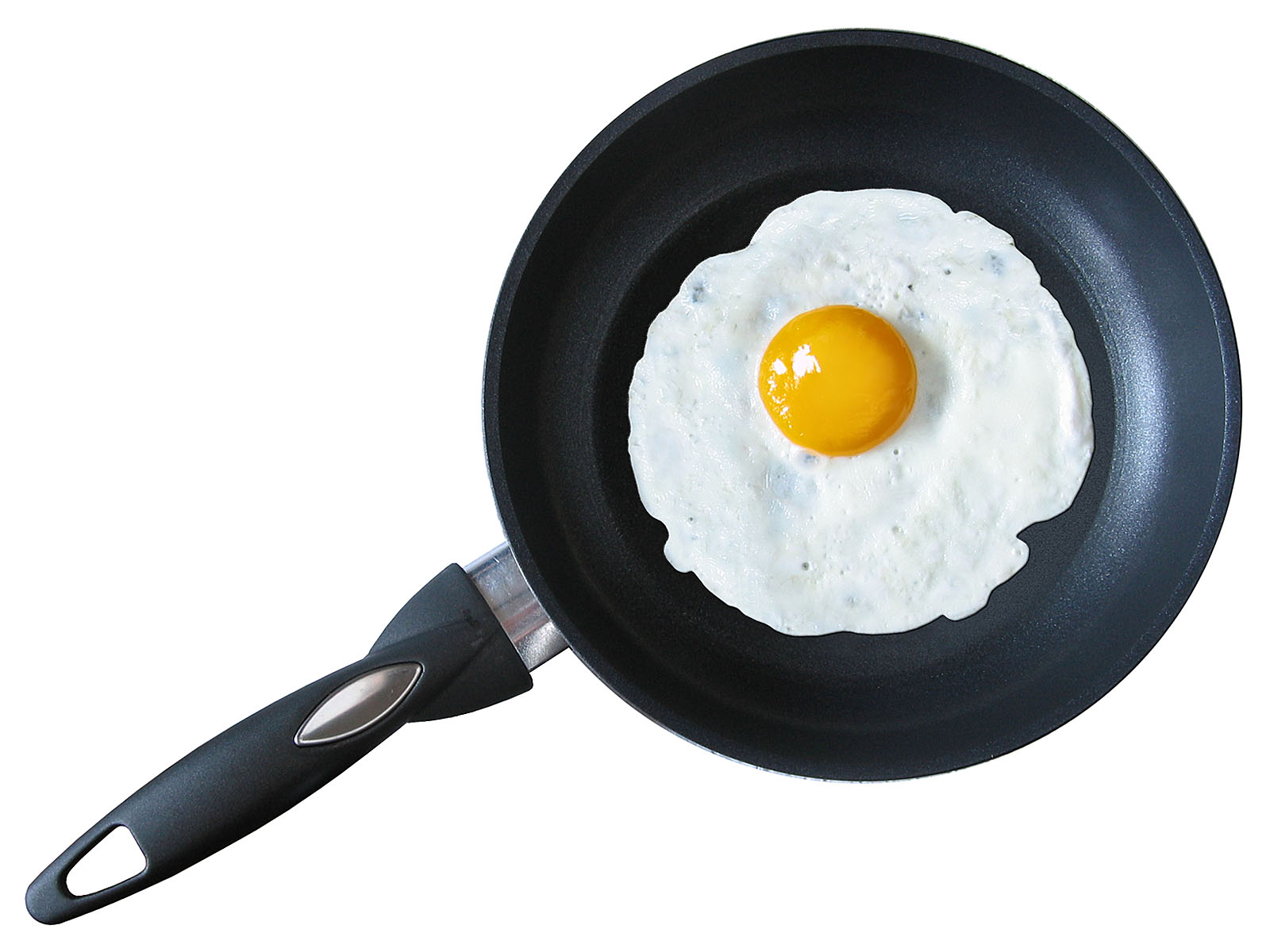
Eggs: Fry 'em, scramble 'em, poach 'em, boil 'em, and PIG OUT. Egg protein is one of the greatest sources of protein in the entire world, with a bio-availability in the high 90%'s when cooked. That means your body can use almost all of the protein available in eggs with the upmost efficiency to build strong, lean muscle. BUT, as manly as it may look, drinking raw eggs is a bad idea. When left uncooked, egg protein only has a bio-availability of about 50%, so much of that protein is wasted in your body. Plus, nobody wants salmonella. You won't look too manly puking your guts out all night, right? But seriously, eat those eggs. Oh, and dietary cholesterol hasn't been proven to have nearly ANY effect on blood cholesterol, so don't worry about that either. Sound good? Great.
Sausage: Awww yeah, brautwerst anyone? Sausage comes in all shapes and sizes, with all sorts of fillings. Sure, it's not the highest quality meat you can buy, but it's a great source of protein and has a lot of healthy fats in it as well. Want something lean? Go for the chicken or turkey sausage. Want the tastiest thing this side of Neptune? Get some biggun's packed with pork and beef, and pile them next to that big morning omelette. I recommend eating sausage in moderation, but you definitely don't have to cut it out of your diet. Just watch the sodium, as it can pile up quickly in certain kinds. Also, look at the ingredients, and make sure as much of the stuff inside is stuff you can pronounce, preferably meat without additives.
Peanut Butter: I eat this stuff by the spoonful. Packed with healthy fats and Omega-6 fatty acids, peanut butter is the bomb. It's an incredible source of healthy calories, especially when you get the natural, or "natty" stuff. Natty PB brah...all the way. In fact, the best peanut butter out there has the fewest ingredients. While the general rule of thumb is to make sure there is NO trans fat in the peanut butter, you also generally want to avoid the stuff with "partially hydrogenated vegetable oils." Those oils are used to make sure the peanut oil doesn't separate out of the butter itself, which is a pretty useless task unless someone is unbelievable lazy. A little stirring might help those forearms develop anyway. Brands I like are Teddie natural chunky, Smucker's natural, Jif Natural, Naturally More, and Power Butter. Go ahead and have a couple tablespoons, and watch those muscles EXPLODE.
Spinach: OK, you may be looking at me funny. But hey, if it made Popeye a monster, it could do the same to you. It's an aquired taste, but the aggressive flavor almost makes it manlier, right? Try some light sauces or spices on it to make it more palletable, like mustard, salsa, cayenne pepper, curry powder, whatever floats your boat. It's packed with vitamins and minerals, and will help you lose extra body fat covering those shredded guns of yours. Have a couple of forkfuls a day, and release your inner Popeye.
There you go you beastly dude you, eat up and get big, shredded, ripped, and NOTICED. Enjoy your meat, your steak, your peanut butter, and those huge, giant, bacon filled omelettes. Compliment any of these manly dishes with a side of veggies and you're in business. You can eat healthy and retain your manhood, it's easy! Now go eat some food, lift some weight, and growl at all the little meager folks cowering away from you. You're a beast, and noone gets in your way.
GOOD LUCK DUDES!
This blog will inform you about all kinds of food. It'll teach you to make the right choices, and feel great about them. By making these choices I personally guarantee you will perform better in the gym, stay healthier throughout the year, and get stronger both physically and mentally. I might even give you a few recipes to try. And on top of all that, I promise it'll be fun to read =].
Showing posts with label bacon. Show all posts
Friday, July 13, 2012
Sunday, October 16, 2011
The Basics of Clean
So, I'm going to introduce you to a new diet, and in all honesty, it'll be the only diet you'll ever need.
It's not radical, crazy, and frankly, it's not new at all. It's been around forever. It's called:
CLEAN EATING.
This term, unfortunately, means a lot of different things to a lot of different people. And again I'll be honest, there's no way to determine the exact definition of what "eating clean" really mean. But it's extremely easy to get the gist of it. In fact by the end of this post, all of you should have a good idea of what clean eating really means in its broadest sense.
Here's my personal definition of clean eating:
Eating food that has high nutritional value in correct, balanced quantities.
Pretty simple eh? It really is, however a lot of people like to over-complicate it. To make things a little easier, lets look at some different food groups (or components), and how to eat cleanly in each one.
Carbohydrates: Eating cleanly in terms of Carbohydrates seems to be the place where most people really struggle. Carbs are everywhere. Bread, cheetos, veggies, fruits, desserts, cereal, etc. They hide to some degree in all the food you consume. I'll let you in on a secret though. Carbs are NOT your enemy. For some reason, many people think they are. That's a flawed way of thinking, because your body needs Carbs for it's main energy source. It's the fuel to that human engine of yours.
To keep things simple, let's establish first that there are two main types of carbs: Simple carbohydrates, and complex carbohydrates. Simple carbs are called monosaccharides, or simple sugars. When they are consumed, they are digested quickly and easily, and are readily used for energy. Or at least, they should be. However, how many times after dessert have you actually expended all the energy which that sugar loaded brownie contained? Not often, I'm guessing. And that's where carbs come back to haunt you. Unused Carbohydrates equates to wasted energy. And guess where wasted energy goes. That's right, your midsection.
Complex Carbohydrates are Carbs that your body has a more difficult time digesting, and therefore the body will take a longer time and expend more energy digesting them. These are "long acting" carbs that give you full, sustained energy for a long period of time, without the characteristic "sugar high." Such carbs include vegetables, whole wheat breads, and oatmeal. These carbs, overall, tend to be a little more "flexible". When in doubt about carbs, it's usually safe to assume that complex carbs will be healthier in the long run. Because they are digested over a long period of time, they do not as readily turn to fat. Again this IS NOT ALWAYS TRUE, I'm purely making a broad generality. Learn the rules first, then the exceptions.
So are simple carbs bad? Absolutely not. Fruits are comprised of mainly simple carbs. They give you a good hit of energy without spiking blood insulin (I'll discuss this, the GI scale, and all related topics in a later post) to a high degree. On a hike? Bring an apple. Tired at work? Eat a banana. Craving something sweet? Have an orange. Can you go overboard eating fruits? Sure, but that's true for most anything. It's pretty safe to say that if you're dying for a snack, a fruit is a very healthy, clean option.
Proteins: Here we go guys. MEAT MEAT MEAT. Being an avid weightlifter, I for one am an enormous protein consumer. We all know meat has protein, and protein builds muscle. And at this point, I won't get any more into than that (who wants to hear a boring speech about amino acids and protein synthesis anyway right?). I like to characterize the quality of a protein source with a few questions: How dense is it (grams of protein per serving), how lean is it (how many calories per serving along with saturated fats, trans fats, and other undesirables come with that nice protein punch), and how readily is the protein absorbed by your body (whey protein has greater absorption than soy, etc.).
So without getting into too much detail, let me list a few of the best, readily available protein sources: boneless and skinless chicken breast, turkey breast, lean cuts of beef, salmon, tuna, swordfish, whey, venison, and egg whites.
Some of the less optimal sources: cheap cuts of beef, pork, ham, soy, and basically any meat smothered in sauce and marinade.
I'm going to go back to fish for a second though. I personally believe fish to be the best form of readily available protein. Why? Because there is a huge amount of protein per serving, with very few calories. One can of chunk light tuna has 26g of protein at a hundred calories. That's more protein per serving than my special "Wheybolic extreme 60" protein powder I drink after every workout and spend a fortune on every month. Good old tuna has got most other meats beat. Same with salmon. Fish is loaded with lean protein, Omega 3 fatty acids, low cholesterol, and about a million nutrients that will do your body well. Looking for some good meat? Grab some fish for dinner and grill it up nice (obviously don't fry it, as much as I know you'd like to.)
Fats: AH! FAT! GET IT AWAY! That's the right response, many food companies would claim. And they'd be 100% wrong. I'm going to tell you another secret (I've got a whole bunch) FATS DON'T MAKE YOU FAT. In fact, those "low fat" oreos you're eating aren't any better for you than the regular ones, and might actually be worse. Fats do our body well, especially the unsaturated fats present in nuts, peanut butter (all natural, of course), olive oil, most fish (omega 3 fatty acids), almond milk, avocados, and the list goes on. Unsaturated fat should not ever be avoided outright, but like anything, eaten in moderation.
Unsaturated fats actually do a lot of good for you. They reduce bad cholesterol, help the body absorb fat soluble vitamins,and increase the good. They can slow down nutrient absorption into the muscles, which is great for athletes who want to prevent going catabolic over night. There are many other benefits to fat as well, but hopefully I've convinced you enough at this point.
Saturated fat is what you want to cut down on. As with anything, a little in moderation may have benefits, but in general the average person consumes wayyy too much saturated fat. This is the fat that usually increases bad cholesterol and narrows your arteries. In other words, it makes your heart work way too hard, and that's never good. The recommended saturated fat intake for a 2000 calorie diet (which is by no means the diet for everyone) is about 20 grams, which also happens to be about a third of your daily total fat intake.
Trans fats are a HUGE no-no. I'll devote an entire separate post to those though. If you see trans fat on the nutritional label, and it has any number other than "0" next to it, I would suggest putting it back.
So there you go, the basics. Understanding those three components of food is a huge step in becoming a "food guru." Now, the next step is finding what foods are "clean" and would easily fit into your daily diet, and how to balance your diet so that you get a good ration of these three components: carbs, protein, and fat. Onward and upward!
It's not radical, crazy, and frankly, it's not new at all. It's been around forever. It's called:
CLEAN EATING.
This term, unfortunately, means a lot of different things to a lot of different people. And again I'll be honest, there's no way to determine the exact definition of what "eating clean" really mean. But it's extremely easy to get the gist of it. In fact by the end of this post, all of you should have a good idea of what clean eating really means in its broadest sense.
Here's my personal definition of clean eating:
Eating food that has high nutritional value in correct, balanced quantities.
Pretty simple eh? It really is, however a lot of people like to over-complicate it. To make things a little easier, lets look at some different food groups (or components), and how to eat cleanly in each one.
Carbohydrates: Eating cleanly in terms of Carbohydrates seems to be the place where most people really struggle. Carbs are everywhere. Bread, cheetos, veggies, fruits, desserts, cereal, etc. They hide to some degree in all the food you consume. I'll let you in on a secret though. Carbs are NOT your enemy. For some reason, many people think they are. That's a flawed way of thinking, because your body needs Carbs for it's main energy source. It's the fuel to that human engine of yours.
To keep things simple, let's establish first that there are two main types of carbs: Simple carbohydrates, and complex carbohydrates. Simple carbs are called monosaccharides, or simple sugars. When they are consumed, they are digested quickly and easily, and are readily used for energy. Or at least, they should be. However, how many times after dessert have you actually expended all the energy which that sugar loaded brownie contained? Not often, I'm guessing. And that's where carbs come back to haunt you. Unused Carbohydrates equates to wasted energy. And guess where wasted energy goes. That's right, your midsection.
Complex Carbohydrates are Carbs that your body has a more difficult time digesting, and therefore the body will take a longer time and expend more energy digesting them. These are "long acting" carbs that give you full, sustained energy for a long period of time, without the characteristic "sugar high." Such carbs include vegetables, whole wheat breads, and oatmeal. These carbs, overall, tend to be a little more "flexible". When in doubt about carbs, it's usually safe to assume that complex carbs will be healthier in the long run. Because they are digested over a long period of time, they do not as readily turn to fat. Again this IS NOT ALWAYS TRUE, I'm purely making a broad generality. Learn the rules first, then the exceptions.
So are simple carbs bad? Absolutely not. Fruits are comprised of mainly simple carbs. They give you a good hit of energy without spiking blood insulin (I'll discuss this, the GI scale, and all related topics in a later post) to a high degree. On a hike? Bring an apple. Tired at work? Eat a banana. Craving something sweet? Have an orange. Can you go overboard eating fruits? Sure, but that's true for most anything. It's pretty safe to say that if you're dying for a snack, a fruit is a very healthy, clean option.
Proteins: Here we go guys. MEAT MEAT MEAT. Being an avid weightlifter, I for one am an enormous protein consumer. We all know meat has protein, and protein builds muscle. And at this point, I won't get any more into than that (who wants to hear a boring speech about amino acids and protein synthesis anyway right?). I like to characterize the quality of a protein source with a few questions: How dense is it (grams of protein per serving), how lean is it (how many calories per serving along with saturated fats, trans fats, and other undesirables come with that nice protein punch), and how readily is the protein absorbed by your body (whey protein has greater absorption than soy, etc.).
So without getting into too much detail, let me list a few of the best, readily available protein sources: boneless and skinless chicken breast, turkey breast, lean cuts of beef, salmon, tuna, swordfish, whey, venison, and egg whites.
Some of the less optimal sources: cheap cuts of beef, pork, ham, soy, and basically any meat smothered in sauce and marinade.
I'm going to go back to fish for a second though. I personally believe fish to be the best form of readily available protein. Why? Because there is a huge amount of protein per serving, with very few calories. One can of chunk light tuna has 26g of protein at a hundred calories. That's more protein per serving than my special "Wheybolic extreme 60" protein powder I drink after every workout and spend a fortune on every month. Good old tuna has got most other meats beat. Same with salmon. Fish is loaded with lean protein, Omega 3 fatty acids, low cholesterol, and about a million nutrients that will do your body well. Looking for some good meat? Grab some fish for dinner and grill it up nice (obviously don't fry it, as much as I know you'd like to.)
Fats: AH! FAT! GET IT AWAY! That's the right response, many food companies would claim. And they'd be 100% wrong. I'm going to tell you another secret (I've got a whole bunch) FATS DON'T MAKE YOU FAT. In fact, those "low fat" oreos you're eating aren't any better for you than the regular ones, and might actually be worse. Fats do our body well, especially the unsaturated fats present in nuts, peanut butter (all natural, of course), olive oil, most fish (omega 3 fatty acids), almond milk, avocados, and the list goes on. Unsaturated fat should not ever be avoided outright, but like anything, eaten in moderation.
Unsaturated fats actually do a lot of good for you. They reduce bad cholesterol, help the body absorb fat soluble vitamins,and increase the good. They can slow down nutrient absorption into the muscles, which is great for athletes who want to prevent going catabolic over night. There are many other benefits to fat as well, but hopefully I've convinced you enough at this point.
Saturated fat is what you want to cut down on. As with anything, a little in moderation may have benefits, but in general the average person consumes wayyy too much saturated fat. This is the fat that usually increases bad cholesterol and narrows your arteries. In other words, it makes your heart work way too hard, and that's never good. The recommended saturated fat intake for a 2000 calorie diet (which is by no means the diet for everyone) is about 20 grams, which also happens to be about a third of your daily total fat intake.
Trans fats are a HUGE no-no. I'll devote an entire separate post to those though. If you see trans fat on the nutritional label, and it has any number other than "0" next to it, I would suggest putting it back.
So there you go, the basics. Understanding those three components of food is a huge step in becoming a "food guru." Now, the next step is finding what foods are "clean" and would easily fit into your daily diet, and how to balance your diet so that you get a good ration of these three components: carbs, protein, and fat. Onward and upward!
Subscribe to:
Posts (Atom)


