Showing posts with label health. Show all posts

Tuesday, August 7, 2012

Coconuts: A Peculiar Fruit

Well there I go again, taking another couple week hiatus from typing my articles.  I'm sorry folks, summer is just a busy time for me.  I just got back from the trip of a lifetime to Kauai, Hawaii.  That's right, for 8 days I was immersed in the warm Pacific ocean, the constant cool Hawaiian winds, and more sunshine than my skin knew what to do with.  And there were fruits everywhere!!!  Trees with papayas, mangos, bananas, and of course, coconuts.  I'll let you in on a little secret:  Coconut is probably my favorite fruit of all time.  Something about the taste of it is just so incredible, and so heartily satisfying.  Getting some fresh coconut meat in Hawaii was a dream come true.  But the coconut isn't like your average fruit.  It's nutritional properties are quite unique, and while its still an extremely healthy food, its healthy in a different way than most other fruits.  In fact, the coconut is composed mostly of a substance you wouldn't think sounds very fruity: 

FAT!!!  

That's right, coconuts are composed of mostly fat. And not just any old fat, but that super scary crazy spine tingling SATURATED FAT!!!  OMG!!!  Crazy right?  Now stop freaking out for a second and let me explain something.  This saturated fat is very, very, VERY good for you.  I've said a million times and I'll say it again:  fat doesn't make you fat.  The fat in coconuts not only gives the fruit an amazing taste, but it also does many positive things for your body.  The saturated fats in coconuts (or specifically the oil in coconuts) isn't a long chain fatty acid like we find so often in products made with hydrogenated oils, but instead are medium chain fatty acids which behave quite differently.  These fatty acids have been shown to have anti-oxidant properties, as well as the ability to speed up your metabolism.  That's right, eat fat to burn fat, sounds great doesn't it?
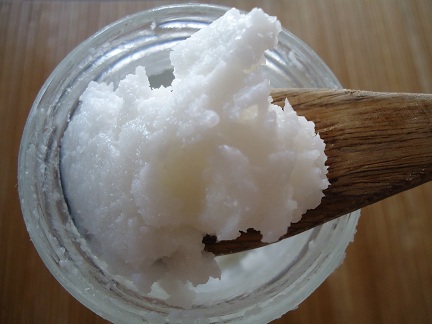


Now you may be remembering all those times you've heard that saturated fat will destroy your heart, clog up your veins, and in general destroy your circulatory system.  I'll say this right now:  there is no proof that the saturated fats in coconuts will cause any harm on bad cholesterol levels or overall heart health, and in fact there is much evidence to suggest the contrary.  Trans fats from hydrogenated oils are the real killers out there, not the natural saturated fats in coconuts.  In fact, by consuming the fats in coconuts, you're actually encouraging your body to use fat as an energy source, which may help you shed a few pounds.  And to all who are still in the dark about the powers of fat, it's an EXCELLENT energy source.  It's actually better than any carbohydrate, because it has more energy per unit of mass.  Cool, right?

But coconuts don't just stop at the fat benefits.  They're also rich with vitamins C, B1, B2, and B3.  This convenient vitamin package will help boost immune system health and support a fast burning metabolism which will keep you energized, strong, and of course, lean.  Coconuts are actually quite low in sugar compared to most fruits as well, which is a welcome change from the normal enormous insulin spike you get when eating apples, grapes, or bananas.  In terms of overall calories, coconuts are actually a very calorie dense food, and I bet you can guess why:  the fat of course!  This means they're an AWESOME energy source, but make sure you plan your daily diet accordingly, because a coconut could bump you over your daily caloric goals quite easily.  Here's the nutritional information for a coconut:

Nutrition Facts
Serving Size 1 cup of shredded
 
Amount Per Serving
Calories from Fat 241
Calories 283
 
% Daily Values*
Total Fat 26.79g41%
 Saturated Fat 23.758g119%
 Polyunsaturated Fat 0.293g 
 Monounsaturated Fat 1.14g 
Cholesterol 0mg0%
Sodium 16mg1%
Potassium 285mg 
Total Carbohydrate 12.18g4%
 Dietary Fiber 7.2g29%
 Sugars 4.98g 
Protein 2.66g 
 
Vitamin A 0%Vitamin C 4%
Calcium 1%Iron 11%
*
That's a bunch of calories, eh?  But don't be afraid, believe me it's worth it to fit coconut into your diet.  It's extremely good for you and tastes absolutely delicious.  It's definitely one of the most interesting fruits out there, and will always be one of my favorites.  But remember though, if you ever travel to Hawaii, or another place where coconuts grow rampant, that more people are killed each year by a coconut to the head than are killed by sharks.


And with that, I say, GOOD LUCK!

References:


Monday, April 2, 2012

Our Daily Eats "Spicy Maple Pepitas" *Review*


I'm back with another fantastic snack that I've recently had the pleasure of stuffing my face with in every possible instance.  As you may or may not know by now, I like things with flavor, things that can kick you in the mouth a little bit with a spicy, sweet combination, yet keep your belly full and waist trim at the same time.  I don't come across store bought snacks that provide this unique feeling too often, yet today I'm pleased to say that a new food has graced my plate with its presence and given me something I truly enjoy.  They're made by a company called Our Daily Eats, and are named creatively "Spicy Maple Pepitas."

So what are these things exactly?  Well, they're pumpkin seeds to be exact.  Small ones, that are spiced up with cayenne pepper and maple syrup.  If that doesn't sound like a combination made in heaven, I don't know what does.  And as far as taste goes, these things really hit the spot.  They're exactly what you'd expect, spicy and interesting, yet deliciously sweet at the same time.  If you're not a huge spice fan, don't worry, these things don't burn, they just let you know they're there with a nice little twinge of flame.  And the maple syrup...well coming from Vermont you can already tell I'm a fan.  I love maple syrup, and I truly believe it is a PERFECT addition to these spicy little seeds.  Together they create a very unique taste that I believe you must taste ASAP.


But what about the actual nutritional profile of these seeds?  Well, as you know, I don't eat food that's not healthy/beneficial toward my body in some significant way, much less write a review on it.  And I'm pleased to announce that the nutritional profile on these pepitas is AWESOME!  Let's look a little closer, shall we?

Ingredients:  This is the first thing that caught my eye.  There aren't any chemical/artificial additives!  In fact, the only ingredients are: Pumpkin seeds, maple syrup, cayenne, and sea salt.  That's FANTASTIC!  Seriously, they don't even have any artificial sweeteners, or even added sugar (other than the maple syrup, which is considered a purely natural sweetener that is MUCH better for you than the granulated stuff).  Normally if you see salt on an ingredient list, you need to be wary of sodium content, but NOT THIS TIME!  We'll get more into that later.  But like I said, this list is short and sweet, and completely fulfills the claim "100% natural" that's boasted on the package.  PERFECT!  

Caloric content:  Now as we know, nuts and seeds tend to be very calorie dense, but they're also quite filling, so you're unlikely to go hog wild on such a product.  1/4 cup of this product has 125 calories, which is quite managable and is a PLENTY decent serving size if you're looking for a quick, midday snack.

Added Nutritional benefits:  As the package states, pumpkin seeds are quite rich with unsaturated fats and Omega-3 fatty acids, which you can pretty much always use more of.  They're extremely heart healthy, and lower your risk for heart disease or other cardiovascular health ailments if consumed on a regular basis.  They also help lubricate your joints and keep things sliding smoothly, keeping you mobile as age creeps onto all of us.  Pumpkin seeds are also very rich is minerals such as iron, zinc, and manganese, and have good helpings of vitamins C and E.

Sodium content:  Now usually you have to be wary of packaged nuts and seeds for their sky high sodium counts, but not this time.  In fact, per serving, there are only 85 mg of sodium, which is EXTREMELY low compared to most other similar products.  There's just enough salt there to support the delicious flavor, without causing that sodium level to skyrocket.  Awesome!

Entire Nutritional Information:

Serving Size: 1/4 Cup
Calories: 125
Total Fat: 5 g
   Saturated Fat: 1 g
   Trans Fat: 0 g
Cholesterol: 0 g
Sodium: 85 mg
Total Carbohydrate: 15 g
   Dietary Fiber: 0 g
   Sugars: 3 g
Protein: 1 g

So would I recommend this product?  ABSOLUTELY!  They're ridiculously delicious and are a great tool to either trim down or bulk up, or even just maintain your weight.  They're very healthy, and are a refreshingly powerful flavor compared to most other bland health food.  Just watch the serving size and you're golden.  Excuse me while I go and have another handful...


Eat healthy, stay creative, and as always, GOOD LUCK!

Friday, March 16, 2012

The Discarded Portions, And What You're Missing


With certain foods, it's pretty commonplace to have a little scrap left behind.  Think of that yummy corn cob, or perfectly ripe banana, or absolutely delicious watermelon.  After a few pieces of each, your plate is littered with  cobs, rinds, and peels.  We don't think much of it, and usually toss our apple cores into the woods just like anyone else.  But what exactly are you throwing away?  Did you know that in certain cases, these "inedible" portions of food actually contain many nutrients that could do your body some serious good?  In fact, some may contain tons MORE health benefits than is easily fathomed.  And you know what?  Some don't taste so bad, either.

Watermelon Rinds:  This one you might have tried before, and you'd be happy to know that your instincts were correct in trying to munch away on this green nutrient goldmine.  In fact, the watermelon rind is actually healthier than the watermelon flesh, and though while it may not taste as good, consuming watermelon rind can give you a heaping load of beta carotene, vitamin A, citrullene (an important amino acid), lypocene, and vitamin C.  Now don't confuse the rind with the dark green outer skin, the rind we're talking about is the lighter green layer between the skin and the pink flesh.  The outer skin is a little harder to stomach (though I've definitely done it on several occassions.)  Next time you have a watermelon, feel free to keep chomping for just a few more bites, just to make sure you get a little of that very healthful rind.


Banana Peels:  You know, it's really only us humans who believe we're too good for a peel.  Many primates eat the entire banana, and by doing so gain a lot more of the fruit's total health benefits.  That's right, the peel, though slightly ropey and initially unappetizing, contains all sorts of goodies that your body will absolutely love.  They're rich with fiber, both soluble and insoluble, much moreso than the fruit itself.  This fiber can assist in raising good cholesterol levels and promoting healthy digestion.  Banana peels also have a significant amount of lutein, an important antioxidant.  Banana peels also contain a very large amount of potassium, a very crucial mineral which when balanced with proper sodium intake allows the management of bodily hydration.  To make banana peels a little more appetizing, wait until the fruit is very ripe, and the peel should be both thinner and slightly sweeter.  You can also boil or cook the peel, and many Asian cultures cook bananas IN their peel, and eat them as one total meal.  Cool, right?


Corn Cob:  OK, now seriously, who eats the cob of the corn?  Actually my loyal readers, I've done so on several occassions.  If the corn is boiled well enough, the cob is most definitely soft enough to consume, and doesn't taste half bad, in my opinion at least.  As far as health benefits go, I can't seem to find many on the internet, which means I must be a little bit strange to consume the cob.  However it's common knowledge that corn cobs can be ground up and mixed into cattle feed to increase fiber, so it's safe to say that the cob is extremely rich in fiber.  I can definitely agree with this, as they fill you up EXTREMELY quickly (one of fiber's most useful attributes, besides healthy digestion).  If you want to try a bite, I suggest you try eating the small end of the cob first, as it's likely to be the softest and most easily consumed. 


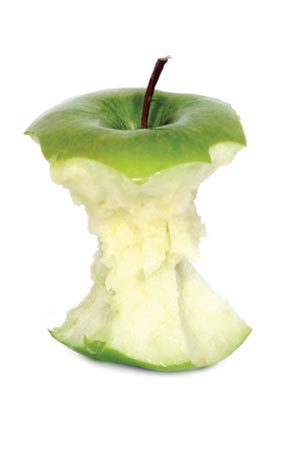
Apple/Pear Cores:  Some people just go all out, and don't let a single bit of their precious fruit go to waste.  Have you ever known someone who eats apple cores, or maybe the cores of pears?  I can tell you that I don't mind eating the core of a pear, however apples tend to be a little past what I can handle.  The seeds in apples are extremely bitter (which you've probably found out if you've accidentally eaten one) which is due to the fact that they're very mildly poisonous, containing a derivative of cyanide.  Don't worry, you'd need to eat a TON of apple seeds to actually poison yourself, but it's just something to keep in mind.  Feel free to eat the core of either fruit, just know that unlike banana peels and watermelon rinds, you're not consuming any sort of normally ignored health beneficiaries.  


Mushroom Stems:  For some reason, people like to throw away the stems of portobello and white button mushrooms.  Why is that?  The stems are just as tasty as the mushroom itself, and contain all the same health benefits, such as cardiovascular system support, anti inflammatory properties, antioxidants, and large portions of vitamins such as vitamin B2, B3, B5, and minerals like selenium, copper, and potassium.  Seriously, eat these things, they're tasty and great for you!


Peach Pits:  Just kidding...don't eat these...big choking hazard.

Avacado Pits:......Seriously? .........No.

So there you have it, a little look into the forbidden parts of food.  Some things you may want to definitely try out, a few others you can keep avoiding, knowing you're not missing much.  But don't worry, no matter what, as long as you're consuming the foods associated with these normally discarded portions, you're doing your body a whole bunch of good.  Eat up, and as always...

GOOD LUCK!

References:

Tuesday, February 7, 2012

Food Worship #12: Mushrooms


Ah yes, mushrooms, those strange looking fungi that taste oh so good when sauteed and placed on top of pizza, philly cheese steaks, or in my case, salmon burgers and salads.  These little guys are quite unique, and while there are many different kinds, today we're going to look at the mushrooms you commonly find in those blue Styrofoam tubs in the grocery store called white button mushrooms.  They're easy to find, delicious, and go well with almost anything.  Seriously, if that plate looks a little bare, it's not hard to throw a few mushrooms at it.  And there are many reasons why you should do just that.

First, a little background of the white button mushroom.  Its formal scientific name is Agaricus bisporus, and according to Wikipedia it is also called by the names: common mushroom, button mushroom, white mushroom, table mushroom, champignon mushroom, crimini mushroom, Swiss brown mushroom, Roman brown mushroom, Italian brown,Italian mushroom, and cultivated mushroom.  That's quite a few names to keep track of, if I don't say so myself.  Amazingly, when these things are full grown, their known by a much more familiar name, the Portobello mushroom.  Funny how things work, right?  Nowadays, the white button mushroom is grown and cultivated all across the world.  The process isn't too complicated, first a bed of manure and fertile soil is put down and raised to about 70 degrees Fahrenheit.  The mushroom spawn are then laid over this growing bed, which is in a dark, sun-free location, and the temperature is then dropped to around 55 degrees Fahrenheit as the spawn take root.  The spawn are then covered with about an inch of soil, and 3-4 weeks later they're ready for harvest and use in your recipes!

But why is this simple food so darn good for you (and tasty)?  Well, let's explore the actual composition of these little mushrooms, and the nutritional benefits that lay within each one just waiting to spice up your diet and do your body some real good:

Immune System Support:  White button mushrooms can help you stay healthy throughout the year with a couple of unique nutritional benefits they offer.  Certain chemicals in these mushrooms actually interact with your white blood cells, and allow them to do their job more effectively.  In simple terms, if your body needs more active white blood cells, the white button mushroom can help to activate a greater number of cells to assist your body.  That's really an interesting trait of ANY food, and what's more the white button mushroom is actually BETTER at supporting your immune system than almost any other (more expensive or exotic) mushroom type.  Cool!

Antioxidants:  White button mushrooms are a food rich with all sorts of antioxidant benefits as well.  Each mushroom is packed with antioxidant related nutrients like zinc, selenium, and manganese, and these little mushrooms are also excellent at helping your body to produce its own oxidative enzymes to help prevent cell damage from oxidation.  

Heart Health:  These mushrooms also are conducive to helping that heart of yours to beat stronger and more efficiently.  They have incredible anti-inflammatory properties which cause your veins to remain less constricted, and the antioxidant benefits you receive from each mushroom can help to protect your blood cells, veins, and arteries from free radical damage.  These little guys also have been shown to lower LDL cholesterol (the bad stuff) quite effectively, which is definitely a help for remaining healthy in later years.  

Vitamins/Minerals:  You knew it was coming, time to look at all the other little goodies that white button mushrooms come packaged with that will help your body to remain healthy and strong.  This time, I'll list it in chart form, to hopefully let you see the nutritional profile of these mushrooms a little more clearly.


White Button Mushrooms have:

9%   DV vitamin B1
40% DV vitamin B2
27% DV vitamin B3
21% DV vitamin B5
52% DV selenium
10% DV of both zinc and manganese

These mushrooms are VERY nutrient dense, and clearly can add a lot to any meal.  Here are the nutritional facts for 1 CUP of white button mushrooms:

Nutrition Facts
Calories 21(88 kJ)
% Daily Value 1
Total Fat0.3g< 1%
Sat. Fat< 0.1g< 1%
Cholesterol0mg0%
Sodium5mg< 1%
Total Carbs.3.2g1%
Dietary Fiber1g4%
Sugars1.6g
Protein3g
Calcium2.9mg
Potassium305.3mg
As you can see, these mushrooms are low in carbs, high in fiber, and have almost no fat.  I munch on them raw sometimes as a low calorie, filling, and delicious snack.  I suggest you try some out; they're actually quite tasty.  If you don't like them raw, saute them up (without using too much butter) and add them to almost any dinner without any trouble whatsoever.  It's a great low calorie filler that tastes heavenly.

So there you have it, the white button mushroom.  I strongly suggest you try a few of these in your next available meal, and I can almost guarantee you'll be glad you did.  They're tasty, nutritious, and readily available at your nearest grocery store.  So what are you waiting for?  Go pick up some fungus!

Be creative, enjoy your buttons, and as always, GOOD LUCK!

References:

Monday, January 23, 2012

Food Worship #9: Olives


So which do you like, black or green?  Personally, I hated both until a few years ago when I basically taught myself to like them.  Now the taste of an olive, black OR green makes my mouth water.  These little guys are taaaaassty.  And they're a great addition to any sort of salad, healthy pizza, meat topping, or a great stand-alone snack!  They're a great source of important macro and micro nutrients, and I would suggest trying a few the next time you get a chance.

But honestly, what the heck's the difference between black and green olives?  Some people will swear by one, but despise the other (my mother falls into this category, but I can't remember which one she loves and which one she hates.  You like the green ones, right mom?)  In fact the only difference between black and green olives is the time at which they're picked relative to their ripeness!  Green olives are picked before they're ripe, and black olives are picked after.  Pretty simple eh?  Sure there are many more variations of olives, like all those yummy greek ones, but for now lets just focus on the commonly seen black and green ones.


Now olives are actually pretty inedible in their raw form, so they're soaked in either water, brine, oil, or some special mixture of the three.  Because the green olive isn't quite as ripe at the time of eating, they're usually firmer and more bitter than the very soft black olive.  Both olives are quite healthy, and here are the major health benefits you'll receive by consumption of these delectable little morsels:

Healthy Fats:  That's right, olives are LOADED with healthy unsaturated fats which do you tons of good.  To be specific, almost all the fat (80-85% of the calories in the olive itself) is monounsaturated, and comes from a fatty acid called oleic acid.  These fatty acids strongly decrease the risk of cardiovascular disease, and also help to decrease LDL cholesterol.  I think we've learned by now that fat doesn't make you fat, and that this monounsaturated fat will do you nothing but good in the long run.  Plus it smooths out the texture of olives to a point where they seem to just melt in your mouth.  YUMMY.


Antioxidants:  Olives have so many phytonutrients and antioxidants it's pretty darn astounding.  To throw a few scientific names at you, olives are extremely rich is flavanols, terpenes, simple phenols, anthocyanidins, and many more.  All you need to know is that most of these fancy name phytonutrients help to protect your cells from oxidation damage from free radicals, which is a BIG DEAL.  Olives also have a nifty little phytonutrient called oleuropein, which is only found in olives.  Oleyropein is another very strong antioxidant, and because it doesn't come from other sources you'd do well to get some olives (or at least some olive oil) in your diet.

Vitamins:  Olives have quite a bit of vitamin E, another antioxidant that also keeps blood vessels from constricting.  They're also rich in vitamin A, which is not only ANOTHER antioxidant but helps to keep teeth and skin healthy.  Vitamins B-1 through B-6, and vitamin K can also be found in olives.


Minerals- Olives have about 25% of your daily iron, and about 17% of your daily recommended zinc, in every cup.  Copper, selenium, phosphorus, and potassium are also found in olives, all minerals vital to your long term health.

All these health benefits are available in ALL olives, black or green.

Nutritional Information:  


Nutrition Facts
Serving Size 1 10 small serving
Amount Per Serving
Calories from Fat 29
Calories 36
% Daily Values*
Total Fat 3.24g5%
Saturated Fat 0.429g2%
Polyunsaturated Fat 0.277g
Monounsaturated Fat 2.395g
Cholesterol 0mg0%
Sodium 299mg12%
Potassium 3mg
Total Carbohydrate 2.06g1%
Dietary Fiber 1g4%
Sugars 0g
Protein 0.3g
Vitamin A 0%Vitamin C 1%
Calcium 3%Iron 6%
*Percent Daily Values are based on a 2000 calorie diet. Your daily values may be higher or lower depending on your calorie needs.

Nutrition Values are based on USDA Nutrient Database SR18


This is for a serving of 10 small black olives.  With 10 medium to large olives, you can bet you'll get around 50 calories.  Green olive nutritional information is similar, if not identical.  The one thing to watch out for in olives (besides the relative caloric density) is the sodium content, as it can add up quickly.

Hungry for olives?  I sure am, I can't wait to have a few on my salad today.  If you want to do your body some good, make sure you get a few of these little guys in your diet ASAP.

Black or green, it doesn't matter, just pop 'em and enjoy.  Good Luck!!!


References:
http://www.whfoods.com/genpage.php?tname=foodspice&dbid=46
http://www.livestrong.com/article/370210-what-vitamins-minerals-do-olives-have/
http://www.marksdailyapple.com/olives-difference-green-black/#axzz1kHR1pqHb