Showing posts with label metabolism. Show all posts

Tuesday, August 7, 2012

Coconuts: A Peculiar Fruit

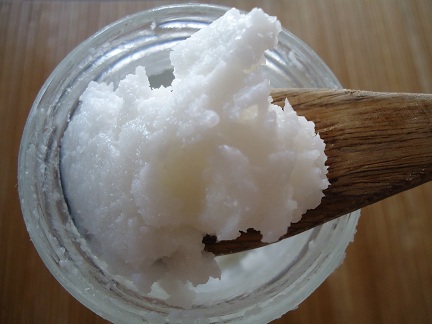
Well there I go again, taking another couple week hiatus from typing my articles.  I'm sorry folks, summer is just a busy time for me.  I just got back from the trip of a lifetime to Kauai, Hawaii.  That's right, for 8 days I was immersed in the warm Pacific ocean, the constant cool Hawaiian winds, and more sunshine than my skin knew what to do with.  And there were fruits everywhere!!!  Trees with papayas, mangos, bananas, and of course, coconuts.  I'll let you in on a little secret:  Coconut is probably my favorite fruit of all time.  Something about the taste of it is just so incredible, and so heartily satisfying.  Getting some fresh coconut meat in Hawaii was a dream come true.  But the coconut isn't like your average fruit.  It's nutritional properties are quite unique, and while its still an extremely healthy food, its healthy in a different way than most other fruits.  In fact, the coconut is composed mostly of a substance you wouldn't think sounds very fruity: 

FAT!!!  

That's right, coconuts are composed of mostly fat. And not just any old fat, but that super scary crazy spine tingling SATURATED FAT!!!  OMG!!!  Crazy right?  Now stop freaking out for a second and let me explain something.  This saturated fat is very, very, VERY good for you.  I've said a million times and I'll say it again:  fat doesn't make you fat.  The fat in coconuts not only gives the fruit an amazing taste, but it also does many positive things for your body.  The saturated fats in coconuts (or specifically the oil in coconuts) isn't a long chain fatty acid like we find so often in products made with hydrogenated oils, but instead are medium chain fatty acids which behave quite differently.  These fatty acids have been shown to have anti-oxidant properties, as well as the ability to speed up your metabolism.  That's right, eat fat to burn fat, sounds great doesn't it?


Now you may be remembering all those times you've heard that saturated fat will destroy your heart, clog up your veins, and in general destroy your circulatory system.  I'll say this right now:  there is no proof that the saturated fats in coconuts will cause any harm on bad cholesterol levels or overall heart health, and in fact there is much evidence to suggest the contrary.  Trans fats from hydrogenated oils are the real killers out there, not the natural saturated fats in coconuts.  In fact, by consuming the fats in coconuts, you're actually encouraging your body to use fat as an energy source, which may help you shed a few pounds.  And to all who are still in the dark about the powers of fat, it's an EXCELLENT energy source.  It's actually better than any carbohydrate, because it has more energy per unit of mass.  Cool, right?

But coconuts don't just stop at the fat benefits.  They're also rich with vitamins C, B1, B2, and B3.  This convenient vitamin package will help boost immune system health and support a fast burning metabolism which will keep you energized, strong, and of course, lean.  Coconuts are actually quite low in sugar compared to most fruits as well, which is a welcome change from the normal enormous insulin spike you get when eating apples, grapes, or bananas.  In terms of overall calories, coconuts are actually a very calorie dense food, and I bet you can guess why:  the fat of course!  This means they're an AWESOME energy source, but make sure you plan your daily diet accordingly, because a coconut could bump you over your daily caloric goals quite easily.  Here's the nutritional information for a coconut:

Nutrition Facts
Serving Size 1 cup of shredded
 
Amount Per Serving
Calories from Fat 241
Calories 283
 
% Daily Values*
Total Fat 26.79g41%
 Saturated Fat 23.758g119%
 Polyunsaturated Fat 0.293g 
 Monounsaturated Fat 1.14g 
Cholesterol 0mg0%
Sodium 16mg1%
Potassium 285mg 
Total Carbohydrate 12.18g4%
 Dietary Fiber 7.2g29%
 Sugars 4.98g 
Protein 2.66g 
 
Vitamin A 0%Vitamin C 4%
Calcium 1%Iron 11%
*
That's a bunch of calories, eh?  But don't be afraid, believe me it's worth it to fit coconut into your diet.  It's extremely good for you and tastes absolutely delicious.  It's definitely one of the most interesting fruits out there, and will always be one of my favorites.  But remember though, if you ever travel to Hawaii, or another place where coconuts grow rampant, that more people are killed each year by a coconut to the head than are killed by sharks.


And with that, I say, GOOD LUCK!

References:


Sunday, February 19, 2012

Little Eating Makes Big People


Okay, so you've been on a diet for a few months, and so far it's going well.  You've lost about 5 lbs, and you're trying your hardest to stick to healthy foods.  Maybe you've been hitting the gym a few times a week, and are forcing yourself to sweat it out on the treadmill for half an hour each time.  It's not fun, but hey, it's working, right?

But then, all of a sudden, your previously steady weight loss just plain stops.  For week after week you step on the scale only to see the same number each time.  In desperation and frustration, you apply the "less and more" technique to diet and gym time respectively.  You start hacking your meals to miniature versions of their former selves and make sure to jog for at least an hour every day on that dreaded treadmill.  Before you know it you're hungry, tired, and your joints are killing you. But in a few weeks it'll all be worth it, right?  You'll step on that scale and see a lighter you, and that'll be worth the world.

But then, when weigh in day finally does rear its ugly head, you step on the scale only to face a number LARGER than what was there last week.  You're bewildered, disgusted, and ready to scream.  Not to mention you're probably ready to throw in the towel on this whole fitness thing, claiming that your body just wouldn't let you lose weight, and that you tried your hardest.  Here's what I say to that:

DON'T GIVE UP!!!

You ran across a very common problem with diets these days.  Many people know the basics behind weight loss, and that you have to burn more calories than you consume on a daily basis in order to be in a caloric deficit and therefore FORCE your body to use stored fat as the source of the remaining required energy.  It isn't rocket science, or at least, the concept isn't.  But in a modern world, where people look for the most efficient, quickest methods to get things done, this little bit of knowledge is a recipe for disaster.  You see, eating too few calories can actually cause you to GAIN weight.  Sounds ridiculous, but after I explain myself a bit here, I'm sure it'll make sense.

Let me start off by saying that your body is quite intelligent, and it knows how to stay alive.  Through millions of years of evolution it has determined exactly what it likes to eat, and exactly what to do if it's presented with a caloric surplus.  Heck, your body still thinks that if food became very scarce, you'll need every ounce of that stored body fat to keep you alive.  And if it's presented with a drastic caloric deficit (AKA starving), it'll do what it deems necessary to make the most out of your remaining energy stores.  You know what that means?

Your metabolism will slow to a turtle's pace and anything you eat or drink will go almost straight to energy stores, which we know better as your love-handles and beer belly.

To your body, there's no difference between an unrealistically low calorie diet, and a forced desert journey devoid of nourishment.  Either way, it thinks you're starving, and will take the necessary steps to keep you alive.  You'll feel like no amount of sleep will ever wake you up, and most likely your hunger will be insatiable, especially on such a low calorie plan.  No energy, no satisfaction, the perfect recipe for skipped visits to the gym, food binges, and a failed attempt at weight loss.  This is reiterated in an article written by David Greenwalt, a reputable personal trainer at bodybuilding.com.  He discusses a typical client in this same situation and how her body will not react to weight loss because of an extremely low caloric intake:

Not only has her metabolism matched her intake, her body has maximized production of enzymes that are designed to help store any additional calories as fat. Anytime additional, immediately-unnecessary calories are consumed the enzymes are there and waiting to store the additional calories as fat. Her body is starved nutritionally and it has one thing on its mind - survival.

Being mostly sedentary, her metabolism (hormones play a large role here) can do a pretty good job of keeping things slow enough so that the pathetically low calories she's consuming are just enough to maintain.
But since certain enzymes are elevated, waiting for more calories so more bodyfat can be stored, every nighttime binge or weekend mini-feast will contribute to fat stores.

So on the days she's not bingeing her body does not lose fat, or if it does, it's very little. And on the few days or times she does binge a bit her body is quite efficient at storing fat. So, while she may lose a smidge of fat from starving it is quickly replaced with every binge.

Original Article (A GREAT READ):  http://www.bodybuilding.com/fun/core_march_8.htm

This describes quite accurately that when drastically low calorie diets are employed as a weight loss tool, your body becomes extra adept at storing any little excess as fat.  Not an optimal situation for dieting, as you'll agree.


So fine, you know the details now, and you may have some returning hope.  But what do you do to turn this whole thing around?  Where does one start?  Well I don't believe the solution is very complicated at all, and it can be easily summed up in just a few simple steps:

Step 1:  Calculate the correct number of calories you need to cut about 1 lb of fat per week, if that's the rate you want to lose at.  I wouldn't suggest any faster rate, though it's fine if you'd like to go slower.  There are a bunch of GREAT calorie calculators out there, and while none are exactly spot on, they can give you a very accurate guess and a great starting point.  Here are some downloadable excel file calculators that I've found to be quite useful and accurate:  http://www.physiquefx.com/bmr-calculators/

Step 2: Change up your workout.  Instead of hitting the cardio for an hour, take about half your gym time to lift some weights.  It doesn't matter if you're a man or a woman, building lean muscle mass will increase your resting metabolic rate so that any weight you do lose you can keep off for good.  Cardio will lose you weight, sure, but it's a quick fix.  You won't have the muscle mass to maintain that new, leaner you, and most likely you'll put all that fat back on in a relatively short amount of time.  More muscle=less retained fat.  It's as simple as that.  

Step 3:  Make sure those calories are coming from clean foods.  You know the drill, lean proteins, whole grains, fruits, veggies, unsaturated fats, just about everything I've ever written about.  Need diet ideas?  I've got over 100 other articles all about food, so read up and get yourself on a good diet.  Use healthy foods to fill in your correct macro levels, and you're good to go.

And there you have it!  A simple solution to weight loss bottle-up.  Not difficult, not depressing, and it definitely should NOT throw you off track.  You CAN lose the fat you want to lose, and it's not as difficult as you think.  But your body needs calories, so don't starve it, because you'll pay the price in the end.

Don't be afraid to eat, get creative at the gym, and watch those numbers carefully.  GOOD LUCK!

Tuesday, November 15, 2011

High Fructose Corn Syrup: Killer Sweetness


I've said it before and I'll say it again.  Processed food ISN'T GOOD FOR YOU.  Even some who eat it realize this.  Lean Cuisine, Ramen, TV dinners, powdered donuts, whatever name it goes by, it's packed with chemicals, sugar, salt, and other nasty things that'll get you heavy quite quickly.  The devil is in the ingredients, and there are a few that can cause some real damage to your body.  The one I am particularly wary of these days is High Fructose Corn Syrup, or HFCS for short.  It's a sweetening agent used in more foods than you or I could think of off the tops of our heads.  It's EVERYWHERE!  And the more processed a food is, the more likely that it contains this devilish little chemical.  But what exactly is this stuff, and why is it so bad?

HFCS, as stated above, is a sweetening agent.  More specifically, it's a replacement for sucrose, or natural sugar.  It achieves the same sort of taste as sucrose, making foods sweet and yummy without needing overly huge amounts of the stuff.  But why do companies use it, when they could just use sucrose instead?  Well, what do most large scale corporations want to cut down on drastically at every little twist and turn in their manufacturing, shipping, and marketing processes?  Hmmmm...COST perhaps?  Guess what!  Sucrose gets really expensive here in the US because of all the import costs associated with it.  HFCS is by far the cheaper option, and therefore is used in thousands of places instead of sucrose.  And in all honesty, although I'm not big on sugar, pure sucrose is far healthier than this stuff is.

It's interesting too, because in general sucrose and HFCS aren't that far off from each other chemically.  They are both composed of two different sugars, glucose and fructose.  Sucrose is 50-50 glucose and fructose, where as HFCS is 58% fructose and 42% glucose.  Surprisingly though this seemingly insignificant percentage of difference adds up big time.  Here's a quote from Livestrong.com about an animal test confirming what we've all been considering:  

"For a long time, researchers debated whether high fructose corn syrup was different from other sweeteners in its effects on human health. To test this assertion, a group of researchers from Princeton University fed rats a diet high in HFCS. They published their results in a 2010 issue of the journal "Pharmacology, Biochemistry and Behavior." In the study, the HFCS caused abnormal increases of body fat, especially in the abdomen, and circulating levels of triglycerides in the blood. 

Read more: http://www.livestrong.com/article/546302-high-fructose-corn-syrup-hardening-of-the-arteries/#ixzz1dmS7BHRR"

This extra body fat is caused by the larger percentage of fructose in the chemical, which can only be processed by the liver.  In fact, the fructose in HFCS can bypass the digestive process that normally breaks down other, similar sugars, and goes straight to the liver.  This is because unlike in sucrose, where fructose and glucose are bonded together, in HFCS they are free from each other and therefore can be readily absorbed into the bloodstream with no digestion needed.  The fructose gets processed into triglycerides, which in layman's terms means they accumulate as fat.  The more fructose, in this case, the more fat.  If you weren't convinced by an animal study (which I rarely am, considering rats and humans are very different creatures), here's another study that was done on humans, from alternet.org:  

"In a study conducted by University of California researchers, 16 volunteers were given a strictly controlled diet including very high levels of fructose. Another group was given the same diet but with high levels of glucose (regular sugar) replacing the fructose. Over 10 weeks, the volunteers that were given fructose produced new fat cells around their heart, liver and other digestive organs. They also showed signs of food-processing abnormalities linked to diabetes and heart disease. The control group of volunteers on the same diet, but with glucose sugar replacing fructose, did not have these problems."

Such fast changes in ten weeks?  WOW!


  Here are a few more reasons why you should try to avoid HFCS whenever possible:

Hardening of the arteries:  Because of the excess triglycerides HFCS helps to produce, your artery walls can begin to harden from excess fat.  This can lead to heart disease, something you DO NOT WANT in older (or younger) age.  

Obesity:  As is evidenced by what has already been said so far, HFCS is one of the largest links to obesity out there in modern society.  The evidence keeps pouring in that those who consume more food and drink containing HFCS have much larger risks of becoming obese.  In fact as HFCS was introduced into mainstream processed foods back in the 70's, its increased usage has almost exactly mirrored the increase in obese individuals.  Because the unbonded fructose in HFCS is almost immediately absorbed into the bloodstream (with no other digestive processes), it's easy to see why it can cause so much fat gain so quickly.  

Keeps You Hungry:  HFCS plays another role in weight gain, this one much more devious, as you might not even know it's happening.  Our body has a few well designed "full" triggers in it that help us to realize when we've eaten enough for our metabolic needs.  One such trigger is called ghrelin, an enzyme secreted by the stomach to cause hunger.  In normal food consumption, ghrelin is eventually neutralized or "shut off" in order to let us know that we're full.  However HFCS does not deactivate ghrelin, and therefore can prevent us from knowing when we've eaten enough.  That's not good, especially on a diet.  

Other health effects related to HFCS include: Pancreatic cancer, kidney stones, and hair loss.  It's not something you want to consume much of, that's for sure.

Here's a final word of warning.  HFCS can hide in foods you might not expect, and may be doing more damage than you think.  Here's a few foods that contain HFCS that may have slipped under your radar:

Bread:  Many breads, even the 100% whole wheat variations, contain HFCS.  These slices can sabotage your otherwise healthy sandwhich.  The solution?  Spend a little extra time in the grocery store and read the ingredients on a few different brands.  Some are made with NO ARTIFICIAL SWEETENERS, and these are the brands you should buy.  Trust me, that little extra time will help bigtime.


Canned/Bottled Drinks:  Yup, you guessed it.  Soda, and other main stream energy drinks usually have HFCS in their ingredients.  They'll pull you in with flashy colors and claims of electrolyte replenishment, but believe me they won't do you much good.  Again, read the ingredients, and choose wisely.  Usually nothing beats good ol' water.  


Cereal:  Even your breakfast may be sabotaged!  Many Kelloggs products contain HFCS, including Raisin Bran and Rice Krispies, two very famous breakfast cereals.  However many bran-flake variations include HFCS as well, so don't think you're off the hook just because you're getting high fiber.  READ THE INGREDIENTS!!!


Crackers:  Nabisco Wheat Thins contain a good amount of HFCS, which is unforunate because I love the things.  Watch your consumption of little appetizer type foods, as they can usually add up quickly, and if they contain the bad stuff then you're in for some trouble with your diet.  I'll just keep saying it I guess, to hammer it through your head.  Read....the...ingredients......PLEASE.  


Sauces/Salad Dresssings:  Last but not least, many popular sauces contain HFCS, including A1 steak sauce.    Also, salad dressings are quite famous for large amounts of HFCS, another reason to keep your salad dry (read my healthy salad article here:  ).  And you know what I'm going to say next.  In fact, I'm not even going to say it.  Just do it.  Please.  


Here's a list of many, many, MANY foods that contain HFCS.  The list is by no means complete, but gives a good idea of how this artificial sweetener has infiltrated our diets:  http://www.accidentalhedonist.com/index.php/2005/06/09/foods_and_products_containing_high_fruct


Bottom Line:  HFCS might be hard to remove from your diet completely.  That's ok, because accepting it's there and making an effort to avoid it will make a HUGE difference.  Just try to get a good majority of it out of your mouth, and I bet you'll be pleasantly surprised by the difference.  You'll have done your body a world of good.  

READ THE INGREDIENTS....and good luck!!!!


A few references:  


Friday, November 11, 2011

Sleep Tight, and Feel Better


We've all probably heard at some point or another that getting good sleep in crucial to health and well-being.  It's probably your parents who ended up unplugging the nintendo, or stepping into your room and turning off the light, or pulling the phone cord from the wall, saying under their breath "GO TO BED," in the harshest whisper you would've ever thought possible.  God was that frustrating.  Why is sleep so important anyway?  There's only so many hours in a day, you're just trying to make use of them, that's all.

Well it turns out, sleep is more important for your body than you could ever fathom.  A deep sleep represents a time for your body to repair and rebuild, recover and refresh.  Those who get more sleep get sick less often, recover from sickness faster, and are healthier in general.  But why? Why does a deep, restful sleep do so much for your body?  What's going on when you're out like a light?

In reality, sleep isn't just one, constant state. Your body actually goes through five distinct stages as you drift off, each one with different body and brain wave characteristics.

Stage 1:  This stage of sleep is very light, and you may not even think you're really "sleeping" yet.  Your brain produces high amplitude theta waves, which travel very slowly and basically relate to a slowed processing ability.  This stage of sleep most commonly lasts for about 10 minutes.

Stage 2:  The body really begins to shut down in stage 2, and your brain starts to slip into "sleep mode", releasing rapid patterns of rhythmic activity named "sleep spindles."  These spindles are just bursts of brain activity that are measured to be 12-14hz waves.  This stage of sleep lasts for about 20 minutes.

Stage 3:  Here, the brain begins to produce what are called delta waves.  Delta waves are even slower than the previous brain waves mentioned, with a frequency of only 1-4 hz.  These delta waves are present throughout the rest of the deep sleep process.  This stage is only transitional, and really represents when you lose all consciousness.

Stage 4:  This stage of sleep produces more delta waves, and lasts for around 30 minutes.  This stage is directly before REM sleep, and is sometimes called either delta sleep or NREM sleep.  It is the deepest stage of sleep, and is when your body produces HGH (Human Growth Hormone) to repair muscles and assist in fighting off disease.  It's very difficult to be woken from stage 4 sleep, as you generally have very little connection to outside stimulus at this point.

Stage 5:  REM sleep is the final stop your body makes on its journey into restful oblivion.  In this stage, the brain is somewhat active, and is trying to convert short term memory into long term memory.  This is why we often dream during this cycle of sleep, and can remember the images that flashed through our head.  Voluntary muscles (the big ones you use on a daily basis) become paralyzed or frozen.


An EEG scan showing the difference between "normal" sleep and REM sleep

OK, so now we know what our body is doing when we conk out for the night.  But it's still hard to believe that six hours of sleep wouldn't be just as good as the full eight hours (recommended sleep time for ALL ages).  I mean the first four stages take less than two hours, why would you need much more than that?  Turns out there are more reasons for an eight hour sleep than I can easily count.  But I'll mention some of the biggest, most easily noticeable benefits to a better night's sleep.

Muscle Recovery:  We all know that rest=recovery.  That's no secret.  But what you might not have known is that the HGH in your body takes about two hours of restful, uninterrupted sleep to be produced (in stage 4), and another six to do it's work.  This is really the only time when your body can use this powerful hormone.  And I'll let you in on a secret.  If you think you're getting pumped up in the gym, you're wrong.  You grow when you sleep, not when you lift.  Rest more and see greater muscle gains faster, and if you want to pack on some lean mass then hit the hay with plenty of time to get that eight hour rest.

Stress relief:  Sleep deprivation causes your body to produce more cortisol, a stress response hormone that causes anger, anxiety, nervousness, and a whole host of other stress-related feelings that you hate so much.  Get a better night's sleep and help your body to maintain low levels of cortisol, and I guarantee you'll feel much better the next day.  Again, aim for eight hours.  You need EVERY SINGLE ONE of them.

Metabolism:  A good night's sleep has been shown to increase your metabolism and keep your bodily chemicals perfectly in balance so you can more effectively use the energy in your food and burn through unwanted fat.  Start dropping hours of sleep and you'll STOP dropping weight, and more than likely feel like crap because of it.  Who wants to droop around all day, when they just as easily be happy, chipper, and full of natural food energy?

Heart Health:  It's been shown that the less you sleep, the more chance you have for increased blood pressure and other heart conditions such as irregular heartbeat.  Your muscles need to rest, and your heart is no exception.  Get eight hours a night and you may do more benefit for your heart than you can imagine.

Memory:  That's right, you'll have a better, more youthful memory if you get a full night's sleep every night.  As previously described, REM sleep is when your body commits information to long term memory.  The more quality sleep you get, the more likely you'll be to remember crucial information about your day.

Sickness:  Your body fights all sorts of diseases as you rest, and it's been proven time and time again that those who get a better night's sleep don't get sick as often, and recover from sickness much more quickly.  There are even studies out there that suggest that sleep may help to prevent cancer later in life, especially good habits of consistently restful sleep.

Now, the real question arises.  How should you go about trying to get more sleep?  Well after a bunch of research, I didn't find anything revolutionary.  It's all the classic "make it a ritual' and "get as comfortable as possible."  We know all this already probably, so I'll insert my own little nugget of knowledge in the quest for zzzz's.

I'm in college, and here, sleep is crucial.  Almost every night, if I must awake to use the bathroom (from all that water I drink) I almost always see someone out in the hall, romping around, generally causing some sort of ruckus.  This is usually at around 2-4 in the morning.  This is an absolutely ridiculous thing to be doing.  I don't care how much of a night owl you are.  If you are playing around at 2 o clock, something is bound to go wrong in your body.  And honestly, if you're on that kind of sleep cycle, something already has.  Here's my advice.  If you have 8-o-clock work (or class), get to bed at 10pm, and even if you don't fall asleep immediately, give it time.  You have to force yourself into a good sleep cycle.  As soon as you get out of it, it's very hard to get it back.  Sleep during the night, not between classes.  It's that simple.


Time it so every night you can get at least 8 hours.  A little more is fine, and if you don't quite get enough, I would strongly suggest a half hour nap midday.  DON'T OVERDO THIS NAP THOUGH.  You want a short nap.  That will reinvigorate you.  More than an hour and a half and you'll just feel worse than before, because your body will be trying to slip into a deep sleep by the time you need to get up.

Still think that sleep isn't as crucial as I make it out to be?  Here's the deal.  If you don't get enough sleep, or are on a poor sleep cycle, you will:

-Feel like crap
-Look like crap
-Be unable to focus at work or in class
-Be unable to perform even mundane physical tasks efficiently
-Feel Weak
-Get sick
-Be Irritable, frustrated, and stressed
-Gain weight

It's that simple.  If I don't get enough sleep, I can feel it, and I know you can too.

Bottom line:  Sleep is extremely important.  Keep a good sleep cycle as best you can, and make adjustments so that day in and day out you can rack up 8 hours under the covers.  Sound good?  Good.

Curl up, conk out, sleep tight, and as always, good luck!

Wednesday, October 19, 2011

Water: The Critical Liquid

Ok, buckle up, here comes an article that I guarantee will be one of the most important in this entire blog.


It's time to talk about water, and it's importance.  Yeah you've all heard the fun facts, that humans are 72.8% water, and that while you can live for weeks without food, you can only live at most around 10 days without water.  Here's a nifty little chart from survivaltopic.com that shows the predicted survival rates for dehydrated people at various temperatures:


How Long Can You Live Without Water?
Max Daily TemperatureNumber of Days in the Shade
No Water1 Quart
.95 Liter
2 Quarts
1.90 Liters
4 Quarts
3.79 Liters
10 Quarts
9.46 Liters
20 Quarts
18.93 Liters
120 F / 48.9 C2 days222.534.5
110 F / 43.3 C333.5457
100 F / 37.8 C55.5679.513.5
90 F / 32.2 C78910.51523
80 F / 26.7 C91011131929
70 F / 21.1 C1011121420.532
60 F / 15.6 C101112142132
50 F / 10.0 C10111214.52132


Kinda scary eh?  What you don't realize is how incredibly, amazingly, fantastically, undeniably CRUCIAL water is to all bodily functions.  There's no if's, ands, or buts about it, your body runs off the stuff.  Without water, your body can't function, your blood can't flow, your muscles can't move, and your brain can't do a darn thing.

But if you're not in the middle of the Sahara, I'm willing to bet you're getting sufficient water to carry on throughout your day.  If you're thirsty, you have a drink, and go on your merry way.  It's simple, right?  Eh...not so much.  Most people nowadays are not drinking the recommended amount of water.  For men, it's recommended to consume around 12-13cups (3.3L) of fluids a day.  For women, that figure is about 9 cups.  That's a lot of water!  Mind you, most people do get water intake from sources outside liquid in a glass, however if it requires chewing, the amount of water you're taking in won't end up being too significant.

That leaves the majority of that fluid intake up to the actual liquids you drink.  When's the last time you can remember drinking 3.3L of fluid of water in one day?  Keep in mind that eight glasses of water is around 2L.  And that's a LOT of water.  Also, this is just a baseline number.  If you do any sort of exercise, you should be drinking a decent amount more than this.  10-15 glasses of water a day for an active, average sized male.  Wow.


So we've come to the conclusion that if you're like most people, on an average day you drink less than the recommended serving of water.  That may not seem like too big a deal, you always get through your day, right?  It's never posed too much of an issue.  Now comes my job, trying to convince you to drink more by explaining how a few more sips of that refreshing clear liquid could do you more good than you could realize.

Here's just a few of the hundreds of benefits of drinking more water:

Increased energy:  Many studies have shown that increasing your water intake throughout the day will cut down fatigue.  I can personally vouch for this, after increasing my intake by about 5 glasses I've noticed much more energy, and a feel a LOT better in the afternoon.

Brain Function:  Your brain is just like the rest of your body, made up of various tissues.  These tissues are 85% water.  If you become even slightly dehydrated, be prepared to notice a decrease in thinking ability/clear-headedness.  Can't remember the name of that dude you met at the grocery store?  Should've had a glass of water that morning...

Gym Performance:  This one seems like a given.  Your muscles need LOTS of water to function.  Losing 2% of your bodily water will decrease your gym performance by 15-20%.  Blood becomes thicker, oxygen doesn't flow as easily, and everything becomes slow, tired, and stiff.  Drink more water and you may hit that new PR sooner than you think!

Muscle Mass:  Muscles need nutrients to grow.  Guess how they get those nutrients?  You got it, water.  Water keeps nutrients flowing into your muscles, so they can recover after a workout and grow larger and denser than they were before.

Fat Burning:  According to an article on webmd.com, water can help increase your metabolic rate.  One study showed that after 17 ounces of water (around 2 glasses) of water increased metabolic rate by about 30% for two hours.  That's pretty significant, and could definitely help in any weight loss goals.

Feel full, eat less:  My last article dealt with this.  If you drink a full glass of water before and during every meal, your risk of over eating is drastically reduced.  That much water takes up a good bit of space in your stomach, so you'll feel full faster.  This is a must try if you're cutting back on calories and miss that full feeling after every meal.

Healthy kidneys:  Water keeps those kidneys in tip-top condition and will help flush toxins out of the body.

Insulin levels:  Water does not spike your blood insulin, so if you drink a glass and feel full for a while your rate of fat oxidation will remain higher than it would for flavored drinks.

I could go on for hours, but I'd like to discuss one final point.  Some people just don't really like water, and how bland it is.  I'm one of those people, and I find it hard to drink a lot of it.  One glass is fine.  15?  No thanks.  But there's good news.  Any sort of liquid will count toward your daily water intake.  Sure it has to be filtered by your body first to remove the other stuff dissolved in it, but it'll still keep you hydrated.  That means you can have that cup of coffee, or that mountain dew, and still enjoy the benefits of an increased daily water intake.  No, it's not quite as good as the plain stuff, and I would suggest still getting a glass of water down with every meal.  But hey, it's a start.

Does 15 glasses a day sound a little daunting?  It did to me.  But just like eating healthy, start SLOWLY.  Add a glass in the morning when you get up.  Just one.  Then when you've gotten used to that extra bit of liquid, add another.  Your body will soon become accustomed to the increased liquid intake, and you'll start to feel those oh-so-amazing benefits.  I highly suggest you try this method.

Keep on chugging, stay hydrated, and good luck!