Showing posts with label b. Show all posts

Tuesday, August 7, 2012

Coconuts: A Peculiar Fruit

Well there I go again, taking another couple week hiatus from typing my articles.  I'm sorry folks, summer is just a busy time for me.  I just got back from the trip of a lifetime to Kauai, Hawaii.  That's right, for 8 days I was immersed in the warm Pacific ocean, the constant cool Hawaiian winds, and more sunshine than my skin knew what to do with.  And there were fruits everywhere!!!  Trees with papayas, mangos, bananas, and of course, coconuts.  I'll let you in on a little secret:  Coconut is probably my favorite fruit of all time.  Something about the taste of it is just so incredible, and so heartily satisfying.  Getting some fresh coconut meat in Hawaii was a dream come true.  But the coconut isn't like your average fruit.  It's nutritional properties are quite unique, and while its still an extremely healthy food, its healthy in a different way than most other fruits.  In fact, the coconut is composed mostly of a substance you wouldn't think sounds very fruity: 

FAT!!!  

That's right, coconuts are composed of mostly fat. And not just any old fat, but that super scary crazy spine tingling SATURATED FAT!!!  OMG!!!  Crazy right?  Now stop freaking out for a second and let me explain something.  This saturated fat is very, very, VERY good for you.  I've said a million times and I'll say it again:  fat doesn't make you fat.  The fat in coconuts not only gives the fruit an amazing taste, but it also does many positive things for your body.  The saturated fats in coconuts (or specifically the oil in coconuts) isn't a long chain fatty acid like we find so often in products made with hydrogenated oils, but instead are medium chain fatty acids which behave quite differently.  These fatty acids have been shown to have anti-oxidant properties, as well as the ability to speed up your metabolism.  That's right, eat fat to burn fat, sounds great doesn't it?
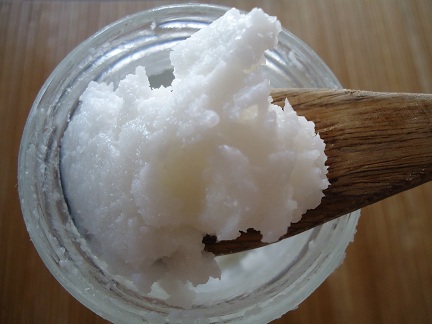


Now you may be remembering all those times you've heard that saturated fat will destroy your heart, clog up your veins, and in general destroy your circulatory system.  I'll say this right now:  there is no proof that the saturated fats in coconuts will cause any harm on bad cholesterol levels or overall heart health, and in fact there is much evidence to suggest the contrary.  Trans fats from hydrogenated oils are the real killers out there, not the natural saturated fats in coconuts.  In fact, by consuming the fats in coconuts, you're actually encouraging your body to use fat as an energy source, which may help you shed a few pounds.  And to all who are still in the dark about the powers of fat, it's an EXCELLENT energy source.  It's actually better than any carbohydrate, because it has more energy per unit of mass.  Cool, right?

But coconuts don't just stop at the fat benefits.  They're also rich with vitamins C, B1, B2, and B3.  This convenient vitamin package will help boost immune system health and support a fast burning metabolism which will keep you energized, strong, and of course, lean.  Coconuts are actually quite low in sugar compared to most fruits as well, which is a welcome change from the normal enormous insulin spike you get when eating apples, grapes, or bananas.  In terms of overall calories, coconuts are actually a very calorie dense food, and I bet you can guess why:  the fat of course!  This means they're an AWESOME energy source, but make sure you plan your daily diet accordingly, because a coconut could bump you over your daily caloric goals quite easily.  Here's the nutritional information for a coconut:

Nutrition Facts
Serving Size 1 cup of shredded
 
Amount Per Serving
Calories from Fat 241
Calories 283
 
% Daily Values*
Total Fat 26.79g41%
 Saturated Fat 23.758g119%
 Polyunsaturated Fat 0.293g 
 Monounsaturated Fat 1.14g 
Cholesterol 0mg0%
Sodium 16mg1%
Potassium 285mg 
Total Carbohydrate 12.18g4%
 Dietary Fiber 7.2g29%
 Sugars 4.98g 
Protein 2.66g 
 
Vitamin A 0%Vitamin C 4%
Calcium 1%Iron 11%
*
That's a bunch of calories, eh?  But don't be afraid, believe me it's worth it to fit coconut into your diet.  It's extremely good for you and tastes absolutely delicious.  It's definitely one of the most interesting fruits out there, and will always be one of my favorites.  But remember though, if you ever travel to Hawaii, or another place where coconuts grow rampant, that more people are killed each year by a coconut to the head than are killed by sharks.


And with that, I say, GOOD LUCK!

References:


Monday, June 25, 2012

The "B" Stands For "BEAST"


We all know it's important to get our vitamins and minerals.  Heck, we've been told that by our parents since the dawn of our days.  They were right to say so, vitamins are crucial to essential bodily functions and maintaining a healthy physical and mental state.  Every vitamin has a different job to do within the body (while some do overlap), so it's important to get a broad spectrum.  Some vitamins are water soluble, and some fat soluble.  The water soluble ones you can pretty much take as much as you want (though huge doses usually aren't necessary), where as fat soluble ones you don't want to overdose on, as that can have some nasty consequences.

Now you remember I wrote an article on why multivitamins aren't necessary in a highly clean and varied diet, and I still stand by that statement.  However there are a few vitamins that are definitely good to supplement if you live a certain kind of lifestyle.  For us gym-goers, who work out hard and heavy on a regular basis, one of the most important vitamins to supplement is vitamin B.

Why vitamin B?  Well, in Olympic weightlifting, there is an enormous toll taken on your central nervous system.  In fact, we lifters are almost never sore muscularly, as we have highly advanced recovery diets, massages, cold and warmth techniques, stretches, and other methods to ensure our muscles are ready to go another round only a few hours later.  The main issue with the sport is allowing the central nervous system to recover, which if left to its ways is a very slow process.  Pretty much the best methods of CNS recovery are: sleep, eat, and vitamin B.  That's right, vitamin B is actually quite helpful when it comes to restoring CNS function in a short amount of time.

There are a couple ways to effectively supplement vitamin B.  The first is to actually inject a vitamin B complex directly into the bloodstream.  This ensures extremely efficient absorption, and many people who get vitamin B injections say they feel like superman the next day.  Joint pain is gone, they feel wide awake, and usually cannot WAIT to lift.  Believe me, that's quite the change from the normal "zombie" state associated with lifting.


The second way is to orally supplement vitamin B.  While a B complex is best, I personally usually supplement very large doses of vitamin B-12, only one part of the complex.  B-12 is virtually impossible to overdose on, and therefore it's easy to take a LOT of it and ensure your body has all it needs.  Any extra will just come out in urine.  A word of caution though, just B-12 will not completely repair your CNS completely by itself (although B-12 by itself can have a large effect), it needs support from other B vitamins such as B-5, B-6, B-2, etc.  This is why it's important you do get other B vitamins in your diet, either through food or separate supplementation.  A person is much more likely to overdose on other B vitamins such as B-6, so don't take it in as large a quantity as you would B-12.

Oral methods of supplementation include pills/capsules, or liquid.

Here's a lot more information on B-12 and the entire B complex via the Livestrong.com site:

http://www.livestrong.com/article/410513-b-complex-vs-b12/

Now as you may have guessed, Olympic weightlifters aren't the only people who experience CNS burnout.  Anyone who hits the gym on a regular basis is at risk of "burning out," especially if you're giving it your all in the gym like you should be.  Don't be afraid of getting burnt, but try to avoid it if possible.  Get plenty of sleep, keep your diet up to snuff, and make sure you supplement your B vitamins.  They go a LONG way in ensuring you're able to perform at your best on a constant basis.


There's one more little thing I'd like to discuss about vitamin B-12.  The vitamin can be derived from two main sources, Cyanocobalamin and Methylcobalamin.  There's a rumor out there that the Cyanocobalamin version of the drug is harmful to your body because it's bonded to a Cyanide molecule.  There have been studies done on this claim, and all have shown that Cyanocobalamin has NO noticable effect on your body whatsoever.  Zip.  Zilch.  None.  This is good, because this version of the drug is MUCH cheaper than the Methylcobalamin version, specifically because it's synthetic.  It's also more stable, and more efficient at getting into your body.  

Don't want to take my word for it?  Here's an article describing exactly the same thing:


Before I end, I'll just add a little personal note in.  The very first night I took a 1500 mcg B-12 pill, I woke the next morning feeling SOOOO much better than I had the day before.  The feeling of mental fatigue and cloudiness was absolutely GONE.  B vitamins are an extremely powerful thing.  Take advantage of what they can do for you.  They're cheap, effective, and boy do they let you perform at your best.

Lift hard, lift often, be a BEAST, and as always, GOOD LUCK!

Sunday, October 23, 2011

Vegetables: To Cook or not to Cook?


I've always been intrigued by the debate about which is healthier:  Cooked vegetables or raw vegetables.  The claim by many is that cooking vegetables removes significant levels of the nutrients in them, therefore they become less beneficial to the human body.  The other side of the argument (which I tend to lean toward) is the fact that we as humans have weak digestive systems, and are unable to process much of the raw, fibrous plant matter contained in uncooked vegetables, so while even though more nutrients may be present in raw veggies, we can't actually absorb them.  There's good data for both sides of this argument, and many reasons to mix it up and have both cooked and raw veggies in your diet.

Reasons to cook vegetables:

1.  Easily accessible nutrients:  Across the board, all the vitamins present in vegetables (A, B1, B2, B3, C, E, etc.) tend to be more easily absorbed because the vegetables are softer, and easier to digest.  This means theoretically that while cooked vegetables have a tad less of each vitamin compared to their raw counterpart, you end up getting MORE of those leftover nutrients than you would have gotten originally if you'd just eaten the vegetable raw.

(Here's a chart displaying the amount of each main vitamin in various vegetables when they're both raw and cooked:  http://www.beyondveg.com/tu-j-l/raw-cooked/raw-cooked-2f.shtml)

2.  Beta Carotene- This extremely powerful nutrient present in many vegetables (especially carrots) is absorbed much more readily when the vegetables are lightly steamed.  Beta Carotene converts to Vitamin A in the body, which will aid in eyesight (ever heard the myth that if you eat enough carrots you can see in the dark?)

3.  Antioxidants- Same deal here.  Useful antioxidants like carotenoids and ferulic acid are utilized by the body much more effectively if vegetables are steamed or boiled.   

4.  They taste better!  At least this is what the majority of people agree upon.  I am partial to cooked vegetables myself, they're quite delicious, warm, easy to chew, and the flavors are much more palatable.  My friends would be a little stunned to see this because I'm usually munching on a pack of raw baby carrots or a stick of celery.  However if given the choice, I'll choose cooked every time.

5.  You can eat more of them!  Cooked veggies aren't as fibrous as raw veggies, and therefore won't fill you up as fast.  That means you can cram more of those useful nutrients down your gullet before your body tells you to stop.  On a muscle building diet, this is a must.  

6.  Anti nutrients are destroyed:  These things won't kill you, but they definitely won't help you.  But what exactly is an anti nutrient?  A good analogy is an apple seed.  The seeds are the valuable part of the apple, and the apple tree doesn't want you to eat its future offspring, therefore apple seeds have evolved to contain traces of cyanide.  Raw grains contain many anti nutrients, and the amount you absorb can be reduced by cooking them before consumption.  This destroys a good portion of those pesky little devils, and the analogy holds true with vegetables (mostly beans) as well.  


Reasons to leave them raw:

1.  They fill you up!  Raw vegetables are extremely fibrous, especially greens like lettuce, broccoli, celery, and spinach.  These foods all are extremely low calorie, healthy snacks that can fill your belly in a heartbeat if you're having one of those hungry hungry hippo moments.  Try a cup of raw broccoli sometime.  No, it may not taste great, but you'll definitely feel like you've eaten a significant meal.  

2.  Easy to snack on:  Raw veggies are easy to pack up.  Try packing a bag full of carrots, celery, pepper slices, and broccoli and I guarantee you'll end up with a filling snack that didn't take more than two minutes to make.  Raw vegetables are firm and robust, and won't be easily crushed.  They're relatively dry as well, so you won't soak the rest of your lunch by accident.  Plus, raw vegetables give that satisfying crunch, and if you can get used to the natural taste, you're golden.  

3.  More Vitamin C:  This vitamin tends to be the one that gets the bad end of the stick when veggies are cooked.  Much of the vitamin C is destroyed by steaming, boiling, or frying, so if you're looking for a little more in your diet (and you should be) then crunch on a few raw veggies today.  

4.  They make your body work!  Have you ever heard of negative calorie foods?  Well stop thinking about them right now, because there are huge debates on whether they exist or not, and the evidence is leaning toward a big fat NO.  However that doesn't mean your body isn't expending large amounts of energy to digest raw foods such as celery and broccoli, and the few calories that are in those foods make them great choices to give your digestive system a workout.  This isn't a pointless endeavor, a healthy digestive system can save you from all sorts of health troubles later in life.  The fiber in those tomatoes will only do you good!  

I say have them both ways!  Veggies are good for you no matter if they're steamed, boiled, fried, cooked, or right off the vine.  I love the way they taste each way, and once you try a few I bet you'll like them too.  Buy some baby carrot packs and much on them at work, or on a walk, or while you're outside reading a book, or while you're cooking dinner, whenever, wherever however you like!  In my opinion, there isn't really ever a bad time to have some vegetables.  

Load those plates high, crunch into a few carrots, and enjoy!