Showing posts with label coconut. Show all posts

Tuesday, August 7, 2012

Coconuts: A Peculiar Fruit

Well there I go again, taking another couple week hiatus from typing my articles.  I'm sorry folks, summer is just a busy time for me.  I just got back from the trip of a lifetime to Kauai, Hawaii.  That's right, for 8 days I was immersed in the warm Pacific ocean, the constant cool Hawaiian winds, and more sunshine than my skin knew what to do with.  And there were fruits everywhere!!!  Trees with papayas, mangos, bananas, and of course, coconuts.  I'll let you in on a little secret:  Coconut is probably my favorite fruit of all time.  Something about the taste of it is just so incredible, and so heartily satisfying.  Getting some fresh coconut meat in Hawaii was a dream come true.  But the coconut isn't like your average fruit.  It's nutritional properties are quite unique, and while its still an extremely healthy food, its healthy in a different way than most other fruits.  In fact, the coconut is composed mostly of a substance you wouldn't think sounds very fruity: 

FAT!!!  

That's right, coconuts are composed of mostly fat. And not just any old fat, but that super scary crazy spine tingling SATURATED FAT!!!  OMG!!!  Crazy right?  Now stop freaking out for a second and let me explain something.  This saturated fat is very, very, VERY good for you.  I've said a million times and I'll say it again:  fat doesn't make you fat.  The fat in coconuts not only gives the fruit an amazing taste, but it also does many positive things for your body.  The saturated fats in coconuts (or specifically the oil in coconuts) isn't a long chain fatty acid like we find so often in products made with hydrogenated oils, but instead are medium chain fatty acids which behave quite differently.  These fatty acids have been shown to have anti-oxidant properties, as well as the ability to speed up your metabolism.  That's right, eat fat to burn fat, sounds great doesn't it?
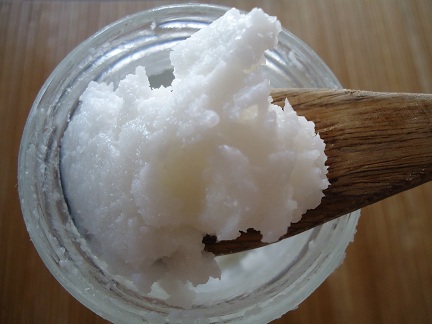


Now you may be remembering all those times you've heard that saturated fat will destroy your heart, clog up your veins, and in general destroy your circulatory system.  I'll say this right now:  there is no proof that the saturated fats in coconuts will cause any harm on bad cholesterol levels or overall heart health, and in fact there is much evidence to suggest the contrary.  Trans fats from hydrogenated oils are the real killers out there, not the natural saturated fats in coconuts.  In fact, by consuming the fats in coconuts, you're actually encouraging your body to use fat as an energy source, which may help you shed a few pounds.  And to all who are still in the dark about the powers of fat, it's an EXCELLENT energy source.  It's actually better than any carbohydrate, because it has more energy per unit of mass.  Cool, right?

But coconuts don't just stop at the fat benefits.  They're also rich with vitamins C, B1, B2, and B3.  This convenient vitamin package will help boost immune system health and support a fast burning metabolism which will keep you energized, strong, and of course, lean.  Coconuts are actually quite low in sugar compared to most fruits as well, which is a welcome change from the normal enormous insulin spike you get when eating apples, grapes, or bananas.  In terms of overall calories, coconuts are actually a very calorie dense food, and I bet you can guess why:  the fat of course!  This means they're an AWESOME energy source, but make sure you plan your daily diet accordingly, because a coconut could bump you over your daily caloric goals quite easily.  Here's the nutritional information for a coconut:

Nutrition Facts
Serving Size 1 cup of shredded
 
Amount Per Serving
Calories from Fat 241
Calories 283
 
% Daily Values*
Total Fat 26.79g41%
 Saturated Fat 23.758g119%
 Polyunsaturated Fat 0.293g 
 Monounsaturated Fat 1.14g 
Cholesterol 0mg0%
Sodium 16mg1%
Potassium 285mg 
Total Carbohydrate 12.18g4%
 Dietary Fiber 7.2g29%
 Sugars 4.98g 
Protein 2.66g 
 
Vitamin A 0%Vitamin C 4%
Calcium 1%Iron 11%
*
That's a bunch of calories, eh?  But don't be afraid, believe me it's worth it to fit coconut into your diet.  It's extremely good for you and tastes absolutely delicious.  It's definitely one of the most interesting fruits out there, and will always be one of my favorites.  But remember though, if you ever travel to Hawaii, or another place where coconuts grow rampant, that more people are killed each year by a coconut to the head than are killed by sharks.


And with that, I say, GOOD LUCK!

References:


Saturday, April 21, 2012

The Cooking Oil Guide


When it comes to throwing that fillet on the skillet, or frying up the tastiest stir fry this side of the moon, you're going to be using a little bit of oil in that hot, hot pan of yours.  I'm here today to tell you that not all oils are created equal, and while sure, any one of them might give you a nice browned fish or seared chicken, some might actually detract from the health factor that's inherently in the foods you're choosing.  Let's make sure you make the right choice when it comes to choosing an oil, OK?

In terms of your choices, they're actually quite varied.  Oils tend to be very high in calories due to their dense fat content, so as far as calories go, you definitely want to get the most bang for your buck.  So let's get started, and see which cooking oil might best suit your next meal:

Canola Oil:  When it comes to cooking in oil, you'd do well to avoid canola oil, despite it being cheap.  While it is very rich in polyunsaturated omega-6 fatty acids, it's an EXTREMELY processed oil that's formed through intense chemical processes.  It's basically an industrial product, and was actually initially intended for usage as a machine lubricant.  As you probably know by now, processed foods can do some serious harm to your body, and while I don't believe canola oil will destroy you single handedly, there are definitely quite a few healthier choices out there.


"Generic" Vegetable Oil (Soybean Oil):  Generic "vegetable oil" is kind of hard to define as one specific oil, but for the most part it's considered refined soybean oil.  When I say refined, that means, you guessed it, it's processed.  In fact, most generic vegetable oil is along the same lines as processed canola oil, in that the polyunsaturated fats it contains are in general too processed and "rancid" to actually be healthy for you.  They're not along the same lines as healthy polyunsaturated fats that come out of nuts, seeds, fish, and other similar foods.  Is vegetable oil unhealthy?  Not disgustingly so, but like I said for canola oil, there are better options out there.


Olive Oil:  Ah, here we go, the original "healthy" oil.  Olive oil is extremely good for you, in that it contains unprocessed, natural, healthful monounsaturated fats, and tons of antioxidants and polyphenols to boot.  Olive oil is great to fry in, especially extra virgin olive oil.  It has a remarkably delicious flavor that can be a fantastic addition to many dishes, and in my personal opinion is one of the best tasting oils out there.  The only downside to olive oil is that it has a relatively low smoke point, and therefore will burn in a pan over 350 F. With extra virgin olive oil, you can avoid this problem somewhat because it has a smoke point of a little over 400 F.


Sunflower Oil:  If you haven't tried sunflower oil before, I would definitely suggest doing so.  It's extremely good for you, very tasty, and very easy to cook with.  It's very high in vitamin E, and contains huge amounts of mono and polyunsaturated fats that are unprocessed (and therefore healthy for your body.)  There are three varieties of sunflower oil, high oleic acid, linoleic acid, and NuSun.  Depending on which type you get, you'll get different amounts of omega-3 and omega-6 fatty acid ratios, but in general you can't go wrong with any of them.  If you have to choose though, go with the NuSun variety, as it is the least likely to form harmful trans fats when heated.


Peanut Oil:  This is a tasty oil if you enjoy nuts.  I love the taste of peanuts, and therefore a little nuttiness in my food is most welcome.  Peanut oil is another natural, healthy alternative to processed oils, and is very high in monounsaturated fats and polyunsaturated, omega-6 fatty acids.  It also has a very high smoke point which means it can be used in recipes requiring high heat.  For the most part, peanut oil is also cheaper than olive oil, so it's a more economic choice for the average health oriented person.  It will impart a little of the nutty flavor into the foods you're cooking, but in my opinion it's quite an enjoyable flavor.


Macadamia Nut Oil:  This is a very interesting cooking oil, and in some ways a very "exotic" option for frying your food.  It's an extremely healthy natural oil, with not only huge benefits from monounsaturated fats (like almost every oil here), but also from containing large amounts of antioxidants such as squaline.  It also contains high amounts of vitamin E, a necessary addition to any healthy diet.  It can also help lower cholesterol due to its healthy fat profile (well, so can almost every oil mentioned, but I had to say it somewhere, right?)


Coconut Oil:  This oil is a little bit different from all the rest, in that it DOESN'T contain many unsaturated fats, and in fact is comprised of almost 90% saturated fats.  Don't worry though, this doesn't mean the oil is unhealthy.  In fact, coconut oil is one of the healthiest oils out there.  It has a high composition of lauric acid, a powerful antioxidant that is also very heart healthy and supports your immune system.  Coconut oil, despite being high in saturated fat, can also help to LOWER bad cholesterol.  It's also quite tasty and can add an exotic flair to any stir fry.  Coconut oil is blatant proof that not all saturated fats are bad, and that they don't deserve the devilish reputation they've been given.


Hopefully that list gave you a little bit better idea of what exactly to look for when buying oil.  In all honesty, it's hard to go wrong when choosing a cooking oil, so don't stress.  Even canola oil, while processed, won't degrade your health, you just won't be getting some of the fantastic nutritional benefits available in other, more natural cooking oils.  Switch it up a little bit, try a new oil every time you get a chance, I guarantee they can really make your meals quite interesting, flavorful, and add a whole new layer of health benefits.

Keep that pan oiled, and those veggies sizzling.  Good Luck!