Showing posts with label you. Show all posts

Tuesday, August 7, 2012

Coconuts: A Peculiar Fruit

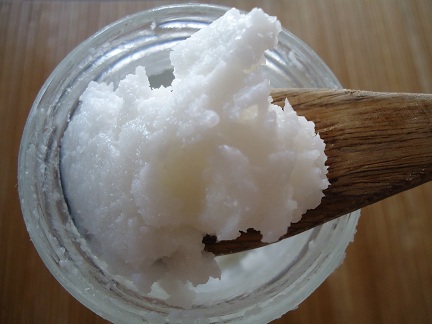
Well there I go again, taking another couple week hiatus from typing my articles.  I'm sorry folks, summer is just a busy time for me.  I just got back from the trip of a lifetime to Kauai, Hawaii.  That's right, for 8 days I was immersed in the warm Pacific ocean, the constant cool Hawaiian winds, and more sunshine than my skin knew what to do with.  And there were fruits everywhere!!!  Trees with papayas, mangos, bananas, and of course, coconuts.  I'll let you in on a little secret:  Coconut is probably my favorite fruit of all time.  Something about the taste of it is just so incredible, and so heartily satisfying.  Getting some fresh coconut meat in Hawaii was a dream come true.  But the coconut isn't like your average fruit.  It's nutritional properties are quite unique, and while its still an extremely healthy food, its healthy in a different way than most other fruits.  In fact, the coconut is composed mostly of a substance you wouldn't think sounds very fruity: 

FAT!!!  

That's right, coconuts are composed of mostly fat. And not just any old fat, but that super scary crazy spine tingling SATURATED FAT!!!  OMG!!!  Crazy right?  Now stop freaking out for a second and let me explain something.  This saturated fat is very, very, VERY good for you.  I've said a million times and I'll say it again:  fat doesn't make you fat.  The fat in coconuts not only gives the fruit an amazing taste, but it also does many positive things for your body.  The saturated fats in coconuts (or specifically the oil in coconuts) isn't a long chain fatty acid like we find so often in products made with hydrogenated oils, but instead are medium chain fatty acids which behave quite differently.  These fatty acids have been shown to have anti-oxidant properties, as well as the ability to speed up your metabolism.  That's right, eat fat to burn fat, sounds great doesn't it?


Now you may be remembering all those times you've heard that saturated fat will destroy your heart, clog up your veins, and in general destroy your circulatory system.  I'll say this right now:  there is no proof that the saturated fats in coconuts will cause any harm on bad cholesterol levels or overall heart health, and in fact there is much evidence to suggest the contrary.  Trans fats from hydrogenated oils are the real killers out there, not the natural saturated fats in coconuts.  In fact, by consuming the fats in coconuts, you're actually encouraging your body to use fat as an energy source, which may help you shed a few pounds.  And to all who are still in the dark about the powers of fat, it's an EXCELLENT energy source.  It's actually better than any carbohydrate, because it has more energy per unit of mass.  Cool, right?

But coconuts don't just stop at the fat benefits.  They're also rich with vitamins C, B1, B2, and B3.  This convenient vitamin package will help boost immune system health and support a fast burning metabolism which will keep you energized, strong, and of course, lean.  Coconuts are actually quite low in sugar compared to most fruits as well, which is a welcome change from the normal enormous insulin spike you get when eating apples, grapes, or bananas.  In terms of overall calories, coconuts are actually a very calorie dense food, and I bet you can guess why:  the fat of course!  This means they're an AWESOME energy source, but make sure you plan your daily diet accordingly, because a coconut could bump you over your daily caloric goals quite easily.  Here's the nutritional information for a coconut:

Nutrition Facts
Serving Size 1 cup of shredded
 
Amount Per Serving
Calories from Fat 241
Calories 283
 
% Daily Values*
Total Fat 26.79g41%
 Saturated Fat 23.758g119%
 Polyunsaturated Fat 0.293g 
 Monounsaturated Fat 1.14g 
Cholesterol 0mg0%
Sodium 16mg1%
Potassium 285mg 
Total Carbohydrate 12.18g4%
 Dietary Fiber 7.2g29%
 Sugars 4.98g 
Protein 2.66g 
 
Vitamin A 0%Vitamin C 4%
Calcium 1%Iron 11%
*
That's a bunch of calories, eh?  But don't be afraid, believe me it's worth it to fit coconut into your diet.  It's extremely good for you and tastes absolutely delicious.  It's definitely one of the most interesting fruits out there, and will always be one of my favorites.  But remember though, if you ever travel to Hawaii, or another place where coconuts grow rampant, that more people are killed each year by a coconut to the head than are killed by sharks.


And with that, I say, GOOD LUCK!

References:


Saturday, July 7, 2012

Eat Fat Get Thin


OK, just a warning, I'm about to blow your mind.  That's right.  You will soon be so astounded that you may have to rethink all you thought you knew about dieting, losing weight, and gaining muscle.  Also, what I'll say kind of goes against some advice I've been giving (but not really) so far.  Are you ready?  Are you sure?  You say yes...but I'm still thinking you're going to be pretty surprised.

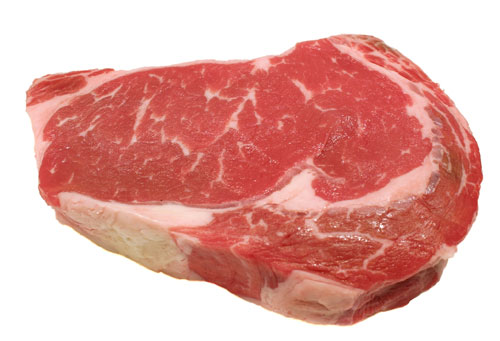
Remember when people told you to eat only lean meats?  How about when your mother and father told you at the dinner table to cut off all that fat on the side of the steak?  That globby white stuff that was so delicious, yet everything you ever read said that it would kill you?  Destroy your heart?  Clog your veins?  REMEMBER THAT??

Well I'm here to tell you that...surprise surprise..............THEY'RE WRONG!!!!!!  THAT STUFF IS ACTUALLY GOOD FOR YOU!  Imagine with me for a second.  Your distant ancestors, the cavemen of ancient times, survived on meat, and lots of it.  There was no sort of "dieting" going on back then.  If you were a vegetarian, you died.  If you refused to eat meat because it wasn't "lean" enough, you died.  You ate when there was food.  That's that.  Now cavemen didn't live very long, I'll give you that, heck their lifespan was only about half of what ours is now, at best.  But evidence shows that's not because of their diet, its more because of, well, predators, disease, and other misfortunes either brought on by nature or...stupidity.  In fact their diets were pretty darn good for what they needed to do, which was a LOT in one day.  Run, hunt, swim, climb, jump, run some more, all on nothing but raw foods and meats.  Not so bad, eh?


And when it comes down to it, the men of ancient days ate a LOT of saturated animal fat.  Did it cause them heart attacks and clogged veins?  Nope.  Saturated animal fat is a remarkably powerful source of energy, and kept them running hard all day.  And despite people thinking it'll clog your system and kill you in a few years, they're completely wrong.  It's a complete MYTH that saturated animal fat destroys your heart and circulatory system, as is summed up conveniently in this quote:

"A hundred years ago, fewer than than one in one hundred Americans were obese, and coronary heart disease was unknown."

One hundred years ago, people WEREN'T cutting the fat off their meat.  Foods were more natural, more pure, more RAW.  cholesterol levels were low, plaque in the veins didn't stick, and hearts beat more strongly.  It's simple, yet baffling at the same time.  But remember this:  People with the highest amount of saturated fat in their diet actually have the lowest risk of heart disease.  CRAZZYYY...RIGHT?

So why is saturated animal fat actually good for you?  Well instead of getting deeply into everything, I'll just list a few immediate benefits.  Saturated animal fat has been PROVEN to promote a healthy circulatory system, support immune system strength, allows for skin to remain healthy and vibrant, is an EXCELLENT energy source, and also.....here's the kicker...PROMOTES WEIGHT LOSS.

So if this stuff is so great, why are we so afraid of it?  Well in the 90's, there was a big movement called the "fat scare."  Just because the word fat means both a state of unfortunate bodily situation AND is a piece of food composition, food companies linked them up and began marketing "low fat" foods to get more customers.  They took fat out, sure, but guess what they put in instead.  Highly refined carbohydrates such as starches and sugars.  THOSE are what made America fat.  Yes, that's right, carbs make people fat, not fat itself.  Now remember I'm not against carbs, not by a long shot.  But if you're going to eat carbs, make sure they're quality, complex carbs.  Whole wheats and grains, as unrefined as possible.  Ya feel me?


Now time for the disclaimer.  Notice how the main subject of this article is saturated ANIMAL fat, not just saturated fats in general.  When it comes to sat fats, they are not all created equal.  Processed, man made fats do not have the same kind of benefit as the pure saturated fats from animal meat.  In fact, many processed fats WILL raise your bad cholesterol and CAN lead to heart problems.  Avoid trans fat and other processed foods rich in saturated fat, as they will do you no good.

So how would I suggest you change your diet?  Well, first of all, don't go crazy.  Don't worry about eating some of the fat on that dinner meat, as it will only do you good when kept within calorie limitations.  Now remember that fat is a great energy source for a reason, which is that it contains the most caloric content per unit of mass.  What does this mean?  That means that if you have 6 oz of super lean chicken, and 6 oz of fatty beef, the fatty beef will have more calories and less protein, as some of the mass is taken up by fat instead of muscle.  Make sense?  This means that if you're looking for the largest protein content, lean meats are still the way to go.  Does this mean that you should be afraid of the fatty meat?  I think we've already covered this........no you shouldn't.  It all just depends on what you want.

So there.  Your mind is blown.  Now go eat some fat.

GOOD LUCK!!!!


References:
http://yuru.com/blog/2011-01-were-cavemen-healthier
http://articles.mercola.com/sites/articles/archive/2011/09/01/enjoy-saturated-fats-theyre-good-for-you.aspx
http://articles.mercola.com/sites/articles/archive/2010/10/22/coconut-oil-and-saturated-fats-can-make-you-healthy.aspx


Friday, May 25, 2012

Food Worship #14: The Kidney Bean

Sorry folks, I know it's been a while since you've heard from the Food Guru.  I've been quite busy, but finally have a little time to sit down and discuss with all of you another of my favorite foods.  As you may or may not know, I'm a huge fan of beans.  They're a fantastic source of carbohydrates, and are absolutely DELICIOUS.  They come in all shapes and sizes, and I could honestly go for a few days rambling on about each one regarding its benefits, nutritional value, and why YOU should be eating them.  But today, I must choose only one.  And so I've made it my second favorite, as I've already written about my number one (the chickpea, or garbanzo bean.)  Today's bean of choice is....*drum roll*.....the humble kidney bean.


These medium sized beans are a little bit funny looking, being shaped like, well, kidneys.  But I assure you, they're one of the best foods you could ever put in that ever improving body of yours.  Not only are they delicious, but they have a whole host of powerful health benefits that will without a doubt make you feel (and look) absolutely amazing.  As per the usual routine, I'll now provide several bulleted categories of beneficial aspects of the bean, as any professional blogger would (despite me not actually being professional...yet.)  Let's get started, shall we?

Fiber:  First and foremost, as with a LOT of beans, kidney beans are very rich in fiber.  Fiber can help lower cholesterol and greatly improves digestive health.  It also makes your body more efficient at digesting the other foods in your diet and utilizing the nutrients in each one.  In all honesty, you want to get as much fiber in your diet as you can, ESPECIALLY if you have a high protein diet (as any muscle-head would.)  Fiber is your friend.  One cup of kidney beans will have about 220 calories and a whopping 16 grams of fiber!  That is a LOT of fiber, and will do your body a LOT of good.

Complex Carbs:  If you're looking to build muscle and have long lasting, powerful energy throughout the entire day, you need a lot of good quality, slow digesting complex carbs. In terms of carbohydrates, you can't get much higher quality than kidney beans.  They'll provide your body with exactly the energy you need, and will promote muscle growth and glycogen replenishment.  Unlike sugary carbs, complex carbs will NOT provoke as aggressive insulin response by your body and therefore will allow you to avoid unnecessary fat gain.  Kidney beans are like high octane, awesome quality fuel for your body, so eat up!


Stabilize Blood Sugar:  Not only are fiber and high quantity of complex carbs an excellent source of digestive health and long lasting energy, they also both help stabilize blood sugar, leading to less fat gain (if you're bulking up), or easier fat loss (if you're slimming down.)  Low and stable blood sugar levels are crucial to a healthy diet and trim figure, especially as you age.  

Protein Packed:  Kidney beans are absolutely LOADED with protein.  One cup has about 14 grams of protein, and while the beans themselves don't provide a complete amino acid profile (the protein in the beans isn't immediately available to your body for muscle building), when the beans are combined with a good whole grain, the amino acid profile can be completed and you'll get all the benefits of that hearty, protein packed legume.  Want the guns to impress the ladies?  Grab yourself a can of kidney beans and dig in.  

Nutritional Profile:  To wrap the rest up into one little section, kidney beans have a great nutritional profile overall.  They're very low in saturated fat, very low in sugar, and of course, if you buy the right ones, are all natural.  I love the canned beans, which have all the same nutritional benefits, but unfortunately with a bunch of added sodium.  If you get canned beans (which again, is completely FINE), make sure to rinse them thoroughly before consumption to wash the majority of that salt right down the drain.  Easy enough, right?

Here's the nutritional information for canned kidney beans:

Nutrition Facts
Serving Size 1 cup
Amount Per Serving
Calories from Fat 8
Calories 218
% Daily Values*
Total Fat 0.87g1%
Saturated Fat 0.128g1%
Polyunsaturated Fat 0.484g
Monounsaturated Fat 0.069g
Cholesterol 0mg0%
Sodium 873mg36%
Potassium 658mg
Total Carbohydrate 39.91g13%
Dietary Fiber 16.4g66%
Sugars 0.56g
Protein 13.44g
Vitamin A 0%Vitamin C 5%
Calcium 6%Iron 18%
*Percent Daily Values are based on a 2000 calorie diet. Your daily values may be higher or lower depending on your calorie needs.

Nutrition Values are based on USDA Nutrient Database SR18
(Lots of sodium if left un-rinsed, so make sure to remember that step.)


All in all, kidney beans are a must-eat if you're at all concerned with health, fitness, or general well being.  They're absolutely delicious, and go well in all sorts of recipes.  Personally though, I love just eating them plain with some good spicy seasoning next to a piece of tilapia and some natural almonds.  YUMMY!  They're cheap, accessible, and ridiculously healthy.  Pick some up ASAP!


Love the kidney bean, a magical fruit, and as always, GOOD LUCK!


References:

Saturday, April 7, 2012

Pushing Through Fatigue: Don't Be A WIMP!


It's been a while since my last article, and for that I apologize.  School has kept me quite busy, especially as the semester is wrapping up.  But today, I wanted to address a topic I see far too often among my friends looking to get healthy, fit, strong, ripped, or whatever else you might want to call it.  And that, of course, is the topic of fatigue.  You know, tiredness, soreness, yawning-ness....yeah I just made that word up.  But you know what I mean.  It's that feeling you have the day or two after a really hard workout, where you crawl out of bed, open your eyes, and realize that you want nothing more than to skip today's scheduled workout and curl up on the couch with some chocolate milk and a bowl of cereal.  Your muscles hurt, your brain can't think, and you feel so inflexible that it wouldn't be out of the question to attempt to loosen your muscles with a rolling pin.  So what should you do?  You know you have to work out -- you have a goal you have to meet.  But you're sooo tired, and maybe your body is crying for rest.  Which should take priority?  Your long term goal, or your aching back?

Well, honestly, it depends.  Sure, there are times when you should take an unscheduled day off and occupy the couch like it's your J-O-B.  But, my loyal readers, you won't be happy with what I'm about to say (or maybe you will, I don't really know.)  When it comes down to it, THOSE TIMES ARE FEW AND FAR BETWEEN.  If you've been on your workout plan for a while, and it's been working, your body probably can handle the workout for that day, even if it doesn't feel like it.  Heck, I work-out 9 times per week, nearly three and a half hours a day (two sessions.)  If I'm not walking into the gym a complete zombie, then I know that day will be absolutely fantastic.  When push comes to shove, you NEED to learn how to push through fatigue if you're going to get anywhere fast in your workout.  If it's not your rest day, it's time to push yourself to your max.  Will it be the same maximum level that you had on a good day?  Probably not.  But as long as you're giving it your all, that's enough.

But I can hear you yelling at me "WHY!?!  Why should I force my way through the crappiest, most painful feelings I've ever known!?!  What are you doing to me??"

First of all, calm down.  Second of all, I'm going to ask you, as politely as possible, to suck it up.  Listen, lifting weights hurts.  It makes you big, strong, and ripped, but it hurts.  It's fun, BUT IT HURTS!  If you're not feeling at least a little pain the day after, you're not working hard enough.  And to answer the question as to why you should push through the pain, the answer is quite simple:  It forces your body to adapt to heavier, more frequent loading.  It doesn't just "suggest" to your muscle fibers that they grow bigger and stronger, it FORCES them too.  If you're pushing your muscles to the point where they start screaming "NO MORE!!!" to you the next day, then laugh in their face and push them harder.  If you do, I can almost guarantee two things will happen.

FIRST:  You will make GREAT progress.  Heck, I'd say have of the personal records I've set have been on days where I was so sore and tired I couldn't think straight.  Something about fatigue brings out the animal in people.  You tell me, would you rather lie on your bed, nursing your wounds?  Or lift heavier weight for more reps than you ever have before?


SECOND:  Your muscles will probably just shut up and work.  Sure, you may be in pain now, but unless it's sharp, violent, strained-a-muscle type pain, it will go away when you start forcing your muscles to lift weight again.  You will almost always be sore somewhere if you're working out at least 3 days a week.  It's futile to avoid working sore muscles, and it's not harmful if you do lift with the same muscle groups again even while they're recovering.  Like I said before, this will force even greater muscle gain, and you'll see quick progress.  Once you warm up and start lifting, I can almost guarantee all that pain and fatigue will take a back seat to the task at hand, which of course is getting bigger, stronger, faster, and leaner.  Sounds great right?


So working through some of the worst fatigue can give you some of the best gains.  We know this now.  But how can we avoid some of that pain and fatigue in the first place?  Well, if you spend a little more time devoted to active recovery work, I bet there won't be nearly as many days where it hurts to pick up your coffee mug, or takes actual effort to keep your eyelids open.

Stretch:  After a heavy workout, static stretch your muscles thoroughly, ESPECIALLY your legs.  The bigger the muscle, the more frustrating it will be to combat post workout tightness the next day.  You can keep things loose and flexible by spending about 10 minutes after your workout really stretching those muscle fibers, which will aid in recovery speed, and will actually help strength gains overall.  Plus, you'll be more flexible, allowing for better form and less chance of injury.

Massage/foam roll/lacrosse ball:  If you can get someone to give you a massage, do it.  If you can't (which probably will be the case), do some foam rolling on your sore muscles, or if you're feeling frisky use a lacrosse ball and really dig in.  Caution, THIS WILL HURT!  And when it hurts, you know you're doing it right.  Massage goes an extraordinarily long way toward helping muscles recover.  It loosens them up, and encourages fresh bloodflow to places that usually don't get too much, especially if they're tight as a drum.  This bloodflow will allow the muscles to receive better nutrition and hydration, and will help them to grow bigger and stronger, faster.  After the massage/rolling session, I bet you'll feel a million times better too.

Lacrosse ball rolling...like foam rolling, except 10000 times more painful (and effective...)
Post workout nutrition:  This one is a well known technique, but should NEVER be overlooked.  Immediately after a workout, consume a fast acting protein and a few carbohydrates to ensure your muscles IMMEDIATELY have the nutrients they need to start rebuilding themselves.  This will go an extremely long way in ensuring you aren't sore the next day, or at least not nearly AS sore.

Diet/nutrition in general:  If you're working yourself to your max, you need to keep your entire diet taylored toward recovery and growth-- lots of protein, quality carbs, and healthy fats.  Don't cut calories down, or you'll definitely feel it in your muscles and general level of fatigue.  Clean foods go a long way, make sure to eat lots of chicken, vegetables, fruits, and fats like nuts and oils.  Heck, what am I talking about, I've got near a million articles all on food.  CHECK THEM OUT!


Pre-workout supplements:  Sometimes, even after everything, you need a little kick in the butt.  A good pre-workout supplement can supply this with a respectable dosage of caffeine, nitric oxide, and creatine, which when combined give you a flood of energy, usually more than enough to kick you out of your funk and into lifting mode.  I would suggest Cellucor C4, or Assault by MusclePharm.  Both great supplements.

Fatigue, annoying yes, crippling?  NO.  Of course, it's up to you when you hit the gym.  But I'm here to tell you that your body isn't always right when it says you're too tired to hit the heavy stuff.  In fact, it's usually wrong (not ALWAYS, but usually.  You'll have to find your own threshold, but again, usually it's MUCH higher than people think.)  Push through the pain and see great results.  Now how can I hammer this point home?  Hmmmm....

Don't be a WIMP!

Good Luck!


Saturday, March 31, 2012

Red Meat: Friend or Foe?


No matter your involvement in the health and fitness field, I'm willing to bet that at some point in your life you've heard that red meat does nasty things to your body.  It has been claimed to increase mortality rate in all sorts of ways, including increased risk of cancer, heart disease, and diabetes.  Those are some pretty hefty claims, all due to the good ol' moo cow.  But let's look at this a little more closely, and try to shed a light on red meat.  You may be surprised to discover that it's not the killer it's been made out to be.

Firstly, I know there have been many studies done on the correlation between red meat and increased mortality.  But every study I come across doesn't quite hold up to the claim that red meat is the actual reason the test subjects died an early death.  In fact, it's virtually impossible to prove that red meat is the reason for premature mortality.  Sure, it's associated.  But hey, if most of those test subjects were on the average American diet of fatty meat and high carb-loaded, chemical packed, sugary junk, then don't you think the latter might have had a bit to do with it?  And what about genetics?  There are just too many factors to blame it all on red meat.  Don't get me wrong, there's some bad red meat out there, but is all red meat inherently dangerous?  Heck no.  Let's look at what makes up the difference between healthy red meat, and the nasty crap.

First thing you should know.  When you eat an animal, you eat parts of what that animal has ingested.  You're getting a little taste of its diet history, and that may be good, or bad.  If you're eating venison, I wouldn't worry too much, as deer tend to have about the cleanest diets going.  If you're eating a cheap cut of beef though, I'd be a little wary, as most of the cheap stuff was fed feed corn and antibiotics on a daily basis in order to make the cows as big, meaty, and profitable as possible.  When fed corn, the cow puts on a lot of excess fat, which marbles (or interlaces) with the actual muscle, making the cuts absolutely delicious, but packed with saturated fat.  The antibiotics most cattle are given have two distinct purposes: First, they prevent the herd from contracting common diseases, and destroying profit.  Second, smaller doses actually cause the animal to gain weight, which INCREASES profit the farmer obtains at slaughter.  Cows are also given growth hormones which...well...cause growth.  All this equates to more meat and more money.


Unfortunately for us, these chemicals remain in the cuts of meat when we consume them, and they don't do our bodies any favor.  And THAT, my friend, is why red meat is bad for you.  There isn't any curse in the meat itself which causes health problems.  In fact, apart from the chemicals, red meat is actually very, very nutritious.

Protein:  Red meat is packed with protein, and has always been a favorite of the muscle building crowd.  In fact, lean ground beef is one of the most useful muscle building tools going.  A little less than a quarter pound of lean beef has about 25 grams of protein, which is pretty darn awesome.  Not to mention it's delicious, cheap, and readily available at almost any grocery store.  And to top it all off, the protein in red meat is very bioavailable, meaning your body can readily use that protein to rebuild muscle fibers with a high degree of efficiency.  Neat!

Vitamins and Minerals:  Surprisingly, red meat has a ton of vitamins and minerals that your body will love you for consuming.  It's extremely rich in B vitamins, and provides about 70% of the required value of B-12 in 100 grams.  It's also very rich in vitamin B-6, vitamin A, riboflavin, and niacin.  Red meat is also one of the best sources out there for both zinc and iron, and will provide about a quarter of the daily recommended value per serving.  Red meat is also extremely rich in selenium, providing about a fifth of the daily recommended value in one 100 gram helping.

Antioxidants:  That's right, red meat has antioxidants!  Actually, it's got a whole bunch, including generous amounts of glutathione, lipoic acid, carsonine, and anserine.  These substances have been proven to help maintain healthy blood sugar levels, act as "anti-aging" compounds, and help maintain healthy metabolic rate.

Fat:  Now you may think you know what's coming here, but prepare to be surprised.  Red meat doesn't just have saturated fat, in fact the majority of the fat in red meat is monounsaturated, and is of the same chemical construction as the healthy fats in olive oil.  It will lower LDL (bad) cholesterol and raise (HDL) cholesterol. The majority of the saturated fat in red meat is stearic acid, which will increase good cholesterol, but have no effect on bad cholesterol, resulting in only a small deficit in the "bad" direction.  The rest of the fat in red meat is polyunsaturated, and will lower bad cholesterol, and have no effect on good cholesterol.  All in all, about 70% of the fat in red meat is beneficial toward your desired cholesterol ratio.  Doesn't sound so bad, right?  Definitely not as bad as it's been made out to be.

So the real question is, how do you get all these health benefits without all the nasty hormones and fat associated with cheap cuts of beef?  What you need to look for in the grocery store is GRASS FED BEEF. Ground, grass fed lean beef is very low in unhealthy fats, packed with protein, and basically eliminates most of the marbled fat that exists within the meat itself.  Grass is a much healthier alternative for the cows, and by eating it the cows retain much less fat overall and build higher quality muscle.  The same can be said for pork, and you should look for grass fed, or pasture raised varities.  This will virtually ensure that the animal was healthier, and carrying less fat at the time of slaughter.

But wait, even if you choose a nice cut of grass fed meat, you're not out of the woods yet.  You should also make sure you look on the label for something like "no hormones" or "no antibiotics," to ensure you're getting meat WITHOUT all the nasty chemicals.  This will provide you with a healthy and fantastically delicious dinner which will definitely help you build some muscle and trim the fat.  Just be smart about your purchase, read the labels, know your red meat.

Here's a link to the FDA's list of labels that can be placed on food, and what you should look for depending on your goals:http://www.fsis.usda.gov/Factsheets/Meat_&_Poultry_Labeling_Terms/index.asp

Still scared of the myths you've heard about huge caloric content?  Let me brush that nonsense aside right now:


This is for lean, ground, grass fed beef.  Not bad at all.  I could fit that into so many diets I couldn't even come close to counting them all.  Don't be scared of red meat.

Hmmm...maybe I shouldn't have put this picture in...a little too cute...
Bottom line:  Red meat isn't inherently bad for you, and is in fact quite healthy in its natural state.  Don't be scared to eat it, and pay no attention to all the haters of red meat and all its glory.

Enjoy your food, love red meat, and as always, GOOD LUCK!


References:
http://www.eatthefatoftheland.com/red-meat.html
http://animalrights.about.com/od/animalsusedforfood/f/AntibioticsrGBH.htm
http://www.webmd.com/food-recipes/features/the-truth-about-red-meat

Friday, December 2, 2011

To Shake or not to Shake?


Whether you're new to the fitness scene, or a seasoned veteran in the gym, chances are you drink a protein shake at some point during your day (usually around your workout, though I've known some who decide to chug one any old time.)  If you've got a good brand of protein, I bet you love the shake, and I bet it feels great to give your body what it needs right after a tough workout.  You may have even seen some pretty good gains off of the stuff, both in the strength and looks department.  There's no doubt protein shakes are great fitness tools, and it's easy to see why so many are sold on them for daily usage.

But why stop at one?  I've known many people who decide they'd like to get bigger and stronger, and decide in order to do so they'll just stick another protein shake in their diet at some random point in their day.  And so now, they chug one protein shake after their workout, and one whenever they feel like it.  If they feel like they'd REALLYYY like some more muscle, they may even stick a third in there somewhere.  Heck, I've known some people to drink as many as 5-6 shakes a day, all in hopes to gain lean muscle mass quickly.  I don't care who you are, 5-6 shakes a day is a LOT of whey protein.  But still, what's the big deal, it'll work...right?

Eh...not so much.  Listen for a second.

What many people in the fitness world fail to realize is that whole food (actual meals, chicken, corn, beans, rice...etc...) still drastically outranks any protein shake in the nutritional department.  To start removing all those fantastic nutrients from your diet in exchange for a shake is a very bad idea, because you will start to leave yourself starved of most of the good stuff.  Your body wants whole food, and trust me it'll go a lot farther than a liquefied shake.  

Shakes just don't have the same kind of nutritional value as whole food.  Sure they've got a ton of protein, but they're lacking many essential nutrients to regular bodily function.  And you know what?  It may be confusing to hear, but in the muscle building department, protein ISN'T EVERYTHING.  You can overload your body with as much protein as you want, and your body will still only use a fraction of it.  Most of it will go right in and right out of your system, doing nothing but wasting your time and money.  Your body needs a very specific environment in order to build a lot of muscle as quickly as possible (which isn't very quick no matter what, mind you), and guess what's the easiest way to ensure you're providing this ideal bodily atmosphere?  EAT FOOD.  You need carbs, you need fat, you need natural, non-synthesized nutrients in order to help your body use all that extra protein you're giving it to its fullest potential.  I'll repeat again, if you're just drinking a ton of protein shakes, more than likely they're going in and washing right out.  


Food also has a thermic effect on the body.  This means that it requires energy to digest, where as shakes are predigested and absorb much more quickly into your system.  After a workout, this is great, because you get nutrients as fast as possible, but any other time of the day this isn't needed and is NOT an ideal scenario.  You need to work your digestive tract, and you'll burn more calories doing so anyway.  

There's also speculation about what excess protein supplementation can do to your kidneys.  Believe it or not your kidneys have to work pretty hard to filter all that junk out of the water it's dissolved in, and the more protein you take in, the more work they have to end up doing.  Will it cause kidney problems?  Probably not, especially if you're drinking enough water.  In fact I truly doubt you'll ever see any negative effects of protein shakes as long as you're not going overboard.  But ya know what?  It's something to think about, and in order to keep your kidneys healthy, and be safe rather than sorry, I'd suggest limiting your protein shake intake and increasing your water intake.  

And finally, DON'T BE AFRAID TO EAT.  It all comes down to the most effective meal (nutritionally) for the calories you're consuming.  Guess what, if you're trying to get a few more quality calories in, protein shakes are NOT the answer.  Sure they'll give you a ton of protein, but again, that protein will do diddly squat without other nutrients to support it.  Enjoy real food.  Try new recipes every day.  Give your body what it really needs.  Protein supplements are just that...SUPPLEMENTS...meant to be taken only when it is more convenient to do so (like right after a workout at the gym, where I doubt you have an entire kitchen setup to make a nice healthy meal right after that last set.)  Would I replace my post-workout shake with a real meal if I could?  You bet your bottom I would!  It'd probably do me a lot more good than some shake, no matter how delicious that shake is.  In fact, let me put this is bold:

TO SEE MUSCLE GAINS, YOU DO NOT NEED PROTEIN SHAKES.  YOU CAN GET BETTER GAINS OFF OF REAL FOOD THAN YOU COULD WITH ANY SHAKE ON THE MARKET.  


Here's my recommendation:  Drink 1-2 shakes a day, max.  Drink one after your workout, as this is the time your body needs it most.  If you leave your body starved after working it to the breaking point, you're completely screwing yourself over for any sort of gain.  The second shake you can drink when you want, but I'd suggest it in the morning, when your body is crying for food after not eating all night.  I have whey protein powder in my oatmeal, but hey, close enough.  Those two times are generally the most effective for protein absorption   If you can have a real meal instead though, do it.  Just make sure you're getting all your required nutrients.

Shakes are meant for convenience.  They are not an excuse to be lazy nutritionally.  Cook your food, plan your meals, design them to fit your caloric and macro nutrient needs.  Put some work into it!  You'll see better results in the long run, I guarantee.  


Keep eating, love those whole foods, and as always, good luck!

Sunday, October 16, 2011

The Basics of Clean

So, I'm going to introduce you to a new diet, and in all honesty, it'll be the only diet you'll ever need.

It's not radical, crazy, and frankly, it's not new at all.  It's been around forever.  It's called:

CLEAN EATING.

This term, unfortunately, means a lot of different things to a lot of different people.  And again I'll be honest, there's no way to determine the exact definition of what "eating clean" really mean.  But it's extremely easy to get the gist of it.  In fact by the end of this post, all of you should have a good idea of what clean eating really means in its broadest sense.

Here's my personal definition of clean eating:
  Eating food that has high nutritional value in correct, balanced quantities.

Pretty simple eh?  It really is, however a lot of people like to over-complicate it.  To make things a little easier, lets look at some different food groups (or components), and how to eat cleanly in each one.

Carbohydrates:  Eating cleanly in terms of Carbohydrates seems to be the place where most people really struggle.  Carbs are everywhere.  Bread, cheetos, veggies, fruits, desserts, cereal, etc.  They hide to some degree in all the food you consume.  I'll let you in on a secret though.  Carbs are NOT your enemy.  For some reason, many people think they are.  That's a flawed way of thinking, because your body needs Carbs for it's main energy source.  It's the fuel to that human engine of yours.

To keep things simple, let's establish first that there are two main types of carbs: Simple carbohydrates, and complex carbohydrates.  Simple carbs are called monosaccharides, or simple sugars.  When they are consumed, they are digested quickly and easily, and are readily used for energy.  Or at least, they should be. However, how many times after dessert have you actually expended all the energy which that sugar loaded brownie contained?  Not often, I'm guessing.  And that's where carbs come back to haunt you.  Unused Carbohydrates equates to wasted energy.  And guess where wasted energy goes.  That's right, your midsection.  


Complex Carbohydrates are Carbs that your body has a more difficult time digesting, and therefore the body will take a longer time and expend more energy digesting them.  These are "long acting" carbs that give you full, sustained energy for a long period of time, without the characteristic "sugar high."  Such carbs include vegetables, whole wheat breads, and oatmeal.  These carbs, overall, tend to be a little more "flexible".  When in doubt about carbs, it's usually safe to assume that complex carbs will be healthier in the long run.  Because they are digested over a long period of time, they do not as readily turn to fat.  Again this IS NOT ALWAYS TRUE, I'm purely making a broad generality.  Learn the rules first, then the exceptions.

So are simple carbs bad?  Absolutely not.  Fruits are comprised of mainly simple carbs.  They give you a good hit of energy without spiking blood insulin (I'll discuss this, the GI scale, and all related topics in a later post) to a high degree.  On a hike?  Bring an apple.  Tired at work?  Eat a banana.  Craving something sweet?  Have an orange.  Can you go overboard eating fruits?  Sure, but that's true for most anything.  It's pretty safe to say that if you're dying for a snack, a fruit is a very healthy, clean option.

Proteins:  Here we go guys.  MEAT MEAT MEAT.  Being an avid weightlifter, I for one am an enormous protein consumer.  We all know meat has protein, and protein builds muscle.  And at this point, I won't get any more into than that (who wants to hear a boring speech about amino acids and protein synthesis anyway right?).  I like to characterize the quality of a protein source with a few questions:  How dense is it (grams of protein per serving), how lean is it (how many calories per serving along with saturated fats, trans fats, and other undesirables come with that nice protein punch), and how readily is the protein absorbed by your body (whey protein has greater absorption than soy, etc.).

So without getting into too much detail, let me list a few of the best, readily available protein sources:  boneless and skinless chicken breast, turkey breast, lean cuts of beef, salmon, tuna, swordfish, whey, venison, and egg whites.

Some of the less optimal sources: cheap cuts of beef, pork, ham, soy, and basically any meat smothered in sauce and marinade.

I'm going to go back to fish for a second though.  I personally believe fish to be the best form of readily available protein.  Why?  Because there is a huge amount of protein per serving, with very few calories.  One can of chunk light tuna has 26g of protein at a hundred calories.  That's more protein per serving than my special "Wheybolic extreme 60" protein powder I drink after every workout and spend a fortune on every month.  Good old tuna has got most other meats beat.  Same with salmon.  Fish is loaded with lean protein, Omega 3 fatty acids, low cholesterol, and about a million nutrients that will do your body well.  Looking for some good meat?  Grab some fish for dinner and grill it up nice (obviously don't fry it, as much as I know you'd like to.)

Fats:  AH!  FAT!  GET IT AWAY!  That's the right response, many food companies would claim.  And they'd be 100% wrong.  I'm going to tell you another secret (I've got a whole bunch) FATS DON'T MAKE YOU FAT.  In fact, those "low fat" oreos you're eating aren't any better for you than the regular ones, and might actually be worse.  Fats do our body well, especially the unsaturated fats present in nuts, peanut butter (all natural, of course), olive oil, most fish (omega 3 fatty acids), almond milk, avocados, and the list goes on.  Unsaturated fat should not ever be avoided outright, but like anything, eaten in moderation.

Unsaturated fats actually do a lot of good for you.  They reduce bad cholesterol, help the body absorb fat soluble vitamins,and increase the good.  They can slow down nutrient absorption into the muscles,  which is great for athletes who want to prevent going catabolic over night.  There are many other benefits to fat as well, but hopefully I've convinced you enough at this point.

Saturated fat is what you want to cut down on.  As with anything, a little in moderation may have benefits, but in general the average person consumes wayyy too much saturated fat.  This is the fat that usually increases bad cholesterol and narrows your arteries.  In other words, it makes your heart work way too hard, and that's never good.  The recommended saturated fat intake for a 2000 calorie diet (which is by no means the diet for everyone) is about 20 grams, which also happens to be about a third of your daily total fat intake.

Trans fats are a HUGE no-no.  I'll devote an entire separate post to those though.  If you see trans fat on the nutritional label, and it has any number other than "0" next to it, I would suggest putting it back.

So there you go, the basics.  Understanding those three components of food is a huge step in becoming a "food guru."  Now, the next step is finding what foods are "clean" and would easily fit into your daily diet, and how to balance your diet so that you get a good ration of these three components: carbs, protein, and fat.  Onward and upward!