Showing posts with label Breakfast. Show all posts

Thursday, January 26, 2012

Weighing In


Weighing yourself seems like a simple task, yet so many people seem to get it wrong.  They weigh in too often, or not often enough, or find some other little way to stress over something that shouldn't be more than a bookmark for where they're currently at.  Hopefully this quick little article will help you to realize that the scale is an extremely helpful dieting tool, but ONLY when used correctly and with the correct mindset.

Weigh yourself in the morning- First thing when you wake up, make sure to jump on that scale before putting anything in your belly.  This will make sure that the weight you're seeing is as close to possible to your actual body weight. Surprisingly, if you were to weigh yourself before bed, then as soon as you wake up, you'd see about a 2-3 lb difference (I've seen as much as 5 lbs) due to water evaporation.  Water is heavy, and can really add a few pounds to that figure you see on the scale face.

Weigh in at the same time each day- This one seems like a no-brainer, but I've had people ask me how they gained 3 lbs in one day, and after getting over my initial bafflement and finally asking when they weighed themselves each day I learned that once was before breakfast and the other time was after dinner.  Of course you're going to weigh more!  FOOD WEIGHS SOMETHING!  Make it only in the morning, and save yourself some worry.


Weigh in naked- OK, this one's truly up to you, but if your scale is in the bathroom it shouldn't be too big a deal.  This will provide consistency to your figure that might be taken away by clothes that are different weight. Before you hop in the shower, just hop on the scale real quick.  Easy enough right?

Weigh in after your business is done- Hopefully I don't have to go into too much detail here.  Wake up, empty yourself, then jump on the scale.  Hey, that stuff weighs something, right?  Do you want it counted in your figure?

Don't weigh in Every Day- This will drive you nuts. If you weigh yourself every day, you're not going to see any real trend due to the natural fluctuations in your body.  This could include things like how much water you're retaining that particular day, or how much food's in your belly (although if you followed my advice prior then that shouldn't be an issue).  Things don't stay the same, especially in your body, and trends take a while to show.  I would suggest once or twice a week, and if you're really looking to track what you hope will be fast progress, then every other day is as often as I'd go for.

Weigh in only once a day- Again, this one doesn't seem too hard to remember, but some people just can't keep away from the scale.  Once a day only please, or else you WILL become neurotic about the scale and freak out about any little weight fluctuation.  Like I said, your body composition changes on an hourly basis.  Weigh in when you wake up, figure out how your diet is working, and go about your business.  Don't burn that number into your head.

Weigh yourself on a hard, even surface- Don't set the scale on the carpet, it's as simple as that.  This will skew the results up to and sometimes greater than 4%.  To give you an idea, that'd be like seeing the scale say 173 lbs when actually you weigh 180 lbs.  Not a surprise you want to figure out later, right?

Weigh in on the same scale- Different scales, while all pretty accurate these days, do have their own characteristics.  If you're hopping from scale to scale, you might see differences that aren't really there, and start to stress.  Keep the benchmark consistent and try to use the same scale every day.


DON'T STRESS!!! I can't say this enough.  The scale, while a great tool to view your progress, can also be a really stressful thing.  Some people avoid it, some people weigh in 4 times a day in obsession.  Listen, while your weight is important, it's not the most critical thing in your life.  There are many factors a scale doesn't take into account, one of them being muscle mass (you can gain muscle, lose a pant size, and GAIN weight all at once), the other is overall health.  If you eat healthy, not only will you tend to weigh less, but you'll be much healthier than a "skinnyfat" person who only weighs 138 but eats burgers, Doritos, and cookies for every meal.  Concern yourself more with health than with weight.  The scale is your friend, don't stress out about it.

Keep recording, keep smiling, and as always, GOOD LUCK!

Friday, December 9, 2011

Healthy Breakfast Cookie Bar Recipe

These things are absolutely awesome!  Virtually nothing in them that's unhealthy, everything proportioned just right.  The only suggestion I might make is to add some whey protein, just to give it a little more of a muscle building punch.  If I ever get around to experimenting with that I'll let you guys know how it goes.

But anyway, try these things out!  No sugar, and the delicious flavor of oats and raisins.  They're really moist too!


HEALTHY BREAKFAST COOKIE BARS:

Packed with Fiber, Protein, and even a little fruit!

Ingredients:

Serves: 8
Yield:

24
cookies
Units: US | Metric

Directions:


  1. 1
    Preheat oven to 350°F.
  2. 2
    Crush cereal, and place in a medium-sized mixing bowl. Add oatmeal, wheat germ, and cinnamon; set aside.
  3. 3
    In a medium mixing bowl, combine yogurt, applesauce, vanilla, honey, beaten egg, and skim milk powder: mix well to combine.
  4. 4
    Add baking soda and baking powder to the yogurt mixture. Mix well.
  5. 5
    Gradually add the cereal and oatmeal mixture to the yogurt mixture and stir well.
  6. 6
    Add raisins and mix to combine.
  7. 7
    Scoop a heaping tablespoon of the batter and roll it into a ball. Place onto a non-stick cookie sheet, or lined with baking parchment, and lightly flatten.
  8. 8
    Bake at 350°F for 15-18 minutes. Makes 24 cookies.


Oh and by the way I, The Food Guru, did what they forgot to do on the original site, calculate the caloric information!  For one 24th of this recipe (or one cookie bar), it's around 80 calories.  And there's no processed sugar in any of that, just sweet, natural honey!  YUM.

Read more: http://www.food.com/recipe/healthy-breakfast-cookies-and-bars-fiber-protein-and-fruit-147262#ixzz1g2O615ha

Monday, December 5, 2011

Maple Syrup: Sweet with Benefits


I'm originally from Vermont, therefore maple syrup to me is a way of life.  I've experienced arguably the best maple syrup this side of the Canadian border, and believe me this amber nectar from the gods themselves will always hold a place in my heart.  It truly is one of my most favorite tastes, and honestly I've never consumed one of the artificial counterparts (like Aunt Jemima) without a slight level of disgust and confusion as to how that stuff even came close to imitating the real deal.  Real maple syrup really is something special, and despite it being....well....SUGAR, it does have quite a few health benefits that allow it to find its way into a health food blog such as this.

Firstly, I'll give those of you who aren't native to sugaring country a little background as to how maple syrup is made.  It is originally created from sap of the maple tree, which can be collected only in a certain window of time during early spring when it drops below freezing at night and rises above freezing during the day.  This causes the sap inside the tree to flow up and down the trunk and right past any sort of tap you've hammered into the tree.  Many maple sugarers collect the sap in hanging buckets, but the more large scale operations use vacuum tubes that basically meet up with the tap and suck the sap down to a holding tank hundreds of feet downhill, which is also connected to an entire web of other vacuum tubes winding all over the forest.  It's a pretty impressive sight come spring time, if I don't say so myself.

Once the sap is collected, it must be boiled in order to remove most of the water (sap is mostly water with only a tiny hint of sugar.)  This boiling process takes a LOT of sweet time, and ends up removing a lot of the raw material.  In fact, it usually takes in the ballpark of 40 gallons of sap to make one measly gallon of syrup.  And I remember some of my friends back in high school claiming they and their families have made thousands of gallons of syrup each year!  That is a LOT of sap.  Then, based on the quality and color of the syrup, it is either labeled as grade A or B.  All three have distinct tastes.  A is usually called "fancy" syrup and is lighter on your tongue.  Many consumers less used to the distinct taste of organic maple syrup prefer grade A because it tastes more similar to artificial syrups they might have had before.  Grade B is the heavier syrup with a more viscous, powerful taste, and really packs a maple punch (I prefer this =]).  You'll see many more locals using grade B, because to us it represents the most pure taste of Vermont.

 Grade A is made earlier in the season, and usually Grade B is made later.  


I lied slightly, there are multiple grade A syrups, with increasing maple flavor as they get darker.  From left to right, these grades are:


  • Vermont Fancy, light amber color, delicate maple bouquet
  • Grade A Medium Amber, medium amber color, pronounced maple bouquet
  • Grade A Dark Amber, dark amber color, robust maple bouquet
  • Grade B, darkest color, strong maple bouquet

And they're all pure Vermont organic!


So I did mention health benefits, did I not?  Good news is that maple syrup (especially grade B) is packed with large amounts of certain nutrients, so you're getting some good stuff along with all that sugar.  What would that good stuff be?  Let's find out!


Manganese:  This interesting little mineral has all sorts of benefits.  It has shown to be a great supporter of bone and joint health, which you definitely want especially as age starts to catch up with you.  The strength of your bones can determine comfort levels later in life.  Manganese also supports general overall cell health, protecting them from damaging free radicals.  It even promotes good sensory function, specifically taste and smell.

You'd do well to get some more manganese in your diet, and guess what, 1/2 cup of maple syrup has over 250% of your daily recommended manganese!  Impressive!

Zinc:  Maple syrup is also packed with zinc, a fantastic mineral that supports HDL (good) cholesterol levels as well as other heart health benefits.  You definitely want to keep that heart of yours beating strong and stress free, and if you like a little organic maple syrup on your whole wheat waffles, then you'll be doing your heart a favor.  1/2 cup of maple syrup has 45% of your daily zinc (though I should've mentioned before that 1/2 cup is a pretty big serving size when it comes to maple syrup.)

Zinc is also very important as it helps your immune system to function at optimal levels, which you'd definitely be keen to paying attention to this time of the year.

Calcium:  This bone-related mineral is in pretty high supply in maple syrup.  1/2 cup of maple syrup will have around 11% of your daily required calcium, and perhaps a little more if it's grade B.  You definitely don't want to be short on calcium, especially women, as this will increase your chances of osteoporosis.


I found a great nutrition profile of maple syrup online, which I'll share with you right here:


NUTRITIONAL PROFILE OF MAPLE SYRUP

  • Serving Size 1 tablespoon
  • Amount Per Serving
  • Calories 52
  • Calories From Fat 0
  • Calories 52.00 kcal
  • Carbohydrates 13.44 g
  • Calories from Carbohydrates 52.00 kcal
  • % Calories from Carbohydrates 100.00 %
  • Fat 0.04 g
  • Calories from Fat 0.352 kcal
  • % Calories from Fat 0.67 %
  • Monounsaturated Fat 0.0128 g
  • Polyunsaturated Fat 0.02 g
  • Saturated Fat 0.0072 g
  • Ash 0.12 g
  • Calcium, Ca 13.4 mg
  • Copper, Cu 0.0148 mg
  • FA 16:0 Palmitic 0.0072 g
  • FA 18:0 Stearic 0.0008 g
  • FA 18:1 Oleic 0.0128 g
  • FA 18:2 Linoleic 0.02 g
  • Iron, Fe 0.24 mg
  • Magnesium, Mg 2.8 mg
  • Manganese, Mn 0.6596 mg
  • Niacin 0.006 mg
  • Pantothenic acid 0.0072 mg
  • Phosphorus, P 0.4 mg
  • Potassium, K 40.8 mg
  • Riboflavin 0.002 mg
  • Selenium, Se 0.12 mcg
  • Sodium, Na 1.8 mg
  • Sugars, total 12.74 g
  • Thiamin 0.0012 mg
  • Vitamin B-6 0.0004 mg
  • Water 6.4 g
  • Zinc, Zn 0.832 mg

http://www.puremapleproducts.com/health_benefits_maple_syrup.html

Clearly maple syrup is packed with all sorts of healthy vitamins and minerals, and is a big step up from plain cane sugar which has around 0% of just about everything.  So what does that mean?  It means you can enjoy one of the greatest sweeteners known to man without feeling too guilty.  In my opinion though, as much as I love the stuff, don't go overboard with maple syrup.  A tablespoon or two is fine, and most likely it'll be all you need.  Go much further and you're well on your way to sabotaging your own diet.

But don't be afraid of maple syrup!  In moderation it is absolutely delicious and extremely good for you.  So go ahead, enjoy one of the most beneficial organic sweeteners on this green (soon to be white) earth.

Enjoy those waffles, love the maple tree, and as always, good luck!

Monday, November 21, 2011

Kim's Best Pumpkin Bread


Today's the start of Thanksgiving Break!  I plan to write a whole bunch of T-giving related articles, but today I'm pretty darn busy with packing up in order to drive from Potsdam to Vermont right after classes end, and as a result I don't have time to post an in depth article.

That doesn't mean I'm going to let you guys suffer though, in fact I'll reveal to you a little gem of a recipe that I absolutely LOVE.  It goes by the name of "Kim's Best Pumpkin Bread" and is the moistest, tastiest, and overall best flavored bread I've had in a long time.  It's pretty darn healthy for what it is, and can be made even healthier through the replacement of oil with applesauce and a portion of the sugar with a zero calorie sweetener like Truvia.  At some point I plan to post a modified version of this very recipe where the changes have been made, so you know exactly what to put in.  Have fun with this one though, I bet you'll love it!


Ingredients

  • 1/3 cup fat-free milk 
  • 2 1/2 tablespoons vegetable oil 
  • large eggs 
  • large egg whites 
  • (15-ounce) can pumpkin 
  • 2 cups all-purpose flour 
  • 1 cup quick-cooking oats
  • 1 cup sugar 
  • 2 teaspoons baking powder 
  • 2 teaspoons ground cinnamon 
  • 1/2 teaspoon baking soda 
  • 1/2 teaspoon salt 
  • 1 cup raisins 
  • 1/4 cup chopped pecans 
  • Cooking spray 

Preparation

  • Preheat oven to 350°.
  • Combine the first 5 ingredients in a medium bowl; stir well with a whisk.
  • Lightly spoon flour into dry measuring cups; level with a knife. Combine flour and next 6 ingredients (flour through salt) in a large bowl; make a well in center of mixture. Add pumpkin mixture to flour mixture, stirring just until moist. Fold in raisins and pecans.
  • Spoon batter into 2 (8 x 4-inch) loaf pans coated with cooking spray. Bake at 350° for 50 minutes or until a wooden pick inserted in center comes out clean. Cool 10 minutes in pans on a wire rack; remove from pans. Cool completely on rack.
  • Note: To freeze individual slices, place in heavy-duty zip-top plastic bags. Remove excess air from bags; seal and freeze up to 4 months. To thaw, let stand at room temperature.
Nutrition Facts
Serving Size 53.6g
Amount Per Serving
Calories 
119
Calories from Fat 
27
% Daily Value*
Total Fat 
3.0g
5%
Saturated Fat 
0.5g
3%
Trans Fat 
0.0g
Cholesterol 
18mg
6%
Sodium 
88mg
4%
Total Carbohydrates 
20.7g
7%
Dietary Fiber 
1.3g
5%
Sugars 
9.2g
Protein 
2.8g
Vitamin A 56%Vitamin C 1%
Calcium 3%Iron 6%
* Based on a 2000 calorie diet

Nutritional details are an estimate and should only be used as a guide for approximation.
Legend

 Fat
 Protein
 Carbs
 Alcohol
 Other

Calorie Breakdown (?)
Nutrition Breakdown
Daily Values (?)
Daily Values


Read more:http://caloriecount.about.com/kims-best-pumpkin-bread-recipe-r73638#ixzz1eL66vCua


THIS BREAD IS DELICIOUS!  I've been eating a slice with breakfast every now and then, just because it's a great simple carb source that will wake you up quickly.  Also, foods high in sugar should be consumed earlier in the day so that the body actually has time to make use of them instead of storing all that sugar as unwanted fat.  

Again, I hope you guys enjoy, and stay tuned for the modified recipe!

Monday, October 17, 2011

Eating Clean: Where to start?


Ok, so now you know a little bit about what comprises a clean diet.  And maybe you're thinking that a few of the foods I mentioned don't actually sound so bad.  In fact maybe, just maybe you might be able to incorporate a few of those foods into your daily diet, perhaps substituting some of the processed junk that you always feel guilty about eating.

What you've just stumbled upon is the start to a clean diet.  And it's exactly the first step I suggest you take, if you're looking to get into a more healthy mindset.  Take it slowly at first.  Replace a few foods, incorporate some vegetables here, a fruit there (maybe instead of those oreos), and a bowl of oatmeal instead of that breakfast burrito.  I'll say it again.  TAKE....IT...SLOW.  

Why is this so important?

First of all, if you've been running on microwave dinners and chips-ahoy for a while, it's unlikely that you'll find vegetables too appealing, nor will you be too keen on the idea of replacing your brownie dessert with a banana.  Your body has become somewhat addicted to high sugar, high fat, processed food.  It's not an uncommon thing, so don't feel bad.  Breaking an addiction TAKES TIME.  I used to be that guy, who ate half a pan of brownies for breakfast, a jar of cookies for lunch, and nearly a 1 pound burger for dinner.  Being a growing adolescent boy, miraculously I got away with it.  After realizing my absolutely horrendous diet, I began to make changes over the years, as I became more involved with weightlifting and fitness in general.  It took a lot of trial and error, and a ton of research.  Seriously, I spent hours on the computer learning every little nuance about nutrition.  I'm proud of my diet now, and guess what, I don't crave bad food anymore!  Am I perfect?  Absolutely not.  But I'm fine with skipping dessert, and I actually prefer the taste of most vegetables over any sort of cheese doodles or fig newtons.  

Weaning your body off processed food takes time, unfortunately.  You need to actively teach your body to enjoy the healthy stuff.  There are many tricks to doing this more effectively, and I'll go over those in coming posts.  Healthy food does not ever need to taste bad.  And if you prepare it right, I promise you it never will.  I'm not going to lie though, it won't be quite the same as that greasy burger.  But you learn to appreciate healthy food, and I promise that eventually you will crave the healthy stuff, not the chocolate cake.

Whatever you do, do NOT try to go cold turkey off of processed food.  This is the reason that an enormous amount of diet plans fail outright.  You are not able to kick the cravings for the processed stuff, and after a few weeks and barely any results, you throw that broccoli out the window and go back to your precious Tostitos.  I'll say it again, incorporate your new diet slowly.  This isn't a diet plan, it's a lifestyle change.  Learn to eat healthy now, and enjoy doing it for the rest of your life.

How clean you want your diet to ultimately be is up to you.  Many are content and see great results with a moderate level of clean eating, having a good few servings of fruits, vegetables, lean meats, good fats, good carbs, and other nutrients every day, complimented by a small dessert or a few potato chips.  These people usually try to incorporate a good amount of exercise into their lives as well, which I wholeheartedly suggest with every fiber of my being.  Some people go all out and try to make their diet as organic, natural, and lean as possible.  This is your choice.  See what works for you.  What are your goals?  Why are you deciding to do this?  What do you want to achieve?

And remember, you can always make adjustments.  This isn't a one shot deal.

It's not a hard thing to do.  My advice?  Start with breakfast.  That's easy right?  And I think you'll find a nice healthy morning snack should follow pretty effortlessly, then a chicken breast and some veggies for lunch don't sound too bad, and so on and so forth.  

Get out there and make the change.  Good luck!

Sunday, October 16, 2011

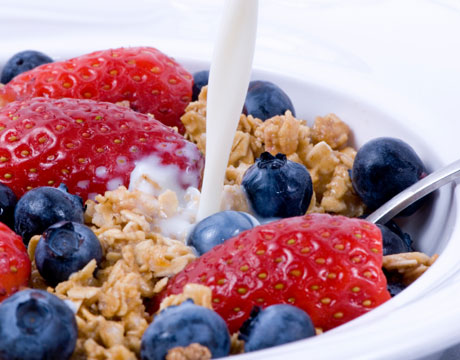
Breakfast: What You Should Have, And Why

Breakfast is the most important meal of the day.  There is no denying it.  This post will explain what you should have when you finally decide to crawl out of bed, why you should have it, and how it'll help you.


Why?  Because your body has been starving for 8 hours up until breakfast.  It's in a catabolic state (muscle fibers are deteriorating) right until it gets that next little bit of food.  The longer your body is in this state, the more essential muscle fiber you will lose, and the more your metabolism will decrease.  An early breakfast can help reverse this state quickly and kick your metabolism into high gear.

Breakfast will also be the meal your body depends on most throughout the day for energy.  So the pressure's on to make this meal your best (if you're going to choose just one).  But what can you eat that will ensure your body a good start to the day, and in turn produce a great feeling that'll keep you smiling and awake as the hours roll by?

A good place to start is with a good helping of natural, complex carbohydrates.  These will feed your body all day, and give you lasting energy, not to mention your muscles will get constant fuel.  For your carbs, you have lots of options.

You could have:

-Two slices of whole wheat toast

-A whole wheat bagel

-Whole grain cereal (be careful on this one, a lot of cereals are absolutely LOADED with sugar, read the nutritional label and attempt to find a cereal high in dietary fiber and relatively low in sugar.  Cereal advertising oats, bran and whole wheat is a good place to start.  I would recommend some of Kashi's cereal).

-Whole wheat English muffin

-My personal favorite, and still probably the top contender for the all around BEST breakfast carb:
OATMEAL (and I mean good old rolled oats boiled up in the microwave, not that instant oatmeal.  That stuff is crap, I guarantee you.  Loaded with sugar and artificial flavoring.)

  Oatmeal is piled with complex carbs, or in other words, long lasting energy.  It also has a good amount of protein, and a large amount of dietary fiber.  It's some of the best fuel you could ever put in your body, as far as I'm concerned.  Give it a try, I bet you'll like it as much as I do in no time.

  But just a carbohydrate would be a pretty boring breakfast, eh?  So lets get some protein in there.  And where else but eggs?  Scrambled, fried, made into an omelette, they're all fine choices.  In fact you can go one step further and use cartons of egg whites.  This will take out any bad cholesterol from the yoke, and still be absolutely delicious with a little pepper and cayenne powder.
  You can also get protein from a dairy source, such as milk, or yogurt.  I would suggest skim milk, and greek yogurt, however you can choose what you prefer.  Just make sure to look at the nutrtional label and know what you're getting BEFORE you buy it.  Those sugar loaded yogurts will do you no good in the long run.

  One of my favorite breakfast compliments is a tablespoon or two of either natural peanut butter, or natural almond butter.  Either one is positively delicious on a microwaved bagel, and will give your body the good fats and protein it needs to function.  Give them a try.  For natural peanut butter I would suggest smucker's Natural creamy or chunky.  The only ingredient on the ingredient list is "peanuts".  You can't get much more natural than that.  Just stir the oil back in before usage, and flip the jar over every couple days while it's stored so the oil can float back up into the butter.

  And we can't forget about fruit.  The simple carbs that will get you going for the day.  This is completely your choice here, because nearly any fruit will do the job.  I prefer a banana or apple, but when I'm home from college I usually grab a peach, a plum, a kiwi, or even a mango.  Fruits are packed with nutrients that you need for the day.  You may substitute the fruit with a glass of natural 100% juice, but stay away from concentrates with lots of dye and artificial flavoring.  Just look on the ingredients list.  If you see High Fructose corn syrup, artificial flavor concentrate, and around 6 different dye colors, do yourself a favor and steer clear.

  So this is all fine and dandy, but as always you'll have to make some choices.  A lot of people may be wondering, how many calories should I be eating at breakfast?  While that's an impossible question to generalize, I will say this:  Breakfast should be the big meal of the day, as it will be your main energy source.  As a weightlifter I aim for 700 calories.  That may be a little bit over what you might want, but maybe not by much.  A good range to shoot for is around 400-500 calories.  And if you're still hungry, have another plum.  Your body needs this energy.

  And here's my final word.  Do not, I repeat DO NOT skip breakfast.  You may think it will help you lose weight.  It will do the EXACT OPPOSITE.  It will slow your metabolism down, make you extremely hungry later in the day, send your body into a starvation mode, and in general will make you feel like absolute crap.  Eat a healthy breakfast and I guarantee you'll feel better, look better, perform better, and even make a good first step toward losing those unwanted pounds, or gaining that much desired muscle.

Wake up and eat, my friends.