Let's face it. Eating "healthy" sure doesn't sound manly. It sounds like you're some pansy who's trying to watch their figure and stay trim. Seriously, who wants to be all meek, skinny, and worst of all, weak? Now there's nothing wrong with trying to lose a few pounds, but it just so happens that you're a man, and men should eat big, meaty, chunky meals that fill their belly and build big, strong, manly muscles. How else are you going to move that massive weight? The good news is that you can eat that masculine food you love, and still be lean, ripped, and BEASTLY.
Oh, and to any women readers, there's no sexist nature intended in this article, it's all in good fun. You can enjoy this food too, and get the exact same benefits, I promise.
So let's go over a list of the manliest, most heftily nutrient packed muscle building man foods we can find, and see if we can't figure out how to fill that plate with something big and meaty (and then maybe slip a few of those meager little veggies on the side...as if they'll even fit...HAR HAR.)
Beef: Steak, ribs, burgers, veil, ground up, I don't care. Beef is delicious, protein packed, and filled with so many nutrients that I won't be able to list them all here. It's packed with B-12 and B-6, two vitamins that will aid in maintaining healthy metabolism and high energy levels, as well as assisting in central nervous system health. We've already mentioned the protein, you'll get a LOT of it in every delicious, perfectly juicy bite. Worried about the fat content? Of course you're not! And you shouldn't be, as every bit of fat in that beef is beneficial in some way. Most of the fat is monounsaturated fat, the same stuff in olive oil! The saturated fat is actually an EXCELLENT energy source, and may actually aid in losing weight, as it encourages your body to use fat as fuel instead of sugary carbs. And contrary to popular belief, the saturated fat in beef isn't related to rising levels of bad cholesterol. Pile a big fat steak on your plate and dig in, beef will make you BEEFY.
Whole milk: That's right, we don't need none of that frilly "fat free" stuff, we want the whole, creamy, yummy, thick and refreshing kind of milk, the way nature intended it. Every cup of whole milk is packed with 8 grams of protein from various sources including both whey and casein, and the natural sugars are great post workout to help those growing muscles suck up all those nutrients quick. Mix in some whey protein and you've got yourself some of the most delicious drinkable stuff on earth. And the fat? It's the same deal here. Saturated fat gets a bad rap, but when it's in its natural form it is actually quite healthy. It will benefit blood lipid levels and is an AWESOME source of energy. Pour a glass and be proud of that milk mustache.
Bacon: OK....seriously...WHO DOESN'T LOVE BACON? Thought you had to avoid it on a healthy diet??? WRONG-OH!!!! Bacon is no less healthy than many cuts of chicken, turkey, beef, or any other meat you can think of off hand. Sure it has some fat in it, but that fat, once again, is a great LOW CARB energy source that will both satiate you quickly and actually elevate your mood. That's right, dietary fat makes you happy. Before you complain that it can't be part of a clean diet, realize that there are thousands of people who've lost untold amounts of body fat while eating bacon almost every day. Don't believe me? Just do some online searching. Bacon, like beef, is also packed with B vitamins, and DEM DER PROTEEEEEIIINNSSS. I can hear those heavenly strips sizzling now, mmmmm. Breakfast of the gods.
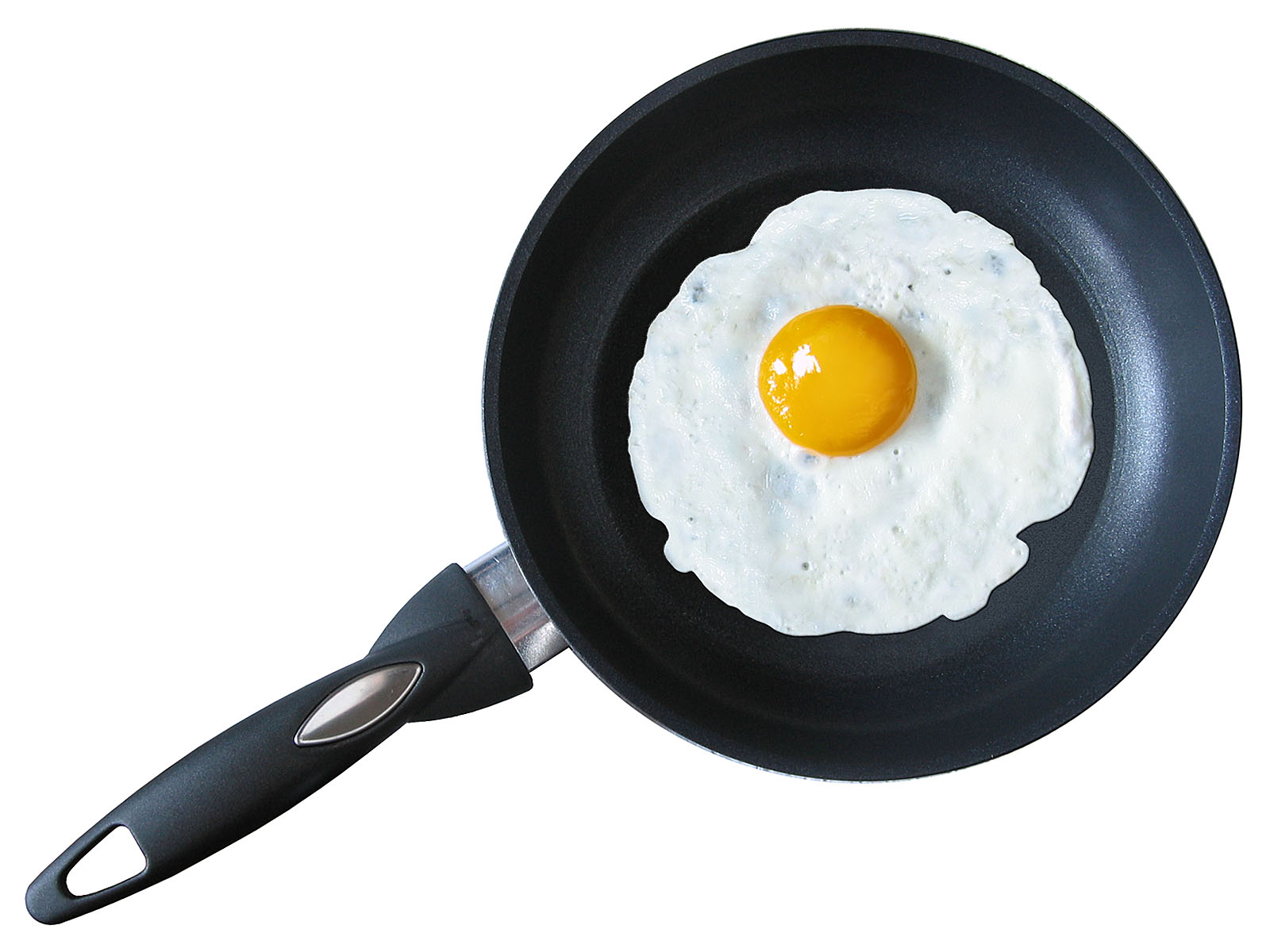
Eggs: Fry 'em, scramble 'em, poach 'em, boil 'em, and PIG OUT. Egg protein is one of the greatest sources of protein in the entire world, with a bio-availability in the high 90%'s when cooked. That means your body can use almost all of the protein available in eggs with the upmost efficiency to build strong, lean muscle. BUT, as manly as it may look, drinking raw eggs is a bad idea. When left uncooked, egg protein only has a bio-availability of about 50%, so much of that protein is wasted in your body. Plus, nobody wants salmonella. You won't look too manly puking your guts out all night, right? But seriously, eat those eggs. Oh, and dietary cholesterol hasn't been proven to have nearly ANY effect on blood cholesterol, so don't worry about that either. Sound good? Great.
Sausage: Awww yeah, brautwerst anyone? Sausage comes in all shapes and sizes, with all sorts of fillings. Sure, it's not the highest quality meat you can buy, but it's a great source of protein and has a lot of healthy fats in it as well. Want something lean? Go for the chicken or turkey sausage. Want the tastiest thing this side of Neptune? Get some biggun's packed with pork and beef, and pile them next to that big morning omelette. I recommend eating sausage in moderation, but you definitely don't have to cut it out of your diet. Just watch the sodium, as it can pile up quickly in certain kinds. Also, look at the ingredients, and make sure as much of the stuff inside is stuff you can pronounce, preferably meat without additives.
Peanut Butter: I eat this stuff by the spoonful. Packed with healthy fats and Omega-6 fatty acids, peanut butter is the bomb. It's an incredible source of healthy calories, especially when you get the natural, or "natty" stuff. Natty PB brah...all the way. In fact, the best peanut butter out there has the fewest ingredients. While the general rule of thumb is to make sure there is NO trans fat in the peanut butter, you also generally want to avoid the stuff with "partially hydrogenated vegetable oils." Those oils are used to make sure the peanut oil doesn't separate out of the butter itself, which is a pretty useless task unless someone is unbelievable lazy. A little stirring might help those forearms develop anyway. Brands I like are Teddie natural chunky, Smucker's natural, Jif Natural, Naturally More, and Power Butter. Go ahead and have a couple tablespoons, and watch those muscles EXPLODE.
Spinach: OK, you may be looking at me funny. But hey, if it made Popeye a monster, it could do the same to you. It's an aquired taste, but the aggressive flavor almost makes it manlier, right? Try some light sauces or spices on it to make it more palletable, like mustard, salsa, cayenne pepper, curry powder, whatever floats your boat. It's packed with vitamins and minerals, and will help you lose extra body fat covering those shredded guns of yours. Have a couple of forkfuls a day, and release your inner Popeye.
There you go you beastly dude you, eat up and get big, shredded, ripped, and NOTICED. Enjoy your meat, your steak, your peanut butter, and those huge, giant, bacon filled omelettes. Compliment any of these manly dishes with a side of veggies and you're in business. You can eat healthy and retain your manhood, it's easy! Now go eat some food, lift some weight, and growl at all the little meager folks cowering away from you. You're a beast, and noone gets in your way.
GOOD LUCK DUDES!
This blog will inform you about all kinds of food. It'll teach you to make the right choices, and feel great about them. By making these choices I personally guarantee you will perform better in the gym, stay healthier throughout the year, and get stronger both physically and mentally. I might even give you a few recipes to try. And on top of all that, I promise it'll be fun to read =].
Showing posts with label food. Show all posts
Friday, July 13, 2012
Thursday, June 7, 2012
Healthy Fast Food?
Well my friends, I think it's about time I shared with you a quick little blurb on my favorite fast food. That's right, I do eat fast food, though I don't think it resembles the greasy burgers and salty fries you're imagining. In fact, I think it actually tastes a lot better than both of those, and is most definitely a lot more filling. Oh, and you know if I'm writing about it, then it's actually legitimately HEALTHY!!!! Too good to be true? Not at all!
So where is this magical place? Why, I'm sure it's in your nearest big shopping district. It's called Panera Bread, and boy do they serve some good stuff. Panera is famous for delicious salads, sandwiches, and a bakery that will put most others to shame. The stores are well designed, modern, comfortable, and welcoming. And while you may be screaming "NOT FAST FOOD!!!" -- you'd be dead wrong. The food there is remarkably fast. Often I place my order, get my little buzzer thing, and by the time I'm sitting down the darn thing is already going nuts (and scaring me half to death.) Believe me, that food is speedy.
You know what else is great about Panera? They post caloric information right next to the menu items. Now while you may be a little leary as to how accurate it really is, I believe they're required by law to put the same portions in each bowl in order to comply with those measurements, so you won't have to give or take too many calories from the stated number.
Now keep in mind, NOT EVERYTHING in Panera is healthy. In fact, you can get yourself into a lot of trouble with both the bakery (those pastries are incredible), and certain greasy sandwiches or cheesy soups. Now don't get me wrong, everything tastes fantastic, but if you want to stay healthy, watch both the number of calories and the content of each sandwich, salad, or soup. When I'm in Panera, I usually get the Thai Chopped Chicken Salad. It's 470 calories for a GIANT bowl of tasty salad that's completely loaded with protein and healthy carbs. Sure, the dressing is pretty sweet, but is completely manageable. If you want to make it even better, take out the little Chinese noodles (as good as they taste.)
Want a better idea of the nutritional information in Panera's food? Here's a link to that exact information for your dieting knowledge:
I believe the best sandwich choices are:
Roasted Turkey and Avacado BLT (510 calories)
Smoked Turkey Breast on Country (420 calories)
And the best salad choices are:
Thai Chopped Chicken Salad (470 calories)
Poppyseed Chicken Salad (340 calories)
Asian Sesame Chicken (450 calories)
BBQ Chopped Chicken (500 calories)
As far as sides go, I'd suggest either an apple or whole grain baguette. The chips are baked though, so they're not the worst thing going.
Panera is definitely my favorite fast food joint. If you keep your head on your shoulders and don't get tempted by the crazy chocolate stuffed croissants or cheesy, creamy soups, you can walk out of that place with a pretty healthy meal in your belly. Remember folks, not all fast food is bad.
Enjoy your meals, choose wisely, and as always, GOOD LUCK!!!
Wednesday, May 2, 2012
The "Smart" Diet (Food For Final Exams)
Well, final exams are over, and I don't like to brag, but I did quite well. I believe such grades were earned, as I studied hard and made sure to manage my time efficiently (or as efficiently as possible while still maintaining my sanity). Yes, all in all, I'm quite pleased with my grades, and god does it feel good to be done with these piles of work. It's as if all at once, the pressure's been lifted. The lid's off the pressure cooker, ya know what I mean?
Anyway, before I start rambling, I'd like to bring up an important concept relating to my success in this year's final exams (and school year in general). It's actually a concept I talk about quite frequently. Could you guess what it might be? If you said "food," or "diet," you're right. I relate a lot of my success this year to my study habits, but feel that credit should also rest in what I've been putting in my belly.
How, you ask, does food have ANYTHING to do with academic success? Well, unlike a lot of articles which just spout off fact after fact and tout study after craftily worded study, I'm just going to tell you about my personal experience. I mean sure, I'll say that you'd be crazy not to think that food has an effect on your brain. Nutrient dense food does wonders for cognitive ability, leading to better memory, lower stress levels, and greater confidence. Good food helps you stay happy, healthy, and ready to take on the world (or a nasty, brutally complicated exam). This isn't any secret, yet so many people fail to accept the fact that a healthy diet can keep them successful when they need to be.
Did I personally do anything special to my diet in preparation for exam week? Well, the changes I made weren't initially geared toward the exams themselves, however I soon realized that they worked great for cognitive ability as well as physical prowess. You see, on my Olympic lifting training program, I work double sessions in the gym multiple times per week. This week, being pretty much empty other than an 8 AM exam every morning, I decided I'd go even harder on the double sessions (as the only other thing I had to do each day was study.) To support this brutal attack on my body, I made sure I was getting another hundred or so calories ON TOP of what I had already calculated to be a 200 calorie excess. I've been stalling out recently on weight gain, so I figured it couldn't hurt anyway. I made sure these calories came from clean sources such as almonds and egg whites, as well as a few more veggies on my plate. So far, such diet programming has been working beautifully for my workouts, and I've been maintaining strength despite increasing squat volume considerably.
This caloric excess also did WONDERS for my level of alertness, stress (low), and energy. That healthy food pushed me through extra study sessions as well as extra squats, and a hearty breakfast of oatmeal, whey, and peanut butter woke me up and got me going each and every morning. To put it bluntly, I felt, and still feel GREAT!
And one more little nugget of useful information: heavy brain work burns a lot of energy. Yeah, you heard me right, you're burning more energy than you think just trying to remember that darn equation for energy stored in parallel inductors. Ever feel drained after a big test? Like it's time for a nap? Well, you're drained because you've been working hard as heck. The bottom line is, my body needed those extra QUALITY calories, especially this week, in the face of the final test of knowledge.
Note to students: Those "care packages" or "study packs" your college offers to your parents to buy for you are full of absolute junk. Dum-Dum lollipops will NOT help you pass that final, and will likely send you on an aggressive sugar roller coaster that will leave you either too hyper to think or too monotonous to care about which bubble you're filling out. And all that chocolate? It won't help your brain grow, but it sure will grow you out of those jeans.
So what's my advice to you? If you've got tests coming up, don't be afraid to eat hearty meals of clean food. I would suggest heaps of complex carbs, as well as plenty of protein and fats from sources such as nuts, milk, and fish. You do NOT need to be waking up a completely drained wreck, unable to focus and unable to think about anything but how hungry you are for lunch. Keep yourself fed with "premium fuel," 'cause hey, you wouldn't put anything but the best in an expensive sports car right? Your body is the fastest, sleekest, most valuable car you own. Fuel it as best you can, and you'll not only see your lifts increase in the gym, but your grade point average climb as well.
Good luck on finals to all my fellow college students. Eat well and let's start this summer right!!
Friday, April 13, 2012
Confessions Toward Getting Bigger
I've been wanting to write more opinionated, personal articles for quite some time. Sure I love bringing you guys all sorts of healthy foods to try out, but rambling off nutrition facts gets old after a while. So I'll bring this post to the other side of the blogging spectrum and give you an inside look on some of the struggles I've had with dieting, weight goals, and how they affect the big picture. Sit back and grab a bowl of air popped popcorn, this is about to get deep.
So as you may or may not know, I'm a weightlifter. No, that's not what you think, I don't just go to the gym and lift weights like everyone else, trying to target specific muscles and get the "big guns." A weightlifter is technically someone who lifts weight in the Olympic style, focusing on two main lifts, the clean and jerk, and the snatch. I won't go nuts trying to explain those two lifts, look them up on youtube if you're curious. Let me just tell you that they're far different and far more total body intensive than your traditional bicep curl. Anyway, being a competitive weightlifter means I'm in the gym 9 times a week, squatting, snatching, cleaning, and jerking as much weight as possible for high volume. Because this sport is judged solely on how much weight is lifted successfully, I need as much muscle as possible packed into as little space as possible. I need dense, explosive, muscle tissue that's very flexible and ready to work at a moment's notice. Sounds easy to get, right? Just load up the steaks on the grill, mix a few protein shakes, and train hard as hell.
But there's a catch.
This sport is also judged in weight classes. What this means is that everyone who competes falls into a class depending on their body weight, which more accurately pits athletes against each other and can really determine who is stronger, has better technique, or in general a better combination of both. It wouldn't really be fair to pit the scrawny, short, 63 kg dude against Mr. big and brutish weighing in at 150 kg, would it? This means weightlifters, while being able to eat a LOT depending on their training, need to watch their diet and make sure it's the most effective combination of foods that will give them both enough energy to complete workouts, and enough excess calories to rebuild torn muscle fiber. Diet is extremely important in Olympic weightlifting.
And there's one more catch too. Every lifter has an optimal weight to lift at, usually based on their height and build. To lift optimally at a body weight of 77 kg, you should be about 5'7". And here's where my struggle comes in. I'm 5'11", which means I should weight around 200-230 lbs to lift at my optimal capacity. I currently weight 162 lbs, which puts me in the lower end of the 77 kg class. I knew I needed to gain weight, and believe me, my coach has been yelling that fact in my face for the longest time.
Maybe you're thinking "so what the heck are you waiting for!?! You get to EAT A LOT OF FOOD! NICE!!!!" But not so fast. I'm not too keen to get big and fat quickly, as I considered myself pretty fit and trim at 158-160 lbs. I had visible abs, pretty decent build, and felt good. Purposely trying to gain weight, no matter how cleanly, might mean I need to sacrifice a good looking build for the sake of added muscle. This, to me, was a little bit depressing (and honestly, it still is.) Sure, putting on weight by eating a lot of clean food and training your butt off ensures that MOST of the weight you put on will be muscle, especially if you're not in a huge caloric excess. But there's absolutely zero percent chance of gaining weight and having it be 100% muscle. In fact, no matter how clean you do it, the percentage usually isn't even close to that number. And purposely putting on fat, to me, didn't sound like fun.
But I changed my diet anyway. I added about 500 calories more initially, and when I plateaued around 161 for a week or two, I added a couple hundred more. I eat all the clean food I can, and don't pay attention to calories quite as much as I used to when I was merely trying to maintain my weight. Roughly I'm around 3200-3300 calories a day now, but when I get up to above 170 lbs, I'm sure this figure will have to increase by another 20% at least. My training is hard enough that I need to eat a LOT of food to maintain my weight. And, resembling more the ectomorph build, I have a pretty fast metabolism as it is.
Honestly, while I love food like no one else, it makes my heart sink a little to know that I have to keep shoveling in the food to the point where I force my body to gain weight one way or another. I don't like seeing the little bits of fat showing up around my midsection (though at this point they're very very small, and I doubt anyone would really notice), but I do like looking in the mirror and seeing a more full, muscular, stronger me. So how do I get through it? How do I keep a positive spin on the weight gain process?
Well, firstly, the way you look can depend a lot on the clothes you wear, the amount of water you're retaining, and the mirror you're looking in, not to mention a million other variables. What I know in my head is that when I see myself in my dorm room mirror, and I think quietly that I look big enough as it is, and maybe I should stop trying to gain, I remind myself that this view is skewed. I'm close to the mirror, and have my own mental image of myself that warps reality a bit. Anyone around me would tell me I look like a rail. I know that. I don't look big to others, and therefore I tell myself I shouldn't look big to my own eyes either. I only weigh 162 for goodness sake. 162 lbs ISN'T big, especially if you're 5'11".
I also keep looking at pictures of my weightlifting idols. Klokov, Chigishev, Ilin, Dolega, all 105 kg or 105+kg lifters. They are huge, with ginormous amounts of USEFUL muscle. I tell myself I need to look and perform like them, and I won't stop training or eating until I do. I tell myself every bite and every squat will bring me one step closer to glory, and when I achieve that, I won't look half bad regardless. How could I? Tons of healthy food, tons of exercise, what could go wrong? So what if my abs aren't quite visible. When I throw 230 kg over my head, I don't think anyone will care, and I don't think I will either.
![]() |
| Dmitry Klokov, probably my favorite lifter (my height too) |
![]() |
| Evgeny Chigishev, the pure essence of POWER |
So my friends, if you're on a journey to get bigger, and are second guessing the weight gain, remember to take a deep breath, realize that abs aren't all that matters in the world, and grab a sweet potato. Train hard, eat big, get strong, grab glory. I won't stop until I do...that's for sure.
Tuesday, February 21, 2012
Going Ketogenic (Atkins, TKD, CKD, And More!)
Maybe you've heard of them, or maybe you haven't. But they're out there: low carb diets which promise to lose you pounds off your waistline and keep tasty foods in your meals. And if you can stave off the craving for breads, fruits, and sweets, these diets might be ones to try out if you're really looking to lose some serious fat. They have been proven to be quite successful in most overweight individuals, and have a huge following in both the fitness world and the general public. But there's a lot of information out there, and quite a few different types of low carb diets, so things can get pretty confusing quite quickly. Let's explore the differences between different low carb or "ketogenic" diets and see if one or the other might be right for you.
First though, I'd like to post a disclaimer. Low carb diets AREN'T for everyone, and they're NOT THE ONLY WAY TO LOSE WEIGHT. Many people can lose pounds of fat while keeping large percentages of carbs in their diet. So don't go cutting the bread, pasta and rice without really knowing what you're getting into.
Okay, so what exactly is a "ketogenic" diet? It's a pretty interesting idea actually. The train of thought is that when you eliminate most of the carbs from your diet, and replace them with high amounts of fat and moderate amounts of protein, your body, which normally gets its energy from converting carbohydrates to glucose, is forced to instead find another energy source. It does this by freeing up stored fat molecules, converting them into a substance called "ketone bodies," and using that special substance to fuel your body. Amazingly, ketone bodies have a lot of energy potential, so after an initial energy low upon starting a ketogenic diet, dieters often report a large increase in energy due to the new energy source. This state of running off fat is called "ketosis." Pretty neat huh?
There are several types of ketogenic diets, one of the most common being the Atkins diet. This diet is mainly focused toward the general public, and has some pretty strict guidelines as to carb consumption. Normally, for the first few weeks, dieters aren't allowed to consume more than 20 grams of carbohydrates per day, and instead are encouraged to take in their calories through mainly protein based sources. There are four phases to the Atkins diet, each with different rules and permitted foods. These phases are:
The Induction Phase (20 g net carbs per day)
Ongoing Weight Loss (Increase of 5 g net carbs per week until within 10 lbs of target body weight)
Pre-maintenance (Increase of 10 g net carbs per week until weight loss ceases, then reduction of 10 g)
Lifetime maintenance (Carbs remain at the "tipping point" established in the pre-maintenance phase)
If you'd like to read more about the phases of the Atkins diet, here's a link to my favorite site: http://en.wikipedia.org/wiki/Atkins_diet#The_four_phases
It's your favorite site too, right? =]
The Aftkins diet is strict in the sense that carbohydrate amounts start low and stay low for the duration of the diet. You're always going to be carbohydrate deprived in order to maintain ketosis, and therefore are always going to have to watch your weight, plan ahead in terms of your diet, and make sure you don't go over the magic number of carbs. You're also going to need to eat a LOT of protein, which to many keto dieters has been found to be a non-ideal solution to replacing carbohydrates. Many keto dieters who don't follow the Atkins diet say that it's far better to replace carbs with healthy fats than it is to replace with large quantities of protein. Also, the Atkins diet doesn't employ any caloric restrictions, which can be confusing and misleading to certain dieters. Many who aren't successful on the Atkins diet fail because they consume too many calories from non-carb sources that are very calorie dense, like certain cheeses and peanut butter.
The Atkins diet does have a very large following though, and quite a few remarkable success stories, so it remains a popular staple in the ketogenic diet category.
But what about other sorts of ketogenic diets? Well, the Atkins diet is geared more toward the general public, and non-gym rats. The fitness crowd tends to employ its own version of the ketogenic diet, and probably the area of greatest success in terms of the ketogenic diet craze is in bodybuilding. Bodybuilders usually cycle between bulking phases (attempting to put on muscle through calculated increases in calorie and macro-nutrient intake), and cutting phases (eliminated the inevitable fat gain on top of the muscle gain due to bulking) before competition. One of the greatest cutting tools in the bodybuilding world today is in fact a ketogenic diet. However the Atkins diet isn't optimal for high intensity gym visits because according to some, it really can decrease strength levels to an intolerable level. To combat this, bodybuilders (and other fitness enthusiasts alike) use three different types of ketogenic diets:
Cyclical Ketogenic Diet- This diet takes the fat burning benefits of ketosis and mixes them with the power of carbohydrates. You may wonder how this is possible, due to ketosis requiring an extremely low carbohydrate environment to really work. You see, on ketogenic diets, some people experience extreme strength losses at the gym, despite the increased fat burning. This will require them to do what's called a "carb-up" once, or even twice a week. This carb up involves eating large amounts of carbohydrates on a certain day, then cutting carbs to between 30 and 60 grams on every other day to reinstate ketosis and increased fat burning. This process should cause a carryover from the carb-up day to allow energy levels to stay managable at the gym, and will keep the dieter from fainting with exhaustion. This diet is EXTREMELY popular in the bodybuilding world, and has shown to be very successful across the board.
Targeted Ketogenic Diet- This version of the ketogenic diet is similar to the cyclical diet in terms of increased carb intake at certain key points, but instead of on a certain day, the targeted ketogenic diet allows you to ingest large amounts of carbohydrates around workout time, to really give you that boost of strength in the gym, and give your body much needed carbohydrates for recovery. Usually around 40-80 grams of carbohydrates are consumed pre and post workout, though that number can be adjusted based on carb sensitivity and fat loss goals. Again, this type of dieting has been shown to be very successful in the fitness world.
Standard Ketogenic Diet- This one I don't need to talk about too much, as it resembles the Atkins diet quite closely. It has no carb-up days, and requires the dieter to maintain net carbohydrates levels under about 30 grams per day.
Here's a more in depth article about CKD and TKD keto diets from bodybuilding.com:http://www.bodybuilding.com/fun/sclark91.htm
Also, ketogenic diets other than the Atkins suggest a larger ratio of fat to protein, which I personally like considering too much protein can cause all sorts of little digestive issues. Some good starting macros for a ketogenic diet would probably be 60% calories from fat, 35% from protein, and 5% from carbs. Look around a little though, because many people have tweaked these macros and are still making great progress.
So you may be wondering, is a ketogenic type diet right for you? Well, if you've got a few extra pounds to lose, a ketogenic diet can really work wonders. I personally would suggest trying out either a cyclical of targeted ketogenic diet first, especially if you go to the gym on a regular basis (WHICH YOU SHOULD.) Don't take this article as your only research on the subject, look around the internet for people who have had success, read their stories, and make sure you know your plan BEFORE you embark on the keto journey. You can get GREAT results, you just need to make sure you know every little nuance of your diet.
Keep things precise, burn that fat, and as always, GOOD LUCK!
http://www.bodybuilding.com/fun/cyclical_ketogenic_diet.htm
http://www.bodybuilding.com/fun/sclark86.htm
Labels:
atkins,
carbohydrate,
carbohydrates,
Carbs,
cyclical,
difference,
fat,
food,
keto,
ketogenic,
loss,
low,
protein,
standard,
targeted,
versus,
vs,
weight
Sunday, February 19, 2012
Little Eating Makes Big People
But then, all of a sudden, your previously steady weight loss just plain stops. For week after week you step on the scale only to see the same number each time. In desperation and frustration, you apply the "less and more" technique to diet and gym time respectively. You start hacking your meals to miniature versions of their former selves and make sure to jog for at least an hour every day on that dreaded treadmill. Before you know it you're hungry, tired, and your joints are killing you. But in a few weeks it'll all be worth it, right? You'll step on that scale and see a lighter you, and that'll be worth the world.
But then, when weigh in day finally does rear its ugly head, you step on the scale only to face a number LARGER than what was there last week. You're bewildered, disgusted, and ready to scream. Not to mention you're probably ready to throw in the towel on this whole fitness thing, claiming that your body just wouldn't let you lose weight, and that you tried your hardest. Here's what I say to that:
DON'T GIVE UP!!!
You ran across a very common problem with diets these days. Many people know the basics behind weight loss, and that you have to burn more calories than you consume on a daily basis in order to be in a caloric deficit and therefore FORCE your body to use stored fat as the source of the remaining required energy. It isn't rocket science, or at least, the concept isn't. But in a modern world, where people look for the most efficient, quickest methods to get things done, this little bit of knowledge is a recipe for disaster. You see, eating too few calories can actually cause you to GAIN weight. Sounds ridiculous, but after I explain myself a bit here, I'm sure it'll make sense.
Let me start off by saying that your body is quite intelligent, and it knows how to stay alive. Through millions of years of evolution it has determined exactly what it likes to eat, and exactly what to do if it's presented with a caloric surplus. Heck, your body still thinks that if food became very scarce, you'll need every ounce of that stored body fat to keep you alive. And if it's presented with a drastic caloric deficit (AKA starving), it'll do what it deems necessary to make the most out of your remaining energy stores. You know what that means?
Your metabolism will slow to a turtle's pace and anything you eat or drink will go almost straight to energy stores, which we know better as your love-handles and beer belly.
To your body, there's no difference between an unrealistically low calorie diet, and a forced desert journey devoid of nourishment. Either way, it thinks you're starving, and will take the necessary steps to keep you alive. You'll feel like no amount of sleep will ever wake you up, and most likely your hunger will be insatiable, especially on such a low calorie plan. No energy, no satisfaction, the perfect recipe for skipped visits to the gym, food binges, and a failed attempt at weight loss. This is reiterated in an article written by David Greenwalt, a reputable personal trainer at bodybuilding.com. He discusses a typical client in this same situation and how her body will not react to weight loss because of an extremely low caloric intake:
Not only has her metabolism matched her intake, her body has maximized production of enzymes that are designed to help store any additional calories as fat. Anytime additional, immediately-unnecessary calories are consumed the enzymes are there and waiting to store the additional calories as fat. Her body is starved nutritionally and it has one thing on its mind - survival.
Being mostly sedentary, her metabolism (hormones play a large role here) can do a pretty good job of keeping things slow enough so that the pathetically low calories she's consuming are just enough to maintain.
But since certain enzymes are elevated, waiting for more calories so more bodyfat can be stored, every nighttime binge or weekend mini-feast will contribute to fat stores.
So on the days she's not bingeing her body does not lose fat, or if it does, it's very little. And on the few days or times she does binge a bit her body is quite efficient at storing fat. So, while she may lose a smidge of fat from starving it is quickly replaced with every binge.
Original Article (A GREAT READ): http://www.bodybuilding.com/fun/core_march_8.htm
This describes quite accurately that when drastically low calorie diets are employed as a weight loss tool, your body becomes extra adept at storing any little excess as fat. Not an optimal situation for dieting, as you'll agree.
So fine, you know the details now, and you may have some returning hope. But what do you do to turn this whole thing around? Where does one start? Well I don't believe the solution is very complicated at all, and it can be easily summed up in just a few simple steps:
Step 1: Calculate the correct number of calories you need to cut about 1 lb of fat per week, if that's the rate you want to lose at. I wouldn't suggest any faster rate, though it's fine if you'd like to go slower. There are a bunch of GREAT calorie calculators out there, and while none are exactly spot on, they can give you a very accurate guess and a great starting point. Here are some downloadable excel file calculators that I've found to be quite useful and accurate: http://www.physiquefx.com/bmr-calculators/
Step 2: Change up your workout. Instead of hitting the cardio for an hour, take about half your gym time to lift some weights. It doesn't matter if you're a man or a woman, building lean muscle mass will increase your resting metabolic rate so that any weight you do lose you can keep off for good. Cardio will lose you weight, sure, but it's a quick fix. You won't have the muscle mass to maintain that new, leaner you, and most likely you'll put all that fat back on in a relatively short amount of time. More muscle=less retained fat. It's as simple as that.
Step 3: Make sure those calories are coming from clean foods. You know the drill, lean proteins, whole grains, fruits, veggies, unsaturated fats, just about everything I've ever written about. Need diet ideas? I've got over 100 other articles all about food, so read up and get yourself on a good diet. Use healthy foods to fill in your correct macro levels, and you're good to go.
And there you have it! A simple solution to weight loss bottle-up. Not difficult, not depressing, and it definitely should NOT throw you off track. You CAN lose the fat you want to lose, and it's not as difficult as you think. But your body needs calories, so don't starve it, because you'll pay the price in the end.
Don't be afraid to eat, get creative at the gym, and watch those numbers carefully. GOOD LUCK!
Monday, February 13, 2012
Shirataki Noodles: A Gift From The Food Gods
A few days ago, I visited a little store called "Nature's Storehouse" in Canton, NY. They're quite the health shop, who sell every supplement you could ever desire, and every healthy food that seems to skip over the shelves of more common, "mundane" grocery stores. I found various grains like amaranth, chia seeds, and quinoa, as well as various seaweed types like dulce flakes. But upon entering that store I was really only looking for one thing: Shirataki noodles. These noodles are a dieter's dream food, having only 1 net carb per serving, and between 5-20 calories per 4oz depending on whether they are enhanced with tofu or not. I'm here to tell you today that my search was not fruitless, and I came back to my dorm with three 8oz bags of tofu shirataki noodles. Let me tell you all right now, THESE THINGS RULE!
First, let's explore a little and find out what shirataki actually is. Shirataki noodles are thin, gelatinous noodles made from a yam native to Japan called the Konjac Yam. They happen to be extremely low carbohydrate, due to the fact that they're composed almost exclusively of soluble fiber, which can't be digested by your body (or at least they're not able to be used as an energy source.) That means they have almost no calories as well, and each of my 8 oz bags has 40 calories. Let me tell you folks, 8 oz is plenty of noodles, and will go with any meal quite nicely. They'll fill you up pretty darn quick too, another plus.
So what's the difference between traditional shirataki noodles and tofu shirataki noodles? Well, by themselves, shirataki noodles have zero carbs, and practically no calories, making them the ideal choice for the super strict dieter. However, plain shirataki noodles have a bit of a strange texture to them, and can bit a bit "rubbery" to bite into. Food production industries found that by adding a small amount of tofu to the noodles, the texture can be softened, and at the same time a tiny bit of carbohydrates and protein is added to the noodles as well. As mentioned before, 4 oz of tofu shirataki noodles still only has 20 calories, so it's really NO big deal at all, and honestly it's nice to get at least a few nutrients into what basically is just a "filler food." Tofu shirataki noodles (while still rare) are also much easier to find than plain shirataki noodles.
Just for fun, here are the nutritional facts for shirataki noodles and tofu shirataki noodles.
3 oz of plain shirataki noodles:
| Nutrition Facts | ||
|---|---|---|
| Calories 2 | (8 kJ) | |
| % Daily Value 1 | ||
| Total Fat | 0g | 0% |
| Sat. Fat | 0g | 0% |
| Trans Fat | 0g | |
| Cholesterol | 0mg | 0% |
| Total Carbs. | 0.5g | < 1% |
| Dietary Fiber | 0.5g | 2% |
| Sugars | 0g | |
| Protein | 0g | |
4 oz of tofu shirataki noodles:
| Nutrition Facts | ||
|---|---|---|
| Calories 20 | (84 kJ) | |
| % Daily Value 1 | ||
| Total Fat | 0.5g | < 1% |
| Sat. Fat | 0g | 0% |
| Trans Fat | 0g | |
| Cholesterol | 0mg | 0% |
| Sodium | 15mg | < 1% |
| Total Carbs. | 3g | 1% |
| Dietary Fiber | 1.5g | 6% |
| Sugars | 0g | |
| Protein | 1g | |
| Calcium | 100mg | |
And also for fun, here's 2 oz of regular angel hair spaghetti:
| Nutrition Facts | ||
|---|---|---|
| Calories 200 | (836 kJ) | |
| % Daily Value 1 | ||
| Total Fat | 1g | 2% |
| Sat. Fat | 0g | 0% |
| Trans Fat | 0g | |
| Cholesterol | 0mg | 0% |
| Sodium | 0mg | 0% |
| Total Carbs. | 42g | 14% |
| Dietary Fiber | 2g | 8% |
| Sugars | 1g | |
| Protein | 7g | |
Big difference right? If you want low carb pasta, there isn't much substitute for shirataki noodles. They're easy to get creative with as well. I'm such a seafood lover that in my dorm the other day I cooked a package of tofu shirataki noodles with a can of drained clams, and two sliced mushrooms. I added some chili powder, mixed it all up, threw it in the microwave, and before I knew it I had a delicious and filling meal that had 30 g of protein at less than 200 calories. I'm sure the seafood lovers amongst you can appreciate my creation, and I assure you I was in heaven.
I ran across this recipe the other day and think it a remarkably creative example of using shirataki noodles to their full extent. Looks delicious!
http://shirataki-noodles.recipesilove.com/2011/11/grilled-tofu-and-chicken-with-tofu-shirataki/
To wrap things up, let me say this: Shirataki noodles really are a miracle food. I can't wait to combine them with all sorts of other recipes and ingredients, because after seeing what can be done with them I realize I've barely scratched the surface of their potential. If you can, I EMPLORE you to pick some up ASAP. You won't regret it. They're delicious, easy to cook, low calorie, low carb, and could very easily help your diet out BIGTIME.
Love shirataki, be creative, and as always, GOOD LUCK!
Subscribe to:
Posts (Atom)


