This blog will inform you about all kinds of food. It'll teach you to make the right choices, and feel great about them. By making these choices I personally guarantee you will perform better in the gym, stay healthier throughout the year, and get stronger both physically and mentally. I might even give you a few recipes to try. And on top of all that, I promise it'll be fun to read =].
Showing posts with label clean. Show all posts
Friday, June 22, 2012
New Olympic Weightlifting Blog: Liftm0re
Well, I figured it was about time to create my own little place to write about my journey into becoming a competitive Olympic Weightlifter. My new blog is called liftm0re, and will serve as a place where I put insightful/poetic observations and thoughts related to training, PR's, failures, competitions, workouts, and basically anything related to this crazy lifting lifestyle.
It won't be quite as "factual" as The Food Guru, but hey, that might make it more fun to read in the long run anyway. I'd really appreciate if a few of you checked it out, and if you like it let me know. The more feedback, the better.
This also means I won't post Oly lifting stuff on The Food Guru anymore, so it's a win win for people who don't want to read about it....hah.
Anyway, I really hope you guys enjoy it, and thank you so much for the continued support.
Here's the link!
http://liftm0re.blogspot.com/
I'll be back with more food related goodness later this afternoon. I've got a few new cool article ideas, stay tuned!
Wednesday, May 2, 2012
The "Smart" Diet (Food For Final Exams)
Well, final exams are over, and I don't like to brag, but I did quite well. I believe such grades were earned, as I studied hard and made sure to manage my time efficiently (or as efficiently as possible while still maintaining my sanity). Yes, all in all, I'm quite pleased with my grades, and god does it feel good to be done with these piles of work. It's as if all at once, the pressure's been lifted. The lid's off the pressure cooker, ya know what I mean?
Anyway, before I start rambling, I'd like to bring up an important concept relating to my success in this year's final exams (and school year in general). It's actually a concept I talk about quite frequently. Could you guess what it might be? If you said "food," or "diet," you're right. I relate a lot of my success this year to my study habits, but feel that credit should also rest in what I've been putting in my belly.
How, you ask, does food have ANYTHING to do with academic success? Well, unlike a lot of articles which just spout off fact after fact and tout study after craftily worded study, I'm just going to tell you about my personal experience. I mean sure, I'll say that you'd be crazy not to think that food has an effect on your brain. Nutrient dense food does wonders for cognitive ability, leading to better memory, lower stress levels, and greater confidence. Good food helps you stay happy, healthy, and ready to take on the world (or a nasty, brutally complicated exam). This isn't any secret, yet so many people fail to accept the fact that a healthy diet can keep them successful when they need to be.
Did I personally do anything special to my diet in preparation for exam week? Well, the changes I made weren't initially geared toward the exams themselves, however I soon realized that they worked great for cognitive ability as well as physical prowess. You see, on my Olympic lifting training program, I work double sessions in the gym multiple times per week. This week, being pretty much empty other than an 8 AM exam every morning, I decided I'd go even harder on the double sessions (as the only other thing I had to do each day was study.) To support this brutal attack on my body, I made sure I was getting another hundred or so calories ON TOP of what I had already calculated to be a 200 calorie excess. I've been stalling out recently on weight gain, so I figured it couldn't hurt anyway. I made sure these calories came from clean sources such as almonds and egg whites, as well as a few more veggies on my plate. So far, such diet programming has been working beautifully for my workouts, and I've been maintaining strength despite increasing squat volume considerably.
This caloric excess also did WONDERS for my level of alertness, stress (low), and energy. That healthy food pushed me through extra study sessions as well as extra squats, and a hearty breakfast of oatmeal, whey, and peanut butter woke me up and got me going each and every morning. To put it bluntly, I felt, and still feel GREAT!
And one more little nugget of useful information: heavy brain work burns a lot of energy. Yeah, you heard me right, you're burning more energy than you think just trying to remember that darn equation for energy stored in parallel inductors. Ever feel drained after a big test? Like it's time for a nap? Well, you're drained because you've been working hard as heck. The bottom line is, my body needed those extra QUALITY calories, especially this week, in the face of the final test of knowledge.
Note to students: Those "care packages" or "study packs" your college offers to your parents to buy for you are full of absolute junk. Dum-Dum lollipops will NOT help you pass that final, and will likely send you on an aggressive sugar roller coaster that will leave you either too hyper to think or too monotonous to care about which bubble you're filling out. And all that chocolate? It won't help your brain grow, but it sure will grow you out of those jeans.
So what's my advice to you? If you've got tests coming up, don't be afraid to eat hearty meals of clean food. I would suggest heaps of complex carbs, as well as plenty of protein and fats from sources such as nuts, milk, and fish. You do NOT need to be waking up a completely drained wreck, unable to focus and unable to think about anything but how hungry you are for lunch. Keep yourself fed with "premium fuel," 'cause hey, you wouldn't put anything but the best in an expensive sports car right? Your body is the fastest, sleekest, most valuable car you own. Fuel it as best you can, and you'll not only see your lifts increase in the gym, but your grade point average climb as well.
Good luck on finals to all my fellow college students. Eat well and let's start this summer right!!
Sunday, April 29, 2012
Training For Gold: Week 10
It's been a while since I've updated you all on as to how I'm progressing through my training. This post serves only as a short update, as I realize it's really only of interest to a few people. Though this is a pretty good spot to get my thoughts down, if I don't say so myself.
I'm please to announce that I'm continually feeling stronger than I ever have before in my life. The workouts are brutally difficult, however I'm constantly surprising myself with hitting double and triple snatches that I didn't think were even close to possible for me. The strength is there, and Ivan, my coach, clearly knows exactly what he's doing. I have an unbelievable amount of respect for him.
In terms of injuries, I'm overcoming a shoulder pang that's been nagging me for a couple weeks, however through ice, heat, and lots and lots of massage and stretching it's recovered despite not ceasing my training. Awesome! It never effected my numbers either, thank goodness. I'm also overcoming a bout of patellar tendinitis with a combination of foam rolling, a LOT of fish oil, and even more ice. All three combined are working wonders, and 12 days after I could barely walk, I'm feeling absolutely great. Another week and I should be up near 100%.
I hit two new max lifts yesterday, which was absolutely remarkable because the workout surrounding the max attempts was designed to drain me of any energy I had left by the time I actually got the lifts themselves. That means good things, such as LOTS of untapped potential deep within my muscles to lift a good few kilos more in both the clean and jerk and the snatch. I have no doubt I could hit at least another 2 kilos in the snatch, and maybe as many as 5 more in the clean and jerk. Regardless, here's my latest video of both lifts:
You can see more at my YouTube account specifically created to document my lifting progress: Liftm0re (yes, that's a zero, NOT an "o").
I'm due to max out in week 12 as well, so we'll see how that goes. Progress is coming at relative light speed, and I cannot WAIT to see what else I'm capable of lifting. A 150kg clean and jerk by the end of this year may not be so far fetched after all, especially if the muscle keeps coming on like it has been. I'm up to 74 kg!
Stay tuned for more progress, cause I'm not quitting any time soon.
Friday, April 13, 2012
Confessions Toward Getting Bigger
I've been wanting to write more opinionated, personal articles for quite some time. Sure I love bringing you guys all sorts of healthy foods to try out, but rambling off nutrition facts gets old after a while. So I'll bring this post to the other side of the blogging spectrum and give you an inside look on some of the struggles I've had with dieting, weight goals, and how they affect the big picture. Sit back and grab a bowl of air popped popcorn, this is about to get deep.
So as you may or may not know, I'm a weightlifter. No, that's not what you think, I don't just go to the gym and lift weights like everyone else, trying to target specific muscles and get the "big guns." A weightlifter is technically someone who lifts weight in the Olympic style, focusing on two main lifts, the clean and jerk, and the snatch. I won't go nuts trying to explain those two lifts, look them up on youtube if you're curious. Let me just tell you that they're far different and far more total body intensive than your traditional bicep curl. Anyway, being a competitive weightlifter means I'm in the gym 9 times a week, squatting, snatching, cleaning, and jerking as much weight as possible for high volume. Because this sport is judged solely on how much weight is lifted successfully, I need as much muscle as possible packed into as little space as possible. I need dense, explosive, muscle tissue that's very flexible and ready to work at a moment's notice. Sounds easy to get, right? Just load up the steaks on the grill, mix a few protein shakes, and train hard as hell.
But there's a catch.
This sport is also judged in weight classes. What this means is that everyone who competes falls into a class depending on their body weight, which more accurately pits athletes against each other and can really determine who is stronger, has better technique, or in general a better combination of both. It wouldn't really be fair to pit the scrawny, short, 63 kg dude against Mr. big and brutish weighing in at 150 kg, would it? This means weightlifters, while being able to eat a LOT depending on their training, need to watch their diet and make sure it's the most effective combination of foods that will give them both enough energy to complete workouts, and enough excess calories to rebuild torn muscle fiber. Diet is extremely important in Olympic weightlifting.
And there's one more catch too. Every lifter has an optimal weight to lift at, usually based on their height and build. To lift optimally at a body weight of 77 kg, you should be about 5'7". And here's where my struggle comes in. I'm 5'11", which means I should weight around 200-230 lbs to lift at my optimal capacity. I currently weight 162 lbs, which puts me in the lower end of the 77 kg class. I knew I needed to gain weight, and believe me, my coach has been yelling that fact in my face for the longest time.
Maybe you're thinking "so what the heck are you waiting for!?! You get to EAT A LOT OF FOOD! NICE!!!!" But not so fast. I'm not too keen to get big and fat quickly, as I considered myself pretty fit and trim at 158-160 lbs. I had visible abs, pretty decent build, and felt good. Purposely trying to gain weight, no matter how cleanly, might mean I need to sacrifice a good looking build for the sake of added muscle. This, to me, was a little bit depressing (and honestly, it still is.) Sure, putting on weight by eating a lot of clean food and training your butt off ensures that MOST of the weight you put on will be muscle, especially if you're not in a huge caloric excess. But there's absolutely zero percent chance of gaining weight and having it be 100% muscle. In fact, no matter how clean you do it, the percentage usually isn't even close to that number. And purposely putting on fat, to me, didn't sound like fun.
But I changed my diet anyway. I added about 500 calories more initially, and when I plateaued around 161 for a week or two, I added a couple hundred more. I eat all the clean food I can, and don't pay attention to calories quite as much as I used to when I was merely trying to maintain my weight. Roughly I'm around 3200-3300 calories a day now, but when I get up to above 170 lbs, I'm sure this figure will have to increase by another 20% at least. My training is hard enough that I need to eat a LOT of food to maintain my weight. And, resembling more the ectomorph build, I have a pretty fast metabolism as it is.
Honestly, while I love food like no one else, it makes my heart sink a little to know that I have to keep shoveling in the food to the point where I force my body to gain weight one way or another. I don't like seeing the little bits of fat showing up around my midsection (though at this point they're very very small, and I doubt anyone would really notice), but I do like looking in the mirror and seeing a more full, muscular, stronger me. So how do I get through it? How do I keep a positive spin on the weight gain process?
Well, firstly, the way you look can depend a lot on the clothes you wear, the amount of water you're retaining, and the mirror you're looking in, not to mention a million other variables. What I know in my head is that when I see myself in my dorm room mirror, and I think quietly that I look big enough as it is, and maybe I should stop trying to gain, I remind myself that this view is skewed. I'm close to the mirror, and have my own mental image of myself that warps reality a bit. Anyone around me would tell me I look like a rail. I know that. I don't look big to others, and therefore I tell myself I shouldn't look big to my own eyes either. I only weigh 162 for goodness sake. 162 lbs ISN'T big, especially if you're 5'11".
I also keep looking at pictures of my weightlifting idols. Klokov, Chigishev, Ilin, Dolega, all 105 kg or 105+kg lifters. They are huge, with ginormous amounts of USEFUL muscle. I tell myself I need to look and perform like them, and I won't stop training or eating until I do. I tell myself every bite and every squat will bring me one step closer to glory, and when I achieve that, I won't look half bad regardless. How could I? Tons of healthy food, tons of exercise, what could go wrong? So what if my abs aren't quite visible. When I throw 230 kg over my head, I don't think anyone will care, and I don't think I will either.
![]() |
| Dmitry Klokov, probably my favorite lifter (my height too) |
![]() |
| Evgeny Chigishev, the pure essence of POWER |
So my friends, if you're on a journey to get bigger, and are second guessing the weight gain, remember to take a deep breath, realize that abs aren't all that matters in the world, and grab a sweet potato. Train hard, eat big, get strong, grab glory. I won't stop until I do...that's for sure.
Monday, April 9, 2012
Eating For Your Goals
Now sure, we all know to "eat healthy, whole foods." But that's wayyyy too general to work sometimes. I'm talking more specifically about eating a diet tailored EXACTLY to your sport or activity. If you haven't done the research and adjusted your intake regarding both quantity, quality, and what exactly it comprises, then you aren't going to hit it perfectly day in and day out like you need to in order to become the best. Let's delve into this a little further, and see exactly what I mean.
Before I go much farther, let me address one thing. I mentioned eating was half of performing well. Actually...it isn't. You can eat crap, train as hard as physically possible, and still see results. But will they be optimal results? Will they come as quickly as physically possible? Will you look and feel your best the most possible amount of days? If you say yes, you're kidding yourself. OF COURSE NOT. Eating may not be everything, but it's a HUGE part of performing the way you want to perform.
Now each sport/activity/goal you have in mind has a specific diet type that works optimally for the desired results. Here are a few examples of what you need to be eating based on what exactly you want to achieve:
Lose fat: Clean foods, raw foods, whole foods, all in a caloric deficit will work very well. To see optimal results, keep a lot of water in your diet, keep the sugar far away from your piehole, and make sure you're getting lean meats dense with protein, complex, slow digesting carbs full of fiber and whole wheat, and healthy fats like nuts and olive oil. You MUST keep in a caloric deficit though, which will be a different value for everybody based on weight, age, metabolism, muscle density, and all sorts of other factors. To lose large amounts of fat, ketogenic diets (very low carb) diets have been known to work well, and I have a whole article on those, so read up.
What doesn't work as well: Junk foods, high in saturated fats, hydrogenated fats, and especially lots of sugar. Sure, if you're in a caloric deficit at the end of the day, that's great, and you'll still lose weight, but I can almost guarantee it won't happen as quickly or efficiently as possible. You're basically using up calories that instead could be replaced with lean meats to help maintain muscle mass and fiberous veggies that will keep you full. If you eat like crap, you'll tend to look like...well...you know.
Gain Mass: Lots of food. You need to be in a caloric excess at the end of the day, but try to keep an eye on the actual amount you go over your maintenece (the number of calories you require to maintain your weight). Overshoot this number by too much, and you'll start putting on an excessive amount of fat. And we all know the name of the game when gaining mass is trying to put on muscle with as little fat as possible. To do this, like I'll always say, keep it clean, but calorie dense. Red meats are great, as are scoops of peanut butter and sweet potatoes. Gaining mass isn't about eating anything and everything in sight. This is what's called a "dirty bulk," and almost always results in too much fat gain and very little actual muscle gain. Train hard in the gym, do big, compound lifts, and don't skimp on the meals.
What doesn't work as well: Obviously, eating under or at maintenance levels will make any gains in size impossible. Yes, that's right, IMPOSSIBLE. It goes against the laws of nature. If you don't consume more energy than you use, your body won't have an excess to build things bigger and stronger. So if you're trying to gain a six pack AND get bigger, you might as well forget about it. Focus on the muscle, eat big and often, and worry about cutting up later. Seriously, there isn't much more of a futile situation than trying to get big and eating too small. Get it?
Gain Strength: Here's the deal, if you're looking to gain strength, like gaining mass, you need food. Sure, keeping it clean is always the goal. Eat a boatload of protein, lots and lots of complex carbs, and as always, healthy fats like nuts and seeds. Eat a LOT of them. Your body needs every ounce of fuel to replenish itself for maximal loading as frequently as possible. Here's the deal though. Strength athletes, if truly specific to their sport, generally don't get all the power they need from healthy, clean foods. Usually they'll throw in a few borderline foods, and many just go all out on the junk. Sure, it's bad for you, but a burger, a piece of meat pizza, and a pile of fries really helps you push a LOT of extra weight up. Believe me I know, some of my best squat sessions were after an accidental overload of food the night before. All that caloric energy, while not optimal for lean looks and rippling abs, sure works great for strength. Would I reccommend going for the junk? HECK NO! I believe there's always a clean alternative, and here it just lies in eating more food. Drink milk, eat peanut butter, have a couple of sweet potatoes. That'll give you the energy. It may fill you up, but hey, your stomach could lose a bit of stretching.
I will say this however. If you're training for strength, you're not allowed to cry if you slip up and eat a burger and a few pieces of cake. Remember, you don't train to be lean, you train to be strong. If you go over caloric requirements, even by a lot, so what? Use it to fuel your workout. Eat as best you can.
What doesn't work as well: Obviously, less food doesn't work. Cutting carbs DOESN'T WORK. Low calorie diets DON'T WORK. Heck, I'll say in general that trying to put a cap on your calories DOESN'T WORK! If you want to be strong, eat when you're hungry, eat a LOT whenever you can, and make sure you're working hard enough to stay hungry frequently. I will say that unlike mass gain, it IS possible to get stronger without excess calories, but it's definitely slow going for anyone other than a newbie. High carb, high fat, high protein. That's the name of the game for strength under the bar.
![]() |
| Before you go thinking you can deadlift that, realize that those big plates are 100lbs a piece |
Endurance: Carbohydrates. Need I say more? If you're running miles upon miles a day, you need carbs, both simple and complex. I'm not a runner, so I can't give you a specific diet that will make you as successful as possible. But I will say that from the endurance athletes I've met, they're always shoveling in the pasta, fruit, and veggies. Sure, they eat a lot of lean protein to help rebuild ripped up muscles (and pop a lot of joint supplements for those pounded ankles), but as far as I know the main focus is carbohydrates. This goes for swimming, running, biking, hiking, or other sports/activities where you're active at medium-high intensity levels for extended periods of time. Your body needs fuel, make sure it gets enough.
What doesn't work as well: Well honestly, I was going to say ketogenic diets. However, I know that there are runners out there who follow ketogenic diets and are quite successful. I believe these people have been on keto diets for quite some time though, and personally I don't believe it's the greatest idea to limit carb intake and expect to perform as well on extended runs, bike trips, etc. Don't limit carbs, don't eat in a caloric deficit, and for obvious reasons DON'T DEHYDRATE YOURSELF. Lots of water, LOTS AND LOTS!
Listen, once again, if you don't eat for your goals, you're probably not going to reach them. I say probably because for some reason, certain people get lucky. But those people are few and far between. Not losing weight? I'd look to your diet first. Not improving on your lifts despite lifting heavy day in and day out? You're probably not eating enough. Trying to gain mass but the scale won't budge? Heck...EAT MORE! Can't seem to run a 5 minute mile? Well, have a big plate of spaghetti the night before and see if you just can't break that barrier tomorrow. It's simple stuff. Sure, there can be lots wrong with a training program, but I'd really make sure your diet isn't off kilter first. Have a good food base, and go from there. After all, we are what we eat, and I'll take that saying a step further and say our accomplishments tend to reflect what we eat as well.
And then there's Chad Ochocinco who eats McDonalds every day and still seems to perform better than was thought to be physically possible. *sigh*, it's people like him that take away credibility for the healthy stuff. Oh well. There's only one of him, and there's many more people like you and me....the normal people. Just don't follow his example, OK? Please?
![]() |
| He eats McDonalds EVERY DAY!?! As Chad would say..."Child Please.." |
Eat to be strong, to be fast, and to win. Good Luck!
Saturday, March 10, 2012
Training For Gold: Week 3
![]() |
| Eleiko Plates. Oh what I wouldn't do for a nice set of these. |
My first session on double days always involves either front squats or back squats, and are usually one hour long. I'll do between 20-30 total reps, attempting to get within at least 87% of my best ever belted max squat. This means above 275 lbs. I can pretty regularly hit 290-300 lbs, which I feel is acceptable with my morning fatigue and semi-cold muscles.
My later afternoon sessions are the ones dictated by my coach, who sends my daily workouts via facebook. I hit all the numbers in Oly lifts, then squat. This week I hit an easy 66 kg double snatch, and am feeling stronger than ever with my snatch form in general. I feel like I could snatch over 80 kg if I maxed out, maybe even closer to 82kg. I feel stronger in my clean and jerks, but I won't know for sure until I get near maximum weights again, which, judging by my workout schemes, won't happen for a while. I'm hoping for at least 110kg when I finally do get a chance to lift the heavy stuff again.
Afternoon squats have been going very well, and my morning sessions haven't seemed to fatigue my legs much at all. I hit 125 kg (275 lbs) for an un-belted triple the other day, AFTER my Oly lifts and AFTER a morning session. Here's the video.
I was happy with it, and I feel like there's more there. I REALLY want a 130 kg triple, hopefully this next week.
This week I added to my diet:
2 Bananas (For Pre and Post Workout Carbs due to high glucose content)
1/4 cup Fiber One Cereal (Post morning session, just to refill some glycogen before afternoon session)
1 cup milk (Basically I just added to my previous milk amounts in lunch and dinner)
Almonds (100 calories worth, just to round out my afternoon meal to an even 200 calories)
Total Calories...3000? I'd say about 3 grand, though I'll count more closely when I get a chance.
After this week I'm right up at about 160 lbs, which is a 1-2 lb weight gain. I'm happy with that, and I'm going to keep my diet steady and see where it takes me. Once I hit a plateau, I'll bump up the calories again. The extra carbs are REALLY doing me good, I feel much more powerful under the bar, and have a LOT more energy. Hurray for bananas.
We'll see how these next workouts go. Things are getting heavy quickly, and I can't WAIT to start smashing some more PR's. Here's a video of my Double 66 kg double snatch, with bar path analysis:
If you have any questions, comments, thoughts, or suggestions about training, please comment! I'd love to hear from fellow Oly lifters, and I'd really love support through this journey of mine. I'm determined to be a champion. I have to lift more, I just plain HAVE to.
Wednesday, February 29, 2012
Front Squats, And Why They RULE!
I've said time and time again, if you want to get stronger, faster, bigger, leaner, more powerful, and look like you actually lift weights, get under the bar and do some squats. Seriously, you can read this article later! go hit up the squat rack for a few sets of heavy triples!
And now that that's done, let's talk about why next time you run off to the gym, you should try putting that heavy bar on your shoulders instead of your traps. What the heck am I talking about? FRONT SQUATS! The ultimate total body squat exercise (save for overhead squats, though those can be a little harder to jump right into). I'm not kidding, back squats and front squats are two completely different beasts. To put it in perspective, I can easily rep 280 lbs for a set of three back squatting, then after a minute or two I'll be ready to come back and hit it again. When I approach my max in front squats (which happens to be about 80% of my max back squat), I literally need to compose myself for quite some time between sets. They absolutely drain you, and work your body to a whole new level of fatigue. Don't be scared though, because after a set of good, deep front squats, you'll walk away from that squat rack feeling like you REALLY pushed yourself, and nothing feels better than that.
So what's a front squat look like? Well, before I attempt to explain via text on a page, I'll show you a video:
This guy definitely knows how to front squat, great depth, great flexibility, and INCREDIBLE strength from the very rock bottom position. Can you do this? Absolutely, though obviously we'll start off with a little less weight.
First step in a front squat, approach and grip the bar with your hands slightly wider than shoulder width. This will ensure your upper back is as tight as possible, and will fight your urge to "hunch" in the bottom of the squat. Second, bring your elbows down under the bar, and push them forward until the bar is resting on your deltoids (shoulders). Make it tight against your throat. Don't worry about breathing problems, and if you are choking just a little, LOOK UP. It will clear your airway. I'm serious here, you want that bar tight against your neck, keep it close to you.
Now, un-rack the bar with either both heels under it or in a split position (just make sure you're not using your toes to lift the weight off the rack). Step back with a couple slow, very controlled steps, and get your feet into a position that's either shoulder width or slightly wider (I go a little wider because I have very long legs).
Now this is important. You may have learned to keep your legs parallel and your toes pointing straight forward. If you do this in a front squat, you'll dump the bar. Front squats require you to remain UPRIGHT in the bottom position, and therefore they might feel a little weird at first. To accomplish this upright position, the first thing necessary is to point your toes at an angle slightly outward. When it's time to descend, lock in your lower back, and instead of pushing your butt "back" like so many personal trainers might have told you, push your knees OUT and start to descend between your hips. This may take time to get right, and you'll need to build up some hip flexibility to get it right. STAY ON YOUR HEELS. Don't go onto your toes, or your knees will punish you. Keep going as deep as you can, continually pushing your knees out, and staying on the outside of your heels. Once you're as low as you can go (hopefully at least below parallel), drive with your heels, quads, and glutes, and try to stay upright. A little forward lean is expected under heavy loads, but try to keep it minimal. Oh, and don't let your knees buckle inward! Push them out with all your might! Once you're standing again, feel free to do another.
Now I keep saying to remain upright, but I haven't told you two EXTREMELY important tips to doing so. Firstly: KEEP YOUR ELBOWS UP! Don't let them dip. Keep them parallel to the ground (I mean your upper arm here, your elbows shouldn't point toward the ground at any time in the squat.) Second: FLEX YOUR CORE!!!! Front squats are one of the greatest core exercises of all time BECAUSE they require you to keep your core extremely tight to stay upright. You have to clench your abs with everything you got, even before you start the squat. Don't even THINK about heading down until you make sure your abs are TIGHT. The requirement for a strong core is much moreso than in back squats.
Here's a picture:
Alternate Grip: If you're having trouble with the classic Olympic grip, you can try the cross arm grip. You're still balancing the bar on your shoulders, but your grip looks more like one of those russian "hooplah" dancers, if you know what I mean. If you don't, here's a picture:
I honestly don't like this grip too much, and if you do any sort of Olympic lifting, even as an assistance exercise, DON'T USE THIS GRIP. But for those of you just starting out, or just doing front squats for the fun of it, feel free to try it out. Some people like it much better.
So there's your intro to the front squat. I HIGHLY HIGHLY HIGHLY recommend hitting this exercise ASAP! You won't be sorry. The gains possible off of front squats are enormous, and a lot of people have found that if they've plateaued on back squats, front squats can push them over that stall point and keep their numbers going up. As far as Olympic lifting is concerned, the front squat is MUCH more applicable to the lifts than back squats, because you're forced to stay upright (and every single time you clean a heavy weight, you have to front squat it up...see the relation). Hit the gym and try these bad boys out and you'll look and feel like an absolute monster!
Squat deep, squat heavy, stay tight, and GOOD LUCK!
Sunday, February 26, 2012
Training For Gold: After week 1
![]() |
| Working on as straight a pull as possible. Not bad so far, eh? |
Before starting this targeted training, I usually lifted heavy singles in all the lifts for about 6-20 reps per exercise (snatches, clean and jerks, squats). This would take me about two hours (working at a slow pace), and my total reps weren't too high (though because the weights were always heavy, I always was quite glycogen depleted at the end of each workout.)
My new workouts involve tons and tons and TONS of triples. That's right, three reps of heavy-ish weight in some of the most fatiguing lifts ever created. Have you ever tried 5-8 sets of triple heavy clean and jerks? Let me tell you, after you're done you feel like you've just sprinted two football fields. It's crazy, but I can feel the strength building up inside me, and I love it.
Diet-wise, this week has been somewhat successful. I've adapted to the higher caloric intake (and enjoyed it quite thoroughly), though I haven't seen too much budging on the scale. I was 159 this morning, with clothes on and breakfast in my belly, as well as a lot of water in my muscles from the creatine. I would say that taking all this into account I haven't really made any progress in terms of weight gain thus far, though I do feel stronger and more capable in the gym. That could be either the creatine or the extra food talking. I guess we'll see.
Creatine loading is complete, by the way. I'm off the 20 grams per day, and have dropped back down to around 7-10 grams. I'm trying to conserve the product, and see how far into this cycle my half jar of Universal Creatine can take me. Luckily the stuff is cheap, so if supplies run low another couple 200 g bottles shouldn't cost much at all.
![]() |
| Universal Creatine. Probably the best strength "bang for your buck" you can find. HIGHLY RECOMMENDED |
For my rest day today, I've been doing nothing but stretching, loading up on protein and complex carbs, and working my core. I cannot WAIT to get back into the gym bright and early tomorrow morning for my next heavy squat session, and can't wait to see what my coach has in store for this next week. I have a sinking feeling the weights are going to increase very quickly.
We'll see how it goes, and I'll keep you all posted. Wish me luck!
Wednesday, December 7, 2011
Get Big, The Right Way
Sometimes, if you want something done, you just have to man up and do it. I'm sorry ladies, but I don't believe this article will too strongly apply to you (there's always the occasional exception, but I'm speaking to the majority here). I know a ton of guys out there wanting to get all big and strong, burly and beefy. It's a common goal, one that many males wish to accomplish as soon as they possibly can. Unfortunately, getting big isn't so simple, and there are thousands out there doing it wrong, or not doing it at all, day in and day out. Getting big the right way takes work and commitment. It takes sacrifice and determination. And above all else, it requires a lot of food, and, as Ronnie Coleman (7 time Mr. Olympia) so famously put it, "lifting heavy ass weight."
So where do you start? How do you jump on that muscle building train? First of all, you have to realize that a good mass building regiment will require a change in diet and exercise routine. Let's talk diet first. A lot of people just think that to get big, you have to eat big. OK, I can follow that train of thought, and to a certain point I will agree. When it comes down to it, IF YOU WANT TO GET BIG, YOU NEED TO EAT BIG.
What does eating big really mean though?
Well, in most general bulking terms, eating big means eating around 500 calories OVER your maintenance calories, or the caloric value at which you can maintain your weight. There's a lot of room for little nuances here and there, but this is the most general formula. And most of the time, it will relate to about a one pound increase in body weight per week. Later, I'll describe what else you need to be doing to make the most of those extra calories, and ensure to a certain degree that you're putting on as much muscle as you can.
Where should these extra calories come from?
Well, the uneducated meat-head would most likely scream out...PROTEIN!!! While there's value in that statement, and while you should consume more protein, the calories should really be a mix of nutrients that fit into your macros (remember macros? If not, here's my article about these wondrously useful little things: http://foodguru802.blogspot.com/2011/10/macros-what-they-are-and-how-to-use.html ). I would suggest starting with macros that are pretty close to around 55/25/20 (55% of daily calories come from carbs, 25% of daily calories come from protein, 20% of daily calories come from fat). You'll need to determine the actual amounts yourself, depending on the calories you calculate you'll need to take in. Here's a free calculator that can help determine your daily caloric needs:
http://www.freedieting.com/tools/calorie_calculator.htm
Here's the deal. Bulking requires experimentation to determine what your body responds to best. If you go a few weeks on a new diet and find you aren't gaining weight, YOU HAVE TO CHANGE SOMETHING!!!! You won't gain weight if you don't find the right diet. Either eat more, or change around your macros. Sometimes something as simple as a few more daily carbs can kick start the weight gain.
If you gain for a while on a certain diet, then stop, most likely you need to increase your calories. Go slowly, add another 100 or 200 every day and see what happens after a week or two. Also, keep your macro ratios consistent. They were working...right? Don't bulk too fast, or you'll end up putting on unwanted bodyfat. Though that's another point I should probably cover. DON'T BE AFRAID TO PUT ON A LITTLE FAT. To get big and strong, sometimes you need to sacrifice that perfect six pack. If you're depressed about this, remember that if you're as skinny as a pole, abs don't count anyway. You can always cut fat later, and with a higher muscle density, it will be much easier in the long run if you ever do decide to lean out. If you're eating big, a little fat will inevitably show up. Keep an eye on the mirror as well as the scale, and if you feel like you're putting on too much, either change your caloric intake, or your macros.
What are the best bulking foods? Well, I like clean, slow bulks. That's what I've been on for a few months now. I'm not looking to pile on the weight, I just want a slow, steady gain. So I eat big, but I eat as clean as I can. My favorite bulking foods are:
Sweet Potatoes: A great complex carb source, and without a doubt will help to put on quality mass.
Peanut Butter: If you want to put on weight, peanut butter is your best friend. It's easy to eat, and very dense in calories. Get the natural stuff, and you'll get a whole heaping of healthy fats and proteins as well as a bunch of quality calories. Quality calories=quality mass.
Mixed Nuts: Same deal here, lots of calories for not that many pieces. Easy to eat, and will help the weight come on nice and steadily.
Oatmeal with Whey Protein: My favorite breakfast food. Lots of complex carbs with a whole heaping of protein, will fuel those muscles and help them grow quite quickly.
Chocolate Milk: Packed with calories, simple carbs, and an awesome blend of whey and casein protein that will feed your muscles for long after a workout. Drink a glass with lunch, or more optimally, after a heavy workout. You can even add some whey in there. If you have a blender, you can add some peanut butter too. Get creative!
What about meats? Well I still eat very lean meats, like fish, chicken and turkey, but you can throw a few more caloric meats in there if you want. Enjoy some steak, or pork every now and then, especially after a tough workout. It'll really add mass quickly due to the high caloric value and protein density. Not to mention it's amazingly delicious.
To finish off the diet section, I just want to say one more thing about clean bulking. It's a great idea, and a noble one, but for some, it just doesn't work. Honestly, if you're a hard gainer (gain weight extremely slowly if at all, no matter how much you seem to eat), you may need to throw a few "questionable" foods in your diet. Enjoy a heaping plate of pasta with meat sauce a few nights a week, chow down on that burger or pazo, and have a big glass of chocolate milk a few times a day. And keep spooning that peanut butter down your piehole. There isn't a person on earth that can't eat enough to gain weight, so stop complaining that you can't put it on.
I will suggest clean bulking every day of my life, but "dirty-bulking" has its place, and has been known to work wonders for the impossibly skinny. My advice? Stay as clean as you can, but don't be afraid of a big, greasy, meat packed burger once in a while. You're trying to pack it on...right?
EXERCISE ROUTINE:
Now I don't want to make this section quite as long, however it has the potential to go on forever. Let me start by saying this: If you want a serious mass building routine, head over to bodybuilding.com, or look at some of Mark Rippetoe's stuff, or...well basically you HAVE TO DO YOUR RESEARCH. I don't have the perfect routine for you. Chances are no one does, you'll have to improvise, and see what works best. But I'll give you the general gist of things.
THE BEST MASS BUILDING EXERCISES ARE COMPOUND MOVEMENTS
What does this mean? It means squats, deadlifts, standing presses, bench presses, and more squats. You want to use every muscle in your body in every single rep, with heavy weight. The mass building rep range is generally 5-8 reps, though I've seen people recommend as little as 1-3 (though this is more strength training territory.) Load up the weights, and push yourself with every set. This is the only way to ensure that all those calories you're consuming go to where you want them to: your muscles.
Why are compound movements the best? First of all, they use a TON of muscles. Second, they activate your biggest muscles (leg and back muscles) which in turn release testosterone which encourages maximum muscle growth. Keep those weights heavy, and the intensity high.
If you're a hard gainer, and are having an extremely hard time putting on mass, here's what I suggest. Cut your workouts a little short. Do a couple fewer sets (but make the ones that you do count for double), so that you burn a few less calories, and those calories can in turn go toward rebuilding a bigger and stronger you. It's that simple really. Oh, and one more thing. CUT CARDIO. If you are already a hard gainer, cardio won't help. If you really want to keep that treadmill in your workout, make sure you're eating like a horse. I mean it. A bull even, or an elephant. Scarf those calories.
So there you have it. The most basic ideas behind getting big. As you may have seen they're not even close to one-size-fits-all, but like anything, it's a start. Head over to bodybuilding.com if you want some real great mass building tips, and DO YOUR RESEARCH. Like I said, getting big takes commitment.
Eat big, lift big, be the beast. Good Luck!
What does eating big really mean though?
Well, in most general bulking terms, eating big means eating around 500 calories OVER your maintenance calories, or the caloric value at which you can maintain your weight. There's a lot of room for little nuances here and there, but this is the most general formula. And most of the time, it will relate to about a one pound increase in body weight per week. Later, I'll describe what else you need to be doing to make the most of those extra calories, and ensure to a certain degree that you're putting on as much muscle as you can.
Where should these extra calories come from?
Well, the uneducated meat-head would most likely scream out...PROTEIN!!! While there's value in that statement, and while you should consume more protein, the calories should really be a mix of nutrients that fit into your macros (remember macros? If not, here's my article about these wondrously useful little things: http://foodguru802.blogspot.com/2011/10/macros-what-they-are-and-how-to-use.html ). I would suggest starting with macros that are pretty close to around 55/25/20 (55% of daily calories come from carbs, 25% of daily calories come from protein, 20% of daily calories come from fat). You'll need to determine the actual amounts yourself, depending on the calories you calculate you'll need to take in. Here's a free calculator that can help determine your daily caloric needs:
http://www.freedieting.com/tools/calorie_calculator.htm
Here's the deal. Bulking requires experimentation to determine what your body responds to best. If you go a few weeks on a new diet and find you aren't gaining weight, YOU HAVE TO CHANGE SOMETHING!!!! You won't gain weight if you don't find the right diet. Either eat more, or change around your macros. Sometimes something as simple as a few more daily carbs can kick start the weight gain.
If you gain for a while on a certain diet, then stop, most likely you need to increase your calories. Go slowly, add another 100 or 200 every day and see what happens after a week or two. Also, keep your macro ratios consistent. They were working...right? Don't bulk too fast, or you'll end up putting on unwanted bodyfat. Though that's another point I should probably cover. DON'T BE AFRAID TO PUT ON A LITTLE FAT. To get big and strong, sometimes you need to sacrifice that perfect six pack. If you're depressed about this, remember that if you're as skinny as a pole, abs don't count anyway. You can always cut fat later, and with a higher muscle density, it will be much easier in the long run if you ever do decide to lean out. If you're eating big, a little fat will inevitably show up. Keep an eye on the mirror as well as the scale, and if you feel like you're putting on too much, either change your caloric intake, or your macros.
What are the best bulking foods? Well, I like clean, slow bulks. That's what I've been on for a few months now. I'm not looking to pile on the weight, I just want a slow, steady gain. So I eat big, but I eat as clean as I can. My favorite bulking foods are:
Sweet Potatoes: A great complex carb source, and without a doubt will help to put on quality mass.
Peanut Butter: If you want to put on weight, peanut butter is your best friend. It's easy to eat, and very dense in calories. Get the natural stuff, and you'll get a whole heaping of healthy fats and proteins as well as a bunch of quality calories. Quality calories=quality mass.
Mixed Nuts: Same deal here, lots of calories for not that many pieces. Easy to eat, and will help the weight come on nice and steadily.
Oatmeal with Whey Protein: My favorite breakfast food. Lots of complex carbs with a whole heaping of protein, will fuel those muscles and help them grow quite quickly.
Chocolate Milk: Packed with calories, simple carbs, and an awesome blend of whey and casein protein that will feed your muscles for long after a workout. Drink a glass with lunch, or more optimally, after a heavy workout. You can even add some whey in there. If you have a blender, you can add some peanut butter too. Get creative!
What about meats? Well I still eat very lean meats, like fish, chicken and turkey, but you can throw a few more caloric meats in there if you want. Enjoy some steak, or pork every now and then, especially after a tough workout. It'll really add mass quickly due to the high caloric value and protein density. Not to mention it's amazingly delicious.
To finish off the diet section, I just want to say one more thing about clean bulking. It's a great idea, and a noble one, but for some, it just doesn't work. Honestly, if you're a hard gainer (gain weight extremely slowly if at all, no matter how much you seem to eat), you may need to throw a few "questionable" foods in your diet. Enjoy a heaping plate of pasta with meat sauce a few nights a week, chow down on that burger or pazo, and have a big glass of chocolate milk a few times a day. And keep spooning that peanut butter down your piehole. There isn't a person on earth that can't eat enough to gain weight, so stop complaining that you can't put it on.
I will suggest clean bulking every day of my life, but "dirty-bulking" has its place, and has been known to work wonders for the impossibly skinny. My advice? Stay as clean as you can, but don't be afraid of a big, greasy, meat packed burger once in a while. You're trying to pack it on...right?
EXERCISE ROUTINE:
Now I don't want to make this section quite as long, however it has the potential to go on forever. Let me start by saying this: If you want a serious mass building routine, head over to bodybuilding.com, or look at some of Mark Rippetoe's stuff, or...well basically you HAVE TO DO YOUR RESEARCH. I don't have the perfect routine for you. Chances are no one does, you'll have to improvise, and see what works best. But I'll give you the general gist of things.
THE BEST MASS BUILDING EXERCISES ARE COMPOUND MOVEMENTS
What does this mean? It means squats, deadlifts, standing presses, bench presses, and more squats. You want to use every muscle in your body in every single rep, with heavy weight. The mass building rep range is generally 5-8 reps, though I've seen people recommend as little as 1-3 (though this is more strength training territory.) Load up the weights, and push yourself with every set. This is the only way to ensure that all those calories you're consuming go to where you want them to: your muscles.
Why are compound movements the best? First of all, they use a TON of muscles. Second, they activate your biggest muscles (leg and back muscles) which in turn release testosterone which encourages maximum muscle growth. Keep those weights heavy, and the intensity high.
![]() |
| Anatoly Pisarenko squatting as deep as possible |
![]() |
| Franco Columbo completing a deadlift with textbook perfect form |
So there you have it. The most basic ideas behind getting big. As you may have seen they're not even close to one-size-fits-all, but like anything, it's a start. Head over to bodybuilding.com if you want some real great mass building tips, and DO YOUR RESEARCH. Like I said, getting big takes commitment.
Eat big, lift big, be the beast. Good Luck!
Wednesday, October 26, 2011
Dark Chocolate, Justified Or Not?
In my personal opinion, dark chocolate is a little gift from heaven. It's smooth, rich, savory, sweet, and gives you that momentary escape from the world around you. I've always preferred it to milk chocolate, as has the rest of my family. There's just something about that dark flavor that isn't quite as "in your face" sweet that captivates me, pulls me in and ties me down. No other taste has really grabbed me quite the same way. And if you're like me, you may love chocolate, but have a hard time finding a place for it in your strict diet. Diets and desserts don't tend to go together too often, at least in the traditional sense.
But wait, you've heard about dark chocolate, you've heard that it has a secret. Rumor has it that dark chocolate is loaded with antioxidants, and actually is GOOD for you. Yup, you may have heard it from a friend, family member, the radio, TV, newspaper, health magazine, really anywhere, as this so called fact is quite prevalent in society today. Dark chocolate has antioxidants, and that's good enough for you. You embrace that chocolate bar with renewed enthusiasm. Hello beautiful, where have you been all my life?
I can't tell you how frustrated I get every time I see my friends crunch into a dark chocolate candy bar, screaming "hey, dark chocolate's good for you!" in defiance as they see the disappointed look cross my face. Listen folks, I love dark chocolate as much as anyone else, but lets put this rumor to bed.
So what are these antioxidants we're talking about in the same sentence as dark chocolate? They're called flavanoids, and play a big role in decreasing blood pressure and supporting overall cardiovascular health. It's powerful stuff, and getting more into your diet is certainly a good idea. And dark chocolate does have a LOT of flavonoids....er...excuse me...cacao beans have a LOT of flavonoids. Dark chocolate doesn't quite pack the same punch as these raw, natural ingredients, however it still has a significant amount of these powerful antioxidants.
But what is significant? Measurable? A good percentage of the daily dosage? Well, yes to both, but I'd consider a significant source to be a sustainable, every day source of antioxidants, not something similar to dessert. Dark chocolate may contain flavanoids, but I'm here to say there are FAR BETTER sources. And although I'm starting to sound repetitive, take a guess as to what those better sources are?
You got it: Fruits, and Vegetables.
Dark colored fruits are an amazing source of powerful flavonoids. These include most berries (raspberries, blueberries, blackberries, and strawberries), as well as citrus fruits, like oranges and lemons. Vegetables rich in flavonoids incude onions, tomatoes, broccoli, garlic, and peppers. Although it can be argued that almost all vegetables have at least some flavonoids in them.
Flavonoids are actually repsonsible for all the different colors fruits and vegetables take on. This is why it is prevalent to some degree in any fruit or vegetable you could imagine, and also why the darker the pigment, the more dense the antioxidant punch.
Dark chocolate owes its flavanoid content to the cacao bean. But dark chocolate is definitely not the healthiest source of flavonoids you could be eating. You can think of it this way: if dark chocolate tastes yummy to you, it's got plenty of sugar in it which make it to be that savory dessert you love oh-so-dearly. And while sure, you may be getting some antioxidants with that bar of dark chocolate, that small benefit is not NEARLY enough to justify all the extra sugar and saturated fat you're putting into your system.
Especially when you could have just grabbed a banana and been done with it.
So here's my final word. ENJOY DARK CHOCOLATE. But enjoy it for the right reasons. Don't claim it to be some super food that it clearly is not. Enjoy it because you love it's savory sweet goodness, and because you know you deserve a treat. Keep your intake moderate, 1-2 ounces a day, at most. Eat it when you're not incredibly hungry, so you don't over-indulge. It's a treat, not a health food.
Keep on track, love chocolate, and good luck!
Labels:
abs,
antioxidant,
cacao,
calories,
chocolate,
clean,
dark,
delicious,
dessert,
diet,
flavonoids,
fruits,
low,
myth,
ripped,
rumor,
vegetables
Tuesday, October 25, 2011
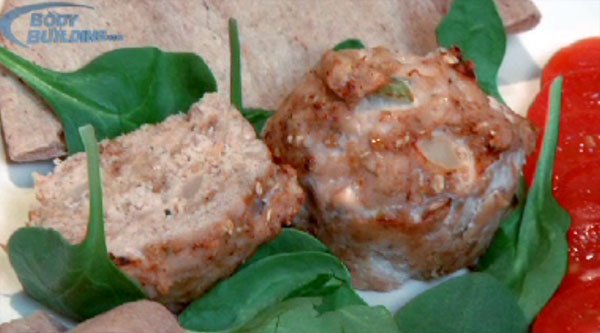
Turkey Meatloaf Muffins Recipe
These are one of the tastiest snacks I've had in a while, and they're absolutely loaded with protein and other great vegetable obtained vitamins and nutrients. I got the recipe off bodybuilding.com, a rich source of clean eating recipes and thousands of other health and fitness related articles. Here's the link to the original article:
http://www.bodybuilding.com/fun/video-jamie-eason-turkey-meatloaf-muffins.htm
It comes with a video tutorial by Jamie Eason, a girl that most definitely knows how to work hard and eat right.
Here's the recipe. These things are heavenly. Throw a little chili powder on them and you're set. Great source of lean protein and vegetables. In fact I would suggest actually adding a few more veggies to the mix, perhaps some bell peppers, beans, or really anything you think might taste good. Enjoy!!!
Turkey Meatloaf Muffins
Calories: 80
Fats: 2 grams
Carbs: 4 grams
Protein: 11 grams
Fats: 2 grams
Carbs: 4 grams
Protein: 11 grams
Ingredients:
- 2 lbs ground turkey (or chicken)
- 3 egg whites
- 1 cup quick cooking oats
- 1/2 tsp ground cumin
- 1/2 tsp dried thyme
- 2 tsp dry yellow mustard
- 2 tsp black pepper
- 2 tsp chipotle pepper spice
- 1 tsp salt
- 2 tbsp garlic powder (2 cloves minced)
- 1 small onion (finely chopped)
- 2 celery stalks (finely chopped)
Directions:
- Preheat oven to 375 degrees.
- Spray muffin pan with canola or olive oil.
- Mix all your ingredients together in one large bowl.
- Roll the mixture into balls and place in muffin pan. Muffins should be about the size of a racquetball.
- Bake for 40 minutes.
Makes 12 muffins.
Serving Size:
Women: 2 muffins
Men: 4 muffins
Serving Size:
Women: 2 muffins
Men: 4 muffins
Labels:
bodybuilding,
bodybuilding.com,
calories,
clean,
delicious,
diet,
eason,
jamie,
low carb,
meatloaf,
muffins,
nutritional,
protein,
recipe,
turkey,
vegetables
Monday, October 24, 2011
Creatine: The Old School Powerhouse!
I'm going to go on a creatine cycle next month, so I figured why not post a related article?
Few muscle building supplements have been around for as long as good ol' creatine monohydrate. It has been a staple in bodybuilding, strength training, and the entire fitness world in general for quite a while (the early 90's is when creatine was introduced as a supplement.) But what is creatine exactly? You may have heard quite a few stories about the stuff, and hopefully this article will clear up your understanding of that powdered powerhouse.
First thing's first, creatine is a natural element of food. It's found in all sorts of meats, like beef, turkey, chicken, and fish. It's composed of three amino acids, arginine, glycine, and methionine. Those are some powerful muscle building blocks right now, and you should already be starting to see how useful creatine is for packing on lean body mass.
But if you're getting some creatine in your diet already (in your food, though I bet you didn't know you were until now), why should you spend your hard earned cash to get some more of that pricey powder? Well first of all, creatine monohydrate, which has been proven time and time again to be the MOST effective form of creatine, doesn't cost much. In fact it'll probably be less than half the price of that expensive whey. And let me get this out of the way, it will NOT replace your protein supplement, in fact creatine is meant to assist in the more effective absorption of all that extra protein into your muscles.
But what will creatine do? Creatine will cause fluid to be drawn into your muscles, causing them to bloat slightly and grow noticably. I'm betting you didn't pay for a temporary "fake" muscle builder though, so keep listening. Your muscles absorb nutrients and protein MUCH more effectively if they are hydrated, and that's where creatine does its job well. It will pack your muscles full of water, making them ready and willing to take in as much of that extra protein as they can.
Creatine will also give you more anaerobic energy. In simple terms, as your energy stores become depleted, creatine can donate part of it's molecular structure to allow your body another short burst of energy when you really need it. This energy will be evident in anaerobic situations such as heavy max lifts, sprints, and other short, high intensity exercises. If you want ravaging muscular power, I suggest trying out some creatine very soon.
How do you take creatine though, that's the real question. There's been a lot of debate on this one, but the method I've used consists of a loading phase, followed by a constant dosage phase, followed by a cycling off. What this basically means is that for one week, you will consume 15-25g (3-4 tsp) of creatine pre or post workout to completely saturate your muscles with creatine as quickly as possible. If you just start off with a smaller, constant dosage, it will take longer to see benefits.
After this week of loading, you back off on the amount you take, trying now only to maintain your creatine stores. Take 2-5g (.5-1 tsp) a day pre-workout, and that should be enough. Keep on this pattern for a month, then stop taking creatine and allow your system to flush out. The reason for this is that there's rumors creatine can be damaging to your kidneys, however there is still a lot of controversy. People agree though that it's better to be safe than sorry. ALWAYS drink lots of water with creatine, both to load your muscles up and to help flush out your system.
Like with any supplement, your body can get used to the extra creatine, and you won't see the effects after a while. That's another reason to cycle off creatine every other month, to keep gaining for as long as possible.
If you're looking for a new, cheap, and easy way to build a little more muscle, before you buy 70$ worth of pills, try some creatine. It's old school, and it works. It'll pack on muscle, and make you feel powerful as the hulk himself (well, maybe not quite, but I like creatine...=]).
Load up, lift hard, and as always, good luck!!!
Monday, October 17, 2011
Eating Clean: Where to start?
What you've just stumbled upon is the start to a clean diet. And it's exactly the first step I suggest you take, if you're looking to get into a more healthy mindset. Take it slowly at first. Replace a few foods, incorporate some vegetables here, a fruit there (maybe instead of those oreos), and a bowl of oatmeal instead of that breakfast burrito. I'll say it again. TAKE....IT...SLOW.
Why is this so important?
First of all, if you've been running on microwave dinners and chips-ahoy for a while, it's unlikely that you'll find vegetables too appealing, nor will you be too keen on the idea of replacing your brownie dessert with a banana. Your body has become somewhat addicted to high sugar, high fat, processed food. It's not an uncommon thing, so don't feel bad. Breaking an addiction TAKES TIME. I used to be that guy, who ate half a pan of brownies for breakfast, a jar of cookies for lunch, and nearly a 1 pound burger for dinner. Being a growing adolescent boy, miraculously I got away with it. After realizing my absolutely horrendous diet, I began to make changes over the years, as I became more involved with weightlifting and fitness in general. It took a lot of trial and error, and a ton of research. Seriously, I spent hours on the computer learning every little nuance about nutrition. I'm proud of my diet now, and guess what, I don't crave bad food anymore! Am I perfect? Absolutely not. But I'm fine with skipping dessert, and I actually prefer the taste of most vegetables over any sort of cheese doodles or fig newtons.
Weaning your body off processed food takes time, unfortunately. You need to actively teach your body to enjoy the healthy stuff. There are many tricks to doing this more effectively, and I'll go over those in coming posts. Healthy food does not ever need to taste bad. And if you prepare it right, I promise you it never will. I'm not going to lie though, it won't be quite the same as that greasy burger. But you learn to appreciate healthy food, and I promise that eventually you will crave the healthy stuff, not the chocolate cake.
Whatever you do, do NOT try to go cold turkey off of processed food. This is the reason that an enormous amount of diet plans fail outright. You are not able to kick the cravings for the processed stuff, and after a few weeks and barely any results, you throw that broccoli out the window and go back to your precious Tostitos. I'll say it again, incorporate your new diet slowly. This isn't a diet plan, it's a lifestyle change. Learn to eat healthy now, and enjoy doing it for the rest of your life.
How clean you want your diet to ultimately be is up to you. Many are content and see great results with a moderate level of clean eating, having a good few servings of fruits, vegetables, lean meats, good fats, good carbs, and other nutrients every day, complimented by a small dessert or a few potato chips. These people usually try to incorporate a good amount of exercise into their lives as well, which I wholeheartedly suggest with every fiber of my being. Some people go all out and try to make their diet as organic, natural, and lean as possible. This is your choice. See what works for you. What are your goals? Why are you deciding to do this? What do you want to achieve?
And remember, you can always make adjustments. This isn't a one shot deal.
It's not a hard thing to do. My advice? Start with breakfast. That's easy right? And I think you'll find a nice healthy morning snack should follow pretty effortlessly, then a chicken breast and some veggies for lunch don't sound too bad, and so on and so forth.
Get out there and make the change. Good luck!
Subscribe to:
Posts (Atom)


.jpg)