Showing posts with label bodybuilding. Show all posts

Saturday, February 25, 2012

Universal Creatine *Review*

Sometimes, the simplest, purest, most basic things in life work out the best for you and your goals.  When things get too complicated, too fruity, too doctored up and fooled around with, their real effectiveness can really be brought into question.  Take one step into GNC and you'll see exactly this, supplements with so many ingredients they basically sell you a novel along with the powder.  Are some of the supplements effective?  Sure thing!  But they sure are complicated, and if you don't know what to look for, you can end up paying a lot of money for something that doesn't do much at all.  Isn't there anything out there that's simple and effective?  Something you can trust, and just plain works?


Yes, as a matter of fact there is.  It's called Universal Creatine Monohydrate.  Now I've done an article on creatine before, and as I've said, creatine is the old school powerhouse in muscle building.  It was one of the first supplements ever to hit the shelves, and it's still one of the most tried and true muscle builders out there today.  Why do so many people use such an old, seemingly outdated supplement?  Because it works, that's why.  And believe me, almost anyone who knows their stuff as far as supplements go will tell you that good ol' creatine is something they'll always turn back to after their complex BCAA glutamine super amino blah blah pills have left them with little to show for their money.

Now don't get me wrong, companies have definitely tried to improve creatine over the years.  Right now you can buy creatine "blends" from all sorts of manufacturers like Muscle-tech, BSN, Muscle Pharm, BPI, Driven Sports, and countless others.  These blends are filled with strange forms of creatine like "creatine ethyl ester," and "micronized creatine," along with the original creatine monohydrate.  And boy, will they all suck your wallet dry quickly.  I'm not saying they don't work, and I'm definitely not saying they don't taste good, but I will say that you can get quite a bit more bang for your buck if you look at the simpler stuff from Universal.  There is no study out there that proves one form of creatine is better than another, and a TON of studies that back up the raw effectiveness of simple creatine monohydrate.  And the good news for you is that pure, unflavored creatine monohydrate is cheap.  That's why I firmly believe that Universal Creatine Monohydrate is one of the best supplements you could ever buy for your money.

What's in it?  Nothing but certified pure, unflavored, creatine monohydrate.  One serving size is 5 grams, or one teaspoon.  In a 200 gram container you'll get 40 servings (yay math), and two of these bottles packaged together from bodybuilding.com costs you $12.  One 300 gram bottle costs only $8.65.  If you're a veteran at buying supplements, you'll know that price is DARN CHEAP, and that amount of product will last you for quite a while (definitely enough for one to two full cycles.)


300 GramsUnflavored
Serving Size1Teaspoon(5g)
Servings Per Container60
Amount Per Serving% DV
Creatine Monohydrate5g*
* Daily Value (DV) not established.
Other Ingredients:
Contains Pure Micronized Creapure® Creatine Monohydrate.
Made in a GMP facility that uses milk, soy, egg, peanuts.


How's it taste?  Like what ever you put it in.  It's unflavored, which may be a bit of a buzzkill when you first get it, however you'll soon realize is actually a big bonus because you can throw it in with pretty much any drink and never know it's there.  Even in plain water it doesn't reveal itself as a supplement, it just goes right down your gullet with no nasty aftertaste or texture.  I usually stick one teaspoon in with my pre-workout, and another in with my post workout shake.  Again, I cannot ever tell the difference, and it's great to know I'm getting my muscles all that creatine with so little hassle.

How's it mix?  Well, creatine monohydrate mixes OK, but never fully dissolves, so at the end of your drink I suggest swishing the little bit of liquid left around the glass a couple times, then quickly chugging it to avoid a little pile of undissolved powder at the bottom of your glass.  This tiny issue in mixibility isn't the product's fault though, it's just the properties of creatine mono itself.  Not hard to overcome though, as long as you're capable of keeping track of how much liquid you have left.

Does it work?  YES!  YES IT DOES!  I've been on a horrendously difficult training program, and even consuming more food was not drastically helping my strength gains.  I decided to go back on creatine (I had used it years ago, and took a long hiatus).  My god, my workouts are entirely different!  I feel stronger, more energized, like a true beast.  I've hit a few new PR's in one week on this stuff, and just keep wanting to hit the gym over and over again.  It's a great feeling, and it's a common result of creatine supplementation.  Creatine will increase energy levels, muscle volume, and protein synthesis (it helps your muscles to more effectively build up bigger and stronger each time after a workout.)  If you want strength gains, get on creatine, it's as simple as that.

How do I take it?  Well, there's controversy on this topic, but in general there are two main trains of thought.  The first supports what's called a "loading phase," which is meant to saturate your muscles with creatine over a period of five days by taking 20 grams of creatine per day (4 tsps), then cut back to around 10 grams per day for the remaining 4-5 week cycle.  The second train of thought says to nix the loading phase and just enter in with a normal daily dosage of 10 grams per day, which will eventually saturate your muscles to the same level as with loading.  I personally side more with the loading phase, as it really does seem to more quickly get creatine into your system (your muscles take time to absorb larger amounts of creatine than natural levels, so you're basically "forcing" more into them), and you'll see better results sooner.  I doubt you'll see much difference either way, but read up on the subject if you're really interested.


Regardless of the initial method of starting supplementation, you want to remain on creatine for 4-5 weeks, then cycle OFF creatine and allow all the extra to completely wash out of your system.  This takes a lot of stress off of your kidneys, and allows them to recover (because they'll be working double time to filter all that excess creatine out of the liquids you're drinking.)  Also, your body likes to maintain a stable equilibrium above all else, and therefore continued usage of extra creatine supplementation will eventually lose its powerful strength building effect (you'll build up a tolerance to a point where the creatine is ineffective).  By cycling off creatine, you can get greater strength gains when you eventually cycle back on.  And after this 4 week "wash out," you can immediately cycle back onto creatine if you wish, and just keep repeating the process.

How does this stuff even work?  Well, in the most basic sense, creatine works in two ways.  First, it volumizes your muscles by hydrating them to extreme levels.  It pulls a LOT of water into your muscle fiber, which has been shown to drastically increase the efficiency of protein synthesis.  Secondly, creatine adds to readily available energy stores by converting to adenosine-triphosphate or ATP (your muscles' main energy source) when your original stores of ATP run out.  This means that if you exhaust your muscle ATP in 8 reps without creatine, when you have extra creatine in your muscles it can be rapidly converted to form more ATP and you can keep pushing for a few more reps.  Those extra reps will translate directly into strength gains, and therefore you'll get stronger, faster.

Note:  You must drink a LOT of water with creatine, and don't be surprised if you seem to soak it all up like a sponge.  Slight water bloating is completely normal with creatine supplementation, and it's not unusual to gain 3-4 lbs of water weight in the first week upon starting it.  But seriously, when it comes to water, try for a gallon a day at least.

All in all, Universal Creatine may be the best bang for your buck out there on the market today.  It's certified to be some of the purest creatine monohydrate you can buy, and therefore you can be sure you're getting maximum benefits from every teaspoon you take.  You can expect immediate strength gains, muscle volume, and increased energy from this stuff, which is a lot more than you can say for other, more expensive supplements.  Yup, when it comes to creatine, Universal will be my brand of choice again and again.  I rate it a 10/10.  It's cheap, effective, and SIMPLE.  I love it.

Here's the link to the order page:  http://www.bodybuilding.com/store/univ/creatine.html

Crank hard, lift heavy, and as always, good luck!

Friday, February 24, 2012

My Beef with YOUR Legs

All right, this here's my blog, and though I'll almost always give helpful, hopeful, kind and informative information, a guy's gotta blow off steam sometimes, right?  


I've recently had a string of circumstances in which I've overheard people discussing the infamous "leg day" in the gym.  Oh god, LEG DAY!  HOW AWFUL!  It's been nothing but moaning, groaning, and whining at how sore they are after their LEG DAY.  "Aw man, I hate walking up stairs after LEG DAY..." or, "Man I think I'm going to take my rest day today, I just hit LEGS yesterday and I can barely walk."  I usually just stand there, fuming a little bit, trying not to scream out at them that they have no idea what a real leg workout really is.  Luckily though, self control is one of my better qualities.

So what's my big issue with LEG DAY?  Well, while I can agree with a lot of bodybuilding philosophies, the dogma behind leg day is NOT one of them.  Sure, I can understand you may be sore after some high rep squats, leg presses, and lunges, but I won't tolerate the whining for days on end that follow such a "high intensity " workout.  I put high intensity in quotes because it's all really a matter of opinion, and I hate to say it, but most gym rats have no idea what some top level athletes go through to force their legs to the next level.  Allow me to explain, but before I do, understand that I AM going to bring up Olympic lifting and power lifting yet again, and because I am training for Olympic weightlifting you may think I'm biased.  You're entitled to that opinion, and you probably are right in a way.  I'm biased, sure, but for sound reasons.  Anyway....

Let's look at an amateur Oly weightlifter.  Do you bodybuilders have any idea what they're training entails?  Let's go through the motions of how their training progresses.  When they're  a stark, raw beginner, they're squatting moderately heavy/ heavy twice a week, and probably pretty light for one more day on top of that.  They'll then progress to at least four days of squatting per week, increasing both their volume and weight.  Pretty soon they'll be hitting at least 80% of their 1 rep max every one of their training days.  Once their body adapts, they'll increase the frequency of their training sessions.  A good amateur will be training about 6 days a week, with one double session thrown in there, in which they'll squat in BOTH sessions.  After that?  You guessed it, they'll add one more day.  At first they'll only squat light on this 7th day, but after a while this workout will build up to around the same level as their other ones.  They'll be hitting at least 85-95% of their max almost every day, for doubles and triples.  But this isn't even close to the end.  Oh no.  A professional, world class weightlifter will squat every day, two to three sessions, in which they'll max out multiple times on singles, doubles, triples, 5's, and sometimes even 10's.  On top of that, they'll be using weights that regularly exceed 500 lbs.  And that's just for squats.  Did I mention they do the same thing with snatches and clean/jerks?  Yeah, your leg day doesn't seem so hard anymore, does it?

Now THAT's some depth!
A common powerlifting workout schedule may not be as squat oriented as Olympic style weightlifting, but they're still working legs multiple times a week with far more intensity than you can really fathom.  They usually have one to two days entirely devoted to the heaviest squats they can muster, and usually one day devoted completely to deadlifting (again, at maximal loads).  These guys are the strongest of the strong when it comes to moving heavy stuff around, and they're doing reps with weight I couldn't move in any way, shape or form.  Do that multiple times a week, then complain about those lunges you used to do.

Bottom line, you'll build strength squatting heavy and squatting often.  You may think it goes against conventional knowledge of muscle recovery, but that's exactly the point.  You force your body to adapt to heavier weights, because you're lifting them so often.  Even me, the skinny kid from Vermont, has put about 100 lbs on his squat so far with the Olympic lifting technique, and it's only been about 6 months of serious training.  And that's self coached.  There's a reason the greatest Olympic athletes were squatting over 500 lbs by the time they were 19.  I think John Broz, one of America's finest weightlifting coaches, puts it best:

"If your family was captured and you were told you needed to put 100 pounds onto your max squat within two months or your family would be executed, would you squat once per week? Something tells me that you'd start squatting every day. Other countries have this mindset. America does not."

Now I don't mean to take anything away from serious bodybuilders.  Judging by the size of their legs, they know how to train to get what they want.  But that's just it.  They want size, definition, vascularity.  Strength comes in behind those.  Again, that's fine if that's your goal, but it certainly isn't mine.  I'd rather squat super heavy weight with big legs than medium/light weight with GIANT legs.


One more issue I have with a bodybuilder style leg workout, is the depth of the squats.  What the HECK are you guys thinking?  I regularly see these big fools get under a bar with WAYYY too much weight, groan as they barely manage to lift it onto their back (or neck if they're REALLY inexperienced), hunch right over and squat a full 4 inches.  WHAT ARE YOU DOING?  You're killing your knees, getting no real leg workout, and most likely destroying your lower back.  To get strength, you need to squat deep.  To squat deep, you need flexibility.  Look at any Olympic lifter, or even power lifter, they have ridiculous hip flexibility and can maintain a tight back even into the deepest of squats.  They're building solid legs.  Why aren't you?

NOT DEEP ENOUGH!!!!!
Anyway, there's my little rant.  To anyone around me, don't complain about leg days.  I may be a skinny kid with pretty skinny legs, but I'm still squatting 6 days a week, with double sessions every other day.  I don't find anything difficult about your stupid lunges, quarter squats, or leg presses.  And next time I see you straining to push 500lbs on the hack sled a full two inches, don't be surprised if you hear me chuckle just a little bit.

If you're looking for strength, squat heavy, squat deep, squat often, and don't cry about it.  GOOD LUCK!

Tuesday, October 25, 2011

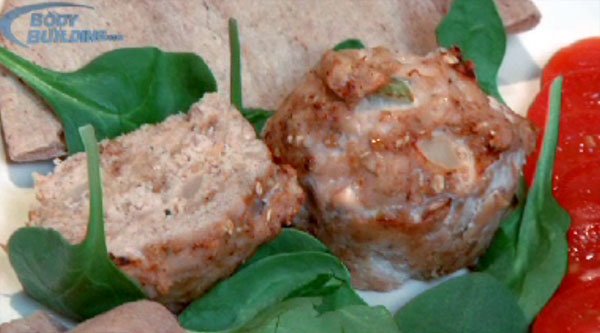
Turkey Meatloaf Muffins Recipe

These are one of the tastiest snacks I've had in a while, and they're absolutely loaded with protein and other great vegetable obtained vitamins and nutrients.  I got the recipe off bodybuilding.com, a rich source of clean eating recipes and thousands of other health and fitness related articles.  Here's the link to the original article:

http://www.bodybuilding.com/fun/video-jamie-eason-turkey-meatloaf-muffins.htm

It comes with a video tutorial by Jamie Eason, a girl that most definitely knows how to work hard and eat right.

Here's the recipe.  These things are heavenly.  Throw a little chili powder on them and you're set.  Great source of lean protein and vegetables.  In fact I would suggest actually adding a few more veggies to the mix, perhaps some bell peppers, beans, or really anything you think might taste good.  Enjoy!!!

Turkey Meatloaf Muffins

Calories: 80
Fats: 2 grams
Carbs: 4 grams
Protein: 11 grams

Turkey Meatloaf Muffins
+ Click To Enlarge.
Turkey Meatloaf Muffins.
Ingredients:
Directions:
  1. Preheat oven to 375 degrees.
  2. Spray muffin pan with canola or olive oil.
  3. Mix all your ingredients together in one large bowl.
  4. Roll the mixture into balls and place in muffin pan. Muffins should be about the size of a racquetball.
  5. Bake for 40 minutes.
  6. Makes 12 muffins.

    Serving Size:
    Women: 2 muffins
    Men: 4 muffins

Tuesday, October 18, 2011

Performance Weekly #1: Whey vs Casein Protein


So, being a gym rat myself, I've decided to post at least one (it'll probably end up being way more than that) performance/strength/muscle building article per week.  I have always been a huge supporter of any sort of exercise, and believe it can do wonders for absolutely anybody.  Ten minutes a day out walking your dog is better than another ten minutes on the couch.  That will always be true.

I for one though, like to push it hard.  Being an Olympic style weightlifter, I am in the gym for at least an hour a day, sometimes twice a day, squatting, snatching, clean and jerking (you know, that sport you maybe have accidentally flipped to one day while the Olympics were on?)  pressing, and in general pushing my muscles to the absolute limit day in and day out.  And many of you are right there with me, whether you be a runner, biker, bodybuilder, swimmer, maybe even a Polo player (though I think the horse does most of the work there.)  You all work your muscles hard, sweat harder, and sleep soundly at night.

We all know the concept of working out.  You go to the gym, lift a few weights, and get stronger, right?  Well there's a lot more to it than that, but in general, yes.  However, if your goal is to get stronger, faster, you could be drastically hampering your progress if you're not supplementing your body correctly.  See, when you lift weights until exhaustion (when you feel the burn), what you're actually doing is forcing your muscles to work in an anaerobic state.  This means they're running off lactic acid instead of oxygen.  This chemical process works, however lactic acid is destructive to your muscles, and begins to break them down.  After your workout, your muscles use available sources of protein, carbohydrates, and various other nutrients to begin rebuilding the damaged fibers, and this time will try to build them a little bigger and denser than they were before, in an attempt to avoid such destruction.

However to do all this, you need supplementation.  One of the most common supplements on the market today to help with your strength goals is the humble protein shake, which you've probably seen in the form of Whey Protein Powder.

Whey is a staple in the fitness industry.  Those that don't know much about lifting still seem to know that they can buy a cheap tub of Whey protein at Walmart, mix some with water, drink it after their workout, and believe they have done their bodies a favor.  And they have!  But when you drink one of these shakes, what are you actually giving your body?  Why is Whey protein so helpful?  Well first things first.  Whey protein itself is a by-product of cheese production.  It is an extremely dense protein source, packed with all sorts of delicious nutrients, amino-acids, and other things your body needs when it's crying for food right after a workout.  Most protein you'll buy at the store is flavored (I like chocolate), and has a lot of other vitamins and related supplements that are beneficial to building muscle pre-mixed into it.  There's also a good source of simple carbohydrates, which will spike your insulin right after a workout, encouraging your body to absorb the protein AS QUICKLY AS POSSIBLE.  These carbs will also help refuel your muscle glycogen levels.  So in all, if you're one who does any sort of physical fitness activity, I would suggest incorporating whey protein into your post workout nutrition.  You'll be building lean muscle mass that will help you feel stronger, perform better, and will actually increase your metabolism to help burn off unwanted fat.  You'll be a lean, mean, performace machine.  A win-win situation for sure!

Side Note:  After a workout is pretty much the only time you want to voluntarily spike your insulin levels.  

So that's all fine and dandy, and now we have a great protein source to rebuild muscles after our intense gym session.  But we've got another problem.  If quick, powerful muscle gains are desired, we've got to realize that the body doesn't only rebuild muscle right after our workout.  Oh no, our body is constantly working on those destroyed muscle fibers, and it takes it's sweet time.  In fact it's most favorite time to work is at night, when we're asleep.  After two hours of deep sleep, our body begins to release Human Growth Hormone (HGH) to build those tired muscles back up to use the next morning.  But there's the problem.  What aren't we doing at night, which our body NEEDS us to do in order to have the raw materials necessary to build muscle back up?  EATING!!!!  We're practically starving ourselves all night!  That's not a good formula for muscle growth.  If only there was a quick, easy way to circumvent this problem.

Enter Casein Protein.  Unlike Whey, which is not optimal for night time growth because of it's extremely fast absorption rate, Casein absorbs into your muscles slowly, essentially feeding them all night long. Casein protein is often found in dairy products as well.  Basically, it is a slow acting alternative to Whey, so when taken right before bed it feeds your body all night as it slowly used by your body.  You can buy tubs of Casein protein powder, just like whey, but if you're not quite as serious about muscle building I would suggest trying this simple alternative:  Before bed, take a tablespoon of natural peanut butter (the fats in peanut butter have the same effect of slowing nutrient absorption) along with half a cup of cottage cheese, a food rich in Casein Protein.  Take these less than half an hour before you hit the hay, and watch your muscles grow. 

Another side note:  Just as whey protein is optimal before bed because it absorbs too fast, Casein isn't optimal post workout because it absorbs too slowly.  After your workout you want to cram nutrients into your muscles at light speed.

If you want to know more about the subtleties of both these protein sources, I suggest reading some articles over at www.bodybuilding.com.  They've got some top notch experts who write fitness related articles every day, and they've got all the science behind it.  I'm just trying to keep up with them =].

Last side note:  If desired, the absorption of Whey protein powder can be slowed by mixing it with non-skim milk, or almond milk, or with a tablespoon or two of PB due to the same nutrient slowing effects of the fat in either the milk or PB.

So now you know about Protein.  Get out there, lift hard, and feed your body right.  

Monday, October 17, 2011

Eating Clean: Where to start?


Ok, so now you know a little bit about what comprises a clean diet.  And maybe you're thinking that a few of the foods I mentioned don't actually sound so bad.  In fact maybe, just maybe you might be able to incorporate a few of those foods into your daily diet, perhaps substituting some of the processed junk that you always feel guilty about eating.

What you've just stumbled upon is the start to a clean diet.  And it's exactly the first step I suggest you take, if you're looking to get into a more healthy mindset.  Take it slowly at first.  Replace a few foods, incorporate some vegetables here, a fruit there (maybe instead of those oreos), and a bowl of oatmeal instead of that breakfast burrito.  I'll say it again.  TAKE....IT...SLOW.  

Why is this so important?

First of all, if you've been running on microwave dinners and chips-ahoy for a while, it's unlikely that you'll find vegetables too appealing, nor will you be too keen on the idea of replacing your brownie dessert with a banana.  Your body has become somewhat addicted to high sugar, high fat, processed food.  It's not an uncommon thing, so don't feel bad.  Breaking an addiction TAKES TIME.  I used to be that guy, who ate half a pan of brownies for breakfast, a jar of cookies for lunch, and nearly a 1 pound burger for dinner.  Being a growing adolescent boy, miraculously I got away with it.  After realizing my absolutely horrendous diet, I began to make changes over the years, as I became more involved with weightlifting and fitness in general.  It took a lot of trial and error, and a ton of research.  Seriously, I spent hours on the computer learning every little nuance about nutrition.  I'm proud of my diet now, and guess what, I don't crave bad food anymore!  Am I perfect?  Absolutely not.  But I'm fine with skipping dessert, and I actually prefer the taste of most vegetables over any sort of cheese doodles or fig newtons.  

Weaning your body off processed food takes time, unfortunately.  You need to actively teach your body to enjoy the healthy stuff.  There are many tricks to doing this more effectively, and I'll go over those in coming posts.  Healthy food does not ever need to taste bad.  And if you prepare it right, I promise you it never will.  I'm not going to lie though, it won't be quite the same as that greasy burger.  But you learn to appreciate healthy food, and I promise that eventually you will crave the healthy stuff, not the chocolate cake.

Whatever you do, do NOT try to go cold turkey off of processed food.  This is the reason that an enormous amount of diet plans fail outright.  You are not able to kick the cravings for the processed stuff, and after a few weeks and barely any results, you throw that broccoli out the window and go back to your precious Tostitos.  I'll say it again, incorporate your new diet slowly.  This isn't a diet plan, it's a lifestyle change.  Learn to eat healthy now, and enjoy doing it for the rest of your life.

How clean you want your diet to ultimately be is up to you.  Many are content and see great results with a moderate level of clean eating, having a good few servings of fruits, vegetables, lean meats, good fats, good carbs, and other nutrients every day, complimented by a small dessert or a few potato chips.  These people usually try to incorporate a good amount of exercise into their lives as well, which I wholeheartedly suggest with every fiber of my being.  Some people go all out and try to make their diet as organic, natural, and lean as possible.  This is your choice.  See what works for you.  What are your goals?  Why are you deciding to do this?  What do you want to achieve?

And remember, you can always make adjustments.  This isn't a one shot deal.

It's not a hard thing to do.  My advice?  Start with breakfast.  That's easy right?  And I think you'll find a nice healthy morning snack should follow pretty effortlessly, then a chicken breast and some veggies for lunch don't sound too bad, and so on and so forth.  

Get out there and make the change.  Good luck!