Showing posts with label low carb. Show all posts

Wednesday, February 8, 2012

Flatout! Multigrain Flatbread *Review*


It's not often you come across a food that's a remarkable step forward in terms of health, convenience, price, and taste.  However, I have to share with you a recent find of mine that I came across in my local Walmart when buying food to stock up my dorm room.  I was looking for whole wheat bagels, and instead came across a brightly colored flat plastic package proclaiming "Flatout!"  Intrigued, I picked it up.  And after reading the front, back, fine print, nutritional information, AND ingredients, I immediately tossed the package in my cart and have been thoroughly enjoying its contents for about a week now.

So what did the package contain?  Well, Flatout makes healthy flatbread/tortillas/wraps, and I've always been a HUGE fan of making wraps containing all sorts of delicious meats and veggies.  They taste amazing, and Flatout flatbreads are NO exception.  I bought their multigrain variety, which not only contains Flax seed and Omega-3 fatty acids, but is made from 100% whole wheat bread.  WOW!  Now that's some serious health horsepower.  But upon reading into the nutritional information and macro-nutrients a little more, the story just gets even better.

What else do these flatbreads have going for them?  Hmmm...where do I begin?

These things are packed with fiber!  Every flatbread has 17 grams of complex carbohydrates, 8 entire grams of which is fiber!  8 WHOLE GRAMS!  That's a LOT of fiber, and is a fantastic addition to any diet.

Not only are you getting a very manageable dose of some of the healthiest carbs you can find, but you'll also get a great dose of protein!  Each flatbread has 9 grams of protein!  Yet again, I say WOW!  That is quite a bit of protein for just one little wrap.  So far I'm loving it.

Also, Flatout flatbreads have only 1 g of sugar per serving, and 2.5 g of unsaturated fat (no saturated fat!  NICE!).  The flax seed adds a whole bunch of Omega-3 as well, which just about everyone needs in their diet. Put some tuna in one of these wraps and you'll be getting enough Omega-3 EFAs to keep your heart happy and healthy for quite some time.

But Flatout flatbreads don't only impress me with what they contain, they also cause great excitement for what they DON'T have.  What am I talking about?  Well in many 100% whole wheat products these days, you'll find that hidden killer, high fructose corn syrup.  That stuff is the devil, and will add fat to your bones quicker than you can get to the nearest dumbbell.  Flatout flatbreads though have none of this, as well as no other crazy, unpronounceable ingredients.  Only the good stuff goes into these breads, and that's just plain awesome.

And did I mention they're only 100 calories EACH!?!

Here are the nutritional facts for Flatout flatbreads:


 Needless to say, I love these things.  They're easy to make into all sorts of amazing culinary creations.  Some days, for a quick and healthy in-dorm breakfast, I make a simple wrap that contains:

1 Flatout! Multigrain flatbread wrap (100 calories)
1 cup of Southwestern style egg beaters (aproximately 110 calories)
3 White button mushrooms (sliced with mandolin) (15-20 calories)
Whatever other veggies I feel like throwing in (would love some diced onions or peppers!)

I basically slice the veggies into the egg whites, stir it up, add some cayenne pepper, and cook it for about two minutes.  I then scoop out the mix onto a Flatout! flatbread wrap, twirl it up nice and tight, and I've got a high protein, low carb breakfast for low calorie days.  Not to mention it's DELICIOUS!

But that recipe is ridiculously simple compared to some of the stuff they have on their site.  Check this out:

Photo of Arugula Mushroom Flatout Thin Crust Pizza


Arugula Mushroom Flatout Thin Crust Pizza
Posted in Grillin' Pizza
1 Flatout® Light Flatbread
1/2 cup fresh, sliced and steamed mushrooms – shiitake, button or portabella
2 Tbs onion, sliced
6 grape tomatoes
1 Tbs olive oil
1 1/2 tsp fat free balsamic vinegar
Salt and freshly ground pepper to taste
1/2 cup baby arugula
1 Tbs freshly grated Parmesan cheese

Preheat outdoor grill. While grill heats, toss mushrooms, onions and grape tomatoes with olive oil; season to taste with salt and freshly ground pepper. Saute 6 to 8 minutes. Lightly oil both sides of Flatout. Cook Flatout on closed grill for 2 minutes. Remove from grill and top with arugula, sautéed vegetables, Parmesan cheese and drizzle with balsamic vinegar. Cut into slices and enjoy!
Alternate Cooking Options: Cook lightly oiled Flatout in 350°F oven directly on grate for 7 minutes. Remove, top with arugula, sautéed vegetables, Parmesan cheese and drizzle with balsamic vinegar. Cut into slices and enjoy!


Does that look good or what?  Check out some other fantastic recipes right on their site:
http://www.flatoutbread.com/category/recipes/

All in all, these wraps are fantastic, a real slam dunk in the diet world.  They're made with quality ingredients, are extremely healthy, and taste absolutely fabulous.  They're moist, thick, and flavorful, and boy do they go great with almost anything.  My rating?  An easy 10/10.  PICK SOME UP TODAY!!!!

Oh, and tell them the Food Guru sent you.  Good Luck!


Monday, October 31, 2011

Macros: What They Are, And How To Use Them


Aren't calories the bottom line?  I mean, the number of calories you eat during the day must be surpassed by the amount you burn in order to lose weight.  That's what you've always heard, and seems to be the most popular knowledge floating around weight loss classes/forums today.  And I'm not here to disagree with it, because bottom line, that is the truth.  For the most part.

But I'm going to pose a little example to you, which might change your thinking just a little bit.  Imagine your weight loss calorie goal was 1800 per day.  So one day, you eat 1800 calories, with most of those calories coming from protein.  The next day, you also eat 1800 calories, but this time 90% of those calories come from carbs.  Now imagine you have a carb sensitivity (your body doesn't like to burn through carbs as quickly as you'd like, and therefore you're more prone to gain weight off of them).  While you still may have eaten your daily goal, you won't have the tendency to lose much fat, because your body will maintain the fat you have if you don't use all the carbs (and an entire days worth of carbs is pretty hard to completely use up.)  

You can think of the body as a house.  Carbs are bricks, protein is cement, and fat is wood.  You can't build a good house with just one of those things.  You need a bit of everything.  Better yet, you need certain RATIOS of those things (I wouldn't want quite as much cement as I would want bricks).  These ratios are referred to by the fitness community as "macros", which is shorthand for macro nutrients (carbs, protein, and fat).  A typical macro ratio looks like this:

40/40/20

So if you see this while perusing the fitness forums and don't know what it means, be confused no longer!  What that simple shorthand basically stands for is the percentage of your calories from each macro nutrient you should be getting in your diet.  The first number refers to the percentage of carbs .  The next, protein, and the final, fat.  40% of daily calories come from protein, 40% come from carbs, and 20% from fat.  

OK, so now you know what it means, but it still sounds like a pretty daunting task to calculate these.  And I used to think so too.  But in reality, it just takes a little trial and error, and usually you can figure out the rest of the percentages if you already have one.  

So what's the easiest one to calculate?  Protein!  A person trying to maintain lean muscle mass should be trying to take in 1 gram of protein per pound of body weight.  So try that in your diet, and calculate the calories coming from those foods you've chosen.  Because only 20% should come from fat, calculate how many calories would come from the amount of fatty foods you'd put in your diet.  How many grams?  Well 20 is half of 40, and if 40 grams of protein represents 1 gram per bodyweight, you should eat about half that many grams of healthy fats.  Simple enough, right?  

Carbs represent the fillers.  Any left over calories in your diet should come from good, complex carbs.  And don't hold too much stock in "low carb" diets.  Sure there's a time and place for those diets, but unless you're really aggressively looking to drop the last few pounds, I would try to maintain a decent amount of carbs, at least initially.  Low carbs=low energy= ABSOLUTELY MISERABLE all day.  That's why a lot of people drop low carb diets quite quickly.

This above statement will be very controversial among keto diet followers, and I know there have been claims/individual proof of giant fat loss/energy boosting from ketogenic diets.  I'm just speaking for the general, average dieter here looking to get into a better habit of eating.  I wouldn't have them hop right into a ketogenic diet.

So this is all well and good, but how do you figure out the best ratio for you and your daily habits/genetics?  Unfortunately, it requires experimentation.  But in this article I can at least give you a good place to start, by listing a few common macro ratios that are used for specific goals.

40/40/20- This diet represents a muscle maintaining/building diet.  It's a very common macro set, and is used throughout the fitness community.  It's not optimal for weight loss, but everyone will respond differently to macros and it's not to say you can't lose weight on these percentages.  Just adjust your daily calories within the ratio.  

55/30/15- This diet is more for bulking.  The large carb percentage will make your body want to store that excess energy as body mass, and therefore you'll grow more easily on this macro set than you would on a lower carb one.  Carbs are especially important for hard-gainers (skinny people who want to build muscle but just can't put the weight on), and you need to eat significant amounts of them to ensure your body can grow.  Again, adjust your overall calorie intake as needed.

25/40/35- This is a common ratio for fat loss.  You're getting around 25% of your daily calories from carbs, and 40% from protein to maintain whatever muscle mass you have.  This will encourage your body to run off the fat you have instead of the carbs you're consuming, and therefore you should burn an extra few pounds.  Unfortunately the body can stop responding to low carb diets rather quickly, and if your fat loss suddenly grinds to a halt I would suggest getting some more carbs back in your diet.


10/40/40- This ratio is called the ketogenic, or "keto" diet.  It's EXTREMELY low carb, and the basic idea is to get your body into a ketogenic state where it is burning only your body fat for energy.  Followers of the keto diet claim increased energy and extremely accelerated fatloss, but there has been a lot of skepticism about the actual merit held by such a low carb diet plan.  The Ketogenic diet will definitely come up in a later article of mine.

So that's about it.  Experiment with your own diet.  Take your daily calorie goal and try to split up those calories by the percentages stated in your chosen macro diet.  Do this by the grams of each macro nutrient you consume (grams of protein, carbs, and fats).  Sure it requires a little math, but hey, gotta keep that brain sharp.  

Count carefully, experiment, and as always, good luck!

Tuesday, October 25, 2011

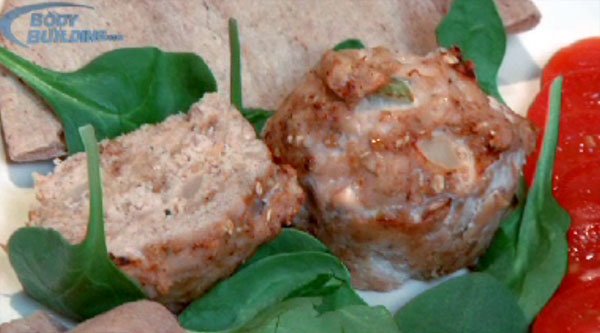
Turkey Meatloaf Muffins Recipe

These are one of the tastiest snacks I've had in a while, and they're absolutely loaded with protein and other great vegetable obtained vitamins and nutrients.  I got the recipe off bodybuilding.com, a rich source of clean eating recipes and thousands of other health and fitness related articles.  Here's the link to the original article:

http://www.bodybuilding.com/fun/video-jamie-eason-turkey-meatloaf-muffins.htm

It comes with a video tutorial by Jamie Eason, a girl that most definitely knows how to work hard and eat right.

Here's the recipe.  These things are heavenly.  Throw a little chili powder on them and you're set.  Great source of lean protein and vegetables.  In fact I would suggest actually adding a few more veggies to the mix, perhaps some bell peppers, beans, or really anything you think might taste good.  Enjoy!!!

Turkey Meatloaf Muffins

Calories: 80
Fats: 2 grams
Carbs: 4 grams
Protein: 11 grams

Turkey Meatloaf Muffins
+ Click To Enlarge.
Turkey Meatloaf Muffins.
Ingredients:
Directions:
  1. Preheat oven to 375 degrees.
  2. Spray muffin pan with canola or olive oil.
  3. Mix all your ingredients together in one large bowl.
  4. Roll the mixture into balls and place in muffin pan. Muffins should be about the size of a racquetball.
  5. Bake for 40 minutes.
  6. Makes 12 muffins.

    Serving Size:
    Women: 2 muffins
    Men: 4 muffins