Showing posts with label vegetables. Show all posts

Tuesday, March 13, 2012

Caveman Eats: The Paleo Diet


At some point along the line of human evolution, we must've done something wrong when it came to nutrition.  Or maybe, we did a whole BUNCH of things wrong.  I'm not exactly sure when wild meats and raw vegetables were replaced with processed, starchy foods, but I can promise you it was a dark day for health and fitness.  Sure, it's pretty obvious to see that we didn't mean to stray away from nature and all its goodness, and that new age processed food was seen as an advancement and modern convinience instead of a silent killer.  But wouldn't it be nice to get back to how things were, when all food was natural, and natural was good?

That ideal is exactly what the Paleolithic Diet tries to cater toward.  The "paleo diet," or "caveman diet" is basically a diet consisting of only foods that were available to the earliest of humans (alive in the paleolithic era, surprise surprise).  It's an interesting diet, and one that has quite a bit of potential in terms of health.  It also has quite the following in the health and fitness community, especially with crossfit athletes.  Some swear by it, saying that our bodies were never meant to consume more than what the paleo diet has to offer, and therefore filling your belly with paleo food is like filling your car with high octane gas.  Our body knows it, loves it, and runs with peak efficiency off of it.  But is it true?  And what foods exactly are in this caveman's buffet?

Meat:  Caveman say "ugh ugh me like meat!"  Seriously, this diet definitely encourages the consumption of lean meats from almost any source, such as beef, pork, chicken, buffalo, alligator, rabbit, and pretty much anything else you can think of.  Personally, I don't really know about paleolithic humans and if they had cows or not, but I do really like this aspect of the diet.  Lean meat is completely essential for the body as far as nutrients go, and the strong suggestion of lean meat consumption really helps to place this diet as a more favorable one for avid gym-goers.


Fish:  The paleo diet is packed with fish and shellfish too, which I LOVE.  Salmon, shrimp, crab, tuna, lobster, mackeral, you name it, you can probably eat it on the paleo diet.  These fish are not only an incredibly dense protein source, they're also very low calorie and packed with heart healthy omega-3 fatty acids.  Awesome!

Vegetables:  The paleo diet says you can eat pretty much any vegetable, as long as it's not starchy (like potatoes, yams, etc).  The diet pushes more for the raw consumption of these veggies, though obviously with modern commodities like ovens, microwaves, stovetops, etc, it's easy to make some pretty awesome recipes from the veggies and meats allowed on the diet.  Again, I'm very supportive of this part of the diet.  VEGETABLES RULE!

Fruits:  Any fruit you can think of is allowed on the caveman diet.  Early humans were supposedly able to easily pick off of trees and bushes, and therefore wouldn't be limited in what they could eat in terms of fruits.  Sounds great to me, I love fruit!  It's an incredible energy source and tastes absolutely delicious.  Who doesn't love a little natural sugar?

Nuts and Seeds:  According to the paleo diet, early humans were large consumers of many different nuts and seeds, and therefore foods like chestnuts, cashews, pumpkin seeds, sunflower seeds, walnuts, macadamia nuts, pine nuts, and sesame seeds are all encouraged on the paleo diet.  However, make sure to note that peanuts are NOT a nut, but actually a legume, which aren't allowed on the paleo diet.


Foods that AREN'T allowed on the paleo diet include:

Dairy foods: Again, according to the paleo diet (I'm not going off any sort of history source here other than what the diet claims), early humans wouldn't have been able to harvest or produce any sort of dairy products such as milk, cheese, or cream.  Because of widespread lactose intolerance, it's easy for paleo dieters to claim that our bodies haven't fully adapted to dairy products as an energy source.  I personally don't like this aspect of the diet, as I do believe that dairy has very large health benefits in the average individual.

Grains:  That's right, you heard me clearly, NO GRAINS on the paleo diet.  This means no oats, no amaranth, no quinoa, no rye, no rice, and no WHEAT.  That may sound strange to any sort of health nut, but paleo dieters claim early humans wouldn't have been able to create processed grains through any sort of method, and therefore we shouldn't consume them for an energy source.  I strongly disagree with this part of the diet. Oats and grains have extreme health benefits, and are an absolutely excellent source of long lasting, slow burning, complex carbohydrates.


Legumes:  This means beans.  No beans.  No peanuts, no chicpeas, no black beans, no green beans, no red beans, and no peas of any sort.  I don't like this part of the diet either, beans are an excellent source of plant protein and other important macro nutrients.

Starchy vegetables:  This means no potatoes or yams, or sweet potatoes, or tubers.  This basically kicks all bodybuilders out of the equation, because sweet potatoes are probably the main muscle building carb of choice, along with brown rice (which also isn't allowed).

Fatty meats: Bacon, fatty beef, fatty pork, etc.  Get the picture?

Also not allowed on the paleo diet are any sort of sweets or soft drinks, as they contain TONS of refined sugars and chemicals that cavemen certainly would NOT have had access to.  This aspect of the diet is quite useful in my honest opinion, as is any excuse to eliminate sweets from a diet.  Your body will perform much more efficiently with lower amounts of refined sugar, not to mention you'll be a MUCH more healthy person as a whole.

Here is a complete list of foods that are and aren't allowed in the paleo diet:  http://altmed.creighton.edu/Paleodiet/Foodlist.html

So here's the question, is the paleo diet a good choice, or a bad choice?  Personally, I give it a split decision.  There are aspects I REALLY like, and aspects I REALLY don't like.  It's great to focus on lean meats, vegetables, and seeds, but not so great to kick out dairy and grains.  Now let me be the first to say that their reasoning for doing so is deep and study-riddled, and wasn't just for the hell of it, so I'm not going to say they have no idea what they're doing.  Clearly they do, at least to a certain degree.  But I believe keeping grains and dairy in a diet is a much better choice for the average individual.  But hey, I guess don't knock it till you try it, right?  Many people have claimed PHENOMENAL body performance off of the paleo diet, and therefore for some people, it works.  Everybody's different, and everyone will respond differently to various food patterns.


The paleo diet is truly a unique approach to dieting, and in some ways it's a refreshing attempt to bring back the days when food was much simpler.  Give it a shot if you like, it definitely won't hurt you.  See how your body responds.  You never know, a caveman's life may be the life for you.

Eat clean, live simply, and as always, GOOD LUCK!

Monday, November 14, 2011

Veggies: Go Frozen, Not Canned


To me, this one seems like a no-brainer.  Frozen vegetables are vastly more healthy and far more delicious than their canned counterpart.  But to some, this may be a foreign concept.  Why take up valuable freezer space when you can leave a can on the shelf and still get all the nutrients from those greens?  Well I'll tell you quickly why going frozen might be one of the best decisions you make when it comes to your diet.

Frozen vegetables actually rival fresh vegetables in overall nutritional value.  This may seem pretty hard to believe considering they're...well...frozen.  And last I knew, not much good natural plant matter can survive in ice.  But then again, what do I know?  It turns out that frozen vegetables are picked and packed at their peak of ripeness, when almost all of the nutrients you'll be consuming have fully developed inside the vegetable itself. Contrast this with fresh veggies which, while still extremely good for you, are picked at a time before they are fully ripe in order to make sure that they aren't spoiled by the time they hit supermarket shelves.  This means the nutrients in fresh vegetables usually haven't fully developed, and you aren't getting quite the quantity.

The first step in creating a bag of frozen vegetables is to blast fresh veggies with steam to kill any sort of enzymes and bacteria that might cause your food to spoil. This super heated steam will inevitably remove a small portion of the nutritional value, mostly water soluble vitamins like B and C, but not 100%.  The veggies are then flash frozen, and the remaining nutrients are then completely locked in.  Yes, that's right, they're locked up tight inside those frozen delicacies, ready to help your body whenever you decide to cook them up.  No extra preservatives are needed, the ice does all the work at keeping bacteria at bay.  Perfect, right?


Canned vegetables, while obviously better than no vegetables at all, are much less nutritious in the long run.  Despite their convenience, they're usually packed with preservatives like salt and sugar to help keep bacteria from running rampant.  To compare, a package of frozen peas has almost no sodium, usually between 0-50 mg per serving.  A package of canned peas though can have up to 400 mg of sodium.  That's a BIG difference.

To decrease the sodium content of canned vegetables, I suggest placing them in a strainer or colendar and rinsing them before eating in order to remove a lot of the salts and added sugars.

In my opinion though, frozen vegetables are not only more nutritious, but have a much "fresher," more delicious taste to them.  Canned veggies are usually slightly tainted by the preservatives used and will never quite have that "fresh from the field" taste.  This is just a personal opinion though, the nutritional comparison still stands alone.

So the bottom line:  If you want to maximize the health benefits from your vegetables, go frozen.  Though don't throw out your canned veggies, because they have plenty of nutritional value in them as well.  Again, either option is MUCH better than having none at all in your diet.

Steam them nightly, and enjoy them fully.  Good Luck!

Wednesday, October 26, 2011

Dark Chocolate, Justified Or Not?

In my personal opinion, dark chocolate is a little gift from heaven.  It's smooth, rich, savory, sweet, and gives you that momentary escape from the world around you.  I've always preferred it to milk chocolate, as has the rest of my family.  There's just something about that dark flavor that isn't quite as "in your face" sweet that captivates me, pulls me in and ties me down.  No other taste has really grabbed me quite the same way.  And if you're like me, you may love chocolate, but have a hard time finding a place for it in your strict diet.  Diets and desserts don't tend to go together too often, at least in the traditional sense.


But wait, you've heard about dark chocolate, you've heard that it has a secret.  Rumor has it that dark chocolate is loaded with antioxidants, and actually is GOOD for you.  Yup, you may have heard it from a friend, family member, the radio, TV, newspaper, health magazine, really anywhere, as this so called fact is quite prevalent in society today.  Dark chocolate has antioxidants, and that's good enough for you.  You embrace that chocolate bar with renewed enthusiasm. Hello beautiful, where have you been all my life?

I can't tell you how frustrated I get every time I see my friends crunch into a dark chocolate candy bar, screaming "hey, dark chocolate's good for you!" in defiance as they see the disappointed look cross my face.  Listen folks, I love dark chocolate as much as anyone else, but lets put this rumor to bed.

So what are these antioxidants we're talking about in the same sentence as dark chocolate?  They're called flavanoids, and play a big role in decreasing blood pressure and supporting overall cardiovascular health.  It's powerful stuff, and getting more into your diet is certainly a good idea.  And dark chocolate does have a LOT of flavonoids....er...excuse me...cacao beans have a LOT of flavonoids.  Dark chocolate doesn't quite pack the same punch as these raw, natural ingredients, however it still has a significant amount of these powerful antioxidants.


But what is significant?  Measurable?  A good percentage of the daily dosage?  Well, yes to both, but I'd consider a significant source to be a sustainable, every day source of antioxidants, not something similar to dessert.  Dark chocolate may contain flavanoids, but I'm here to say there are FAR BETTER sources.  And although I'm starting to sound repetitive, take a guess as to what those better sources are?  

You got it:  Fruits, and Vegetables.  

Dark colored fruits are an amazing source of powerful flavonoids.  These include most berries (raspberries, blueberries, blackberries, and strawberries), as well as citrus fruits, like oranges and lemons.  Vegetables rich in flavonoids incude onions, tomatoes, broccoli, garlic, and peppers.  Although it can be argued that almost all vegetables have at least some flavonoids in them.  

Flavonoids are actually repsonsible for all the different colors fruits and vegetables take on.  This is why it is prevalent to some degree in any fruit or vegetable you could imagine, and also why the darker the pigment, the more dense the antioxidant punch.

Dark chocolate owes its flavanoid content to the cacao bean.  But dark chocolate is definitely not the healthiest source of flavonoids you could be eating.  You can think of it this way:  if dark chocolate tastes yummy to you, it's got plenty of sugar in it which make it to be that savory dessert you love oh-so-dearly.  And while sure, you may be getting some antioxidants with that bar of dark chocolate, that small benefit is not NEARLY enough to justify all the extra sugar and saturated fat you're putting into your system.

Especially when you could have just grabbed a banana and been done with it.  

So here's my final word.  ENJOY DARK CHOCOLATE.  But enjoy it for the right reasons.  Don't claim it to be some super food that it clearly is not.  Enjoy it because you love it's savory sweet goodness, and because you know you deserve a treat.  Keep your intake moderate, 1-2 ounces a day, at most.  Eat it when you're not incredibly hungry, so you don't over-indulge.  It's a treat, not a health food.

Keep on track, love chocolate, and good luck!

Tuesday, October 25, 2011

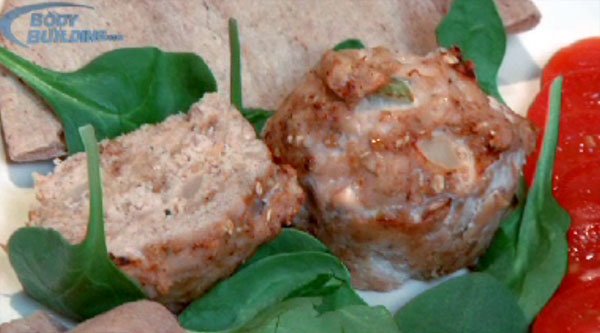
Turkey Meatloaf Muffins Recipe

These are one of the tastiest snacks I've had in a while, and they're absolutely loaded with protein and other great vegetable obtained vitamins and nutrients.  I got the recipe off bodybuilding.com, a rich source of clean eating recipes and thousands of other health and fitness related articles.  Here's the link to the original article:

http://www.bodybuilding.com/fun/video-jamie-eason-turkey-meatloaf-muffins.htm

It comes with a video tutorial by Jamie Eason, a girl that most definitely knows how to work hard and eat right.

Here's the recipe.  These things are heavenly.  Throw a little chili powder on them and you're set.  Great source of lean protein and vegetables.  In fact I would suggest actually adding a few more veggies to the mix, perhaps some bell peppers, beans, or really anything you think might taste good.  Enjoy!!!

Turkey Meatloaf Muffins

Calories: 80
Fats: 2 grams
Carbs: 4 grams
Protein: 11 grams

Turkey Meatloaf Muffins
+ Click To Enlarge.
Turkey Meatloaf Muffins.
Ingredients:
Directions:
  1. Preheat oven to 375 degrees.
  2. Spray muffin pan with canola or olive oil.
  3. Mix all your ingredients together in one large bowl.
  4. Roll the mixture into balls and place in muffin pan. Muffins should be about the size of a racquetball.
  5. Bake for 40 minutes.
  6. Makes 12 muffins.

    Serving Size:
    Women: 2 muffins
    Men: 4 muffins

Sunday, October 23, 2011

Vegetables: To Cook or not to Cook?


I've always been intrigued by the debate about which is healthier:  Cooked vegetables or raw vegetables.  The claim by many is that cooking vegetables removes significant levels of the nutrients in them, therefore they become less beneficial to the human body.  The other side of the argument (which I tend to lean toward) is the fact that we as humans have weak digestive systems, and are unable to process much of the raw, fibrous plant matter contained in uncooked vegetables, so while even though more nutrients may be present in raw veggies, we can't actually absorb them.  There's good data for both sides of this argument, and many reasons to mix it up and have both cooked and raw veggies in your diet.

Reasons to cook vegetables:

1.  Easily accessible nutrients:  Across the board, all the vitamins present in vegetables (A, B1, B2, B3, C, E, etc.) tend to be more easily absorbed because the vegetables are softer, and easier to digest.  This means theoretically that while cooked vegetables have a tad less of each vitamin compared to their raw counterpart, you end up getting MORE of those leftover nutrients than you would have gotten originally if you'd just eaten the vegetable raw.

(Here's a chart displaying the amount of each main vitamin in various vegetables when they're both raw and cooked:  http://www.beyondveg.com/tu-j-l/raw-cooked/raw-cooked-2f.shtml)

2.  Beta Carotene- This extremely powerful nutrient present in many vegetables (especially carrots) is absorbed much more readily when the vegetables are lightly steamed.  Beta Carotene converts to Vitamin A in the body, which will aid in eyesight (ever heard the myth that if you eat enough carrots you can see in the dark?)

3.  Antioxidants- Same deal here.  Useful antioxidants like carotenoids and ferulic acid are utilized by the body much more effectively if vegetables are steamed or boiled.   

4.  They taste better!  At least this is what the majority of people agree upon.  I am partial to cooked vegetables myself, they're quite delicious, warm, easy to chew, and the flavors are much more palatable.  My friends would be a little stunned to see this because I'm usually munching on a pack of raw baby carrots or a stick of celery.  However if given the choice, I'll choose cooked every time.

5.  You can eat more of them!  Cooked veggies aren't as fibrous as raw veggies, and therefore won't fill you up as fast.  That means you can cram more of those useful nutrients down your gullet before your body tells you to stop.  On a muscle building diet, this is a must.  

6.  Anti nutrients are destroyed:  These things won't kill you, but they definitely won't help you.  But what exactly is an anti nutrient?  A good analogy is an apple seed.  The seeds are the valuable part of the apple, and the apple tree doesn't want you to eat its future offspring, therefore apple seeds have evolved to contain traces of cyanide.  Raw grains contain many anti nutrients, and the amount you absorb can be reduced by cooking them before consumption.  This destroys a good portion of those pesky little devils, and the analogy holds true with vegetables (mostly beans) as well.  


Reasons to leave them raw:

1.  They fill you up!  Raw vegetables are extremely fibrous, especially greens like lettuce, broccoli, celery, and spinach.  These foods all are extremely low calorie, healthy snacks that can fill your belly in a heartbeat if you're having one of those hungry hungry hippo moments.  Try a cup of raw broccoli sometime.  No, it may not taste great, but you'll definitely feel like you've eaten a significant meal.  

2.  Easy to snack on:  Raw veggies are easy to pack up.  Try packing a bag full of carrots, celery, pepper slices, and broccoli and I guarantee you'll end up with a filling snack that didn't take more than two minutes to make.  Raw vegetables are firm and robust, and won't be easily crushed.  They're relatively dry as well, so you won't soak the rest of your lunch by accident.  Plus, raw vegetables give that satisfying crunch, and if you can get used to the natural taste, you're golden.  

3.  More Vitamin C:  This vitamin tends to be the one that gets the bad end of the stick when veggies are cooked.  Much of the vitamin C is destroyed by steaming, boiling, or frying, so if you're looking for a little more in your diet (and you should be) then crunch on a few raw veggies today.  

4.  They make your body work!  Have you ever heard of negative calorie foods?  Well stop thinking about them right now, because there are huge debates on whether they exist or not, and the evidence is leaning toward a big fat NO.  However that doesn't mean your body isn't expending large amounts of energy to digest raw foods such as celery and broccoli, and the few calories that are in those foods make them great choices to give your digestive system a workout.  This isn't a pointless endeavor, a healthy digestive system can save you from all sorts of health troubles later in life.  The fiber in those tomatoes will only do you good!  

I say have them both ways!  Veggies are good for you no matter if they're steamed, boiled, fried, cooked, or right off the vine.  I love the way they taste each way, and once you try a few I bet you'll like them too.  Buy some baby carrot packs and much on them at work, or on a walk, or while you're outside reading a book, or while you're cooking dinner, whenever, wherever however you like!  In my opinion, there isn't really ever a bad time to have some vegetables.  

Load those plates high, crunch into a few carrots, and enjoy!


Wednesday, October 19, 2011

Not Full Yet? Here's why


I'm going to go out on a limb and bet that once or twice your diet plans have been hampered by accidental overeating.  And while my most recent article explains why you shouldn't EVER feel bad about this, let's examine why it happens.

A big reason why people tend to overeat is because they don't feel full at the end of their meal.  They've just crammed down an entire can of Pringles, and within twenty minutes they're hungry again.  They're a little confused, but can't really fight their stomachs and end up eating more.  Probably another can, because the first one was so tasty.


But those were a lot of chips.  Why didn't they fill you up?  Or that entire soda, you could feel it in your stomach, but for some reason it did nothing to quell that ravenous hunger.  It's curious, isn't it, and I bet you'd like to get some foods in your diet that would really fill you up quick without actually consuming that much of it. But could such a food exist?

Of course they exist, and I bet you've eaten them and felt their effects without even realizing it.  Vegetables!  Seriously, vegetables will fill you up quickly with relatively few calories.  Try it some time.  Sit down to dinner sometime and pile a large heaping mound of veggies onto your plate.  Don't be shy about it, one cup of broccoli is something like 30 calories, and a cup of corn on carrots or peas is around a hundred.  Go ahead and eat three hundred calories worth of vegetables, and I can almost guarantee you'll be full for hours.  In fact, don't go overboard, because sometimes they fill you up faster than you'd think.  I've gotten stomach aches from eating too many vegetables before, not fun!


Why though, do these little super foods fill you up so nicely?  It's because they're high in FIBER!  Fiber is a remarkably brilliant little nutrient that does a lot of good things for you.  I plan to devout an entire article to it at some point, but for now we'll just say it helps keep your digestive tract in tip top shape.  Fiber is also indigestible by itself, so it makes your body work hard to move it through your system.  But in general, fibrous foods get you full faster, and keep you full longer.

Want more fibrous foods?  Grab an apple, a pear, a peach, or basically any other kind of fruit.  An apple is a great snack to fill you up quick if you get those afternoon munchies.  Fruit also has another added bonus, it's full of water, the greatest stomach space-filler known to exist!  Water will help keep you full by taking up room in that seemingly endless stomach of yours, and I guarantee you'll feel it.


Another great tip, if you're still hungry, before you go back for more food, drink a glass of water.  An entire glass.  Not only should you feel pretty full afterwards, but sometimes your body can get it's "hungry" and "thirsty" cries mixed up, and after some fresh water you may feel more satisfied than you thought.


So now it isn't a mystery anymore why those potato chips and that soda don't fill you up.  Potato chips are very low in fiber, and have high calories for the amount of food material that you consume.  That's a recipe for over eating.  And soda?  It's filled with High Fructose Corn Syrup and other cheap artificial sweeteners, which are designed not to spike your insulin levels as drastically, which, while that can be a good thing, also tells your brain that your body hasn't gotten enough nutrients, and that you're still hungry.

Try some fruits, veggies, and a glass of water.  Who knows, you might be full for hours.  Eat well, keep healthy, stay full.

Tuesday, October 18, 2011

Butternut Squash Soup Recipe


This one's a must try.  Butternut squash is one of the overall best vegetables out there, at least in my opinion.  If you love potatoes, but don't want something quite as dense, give butternut squash an honest chance. It tastes GREAT with spices, and is absolutely loaded with delicious flavor and nutrients.  It's also very low calorie, and much lower in overall calorie density than potatoes or sweet potatoes.

You can mash them, grill them, BBQ them, and my personal favorite, make soup out of them!  Here's a recipe for probably the greatest soup I've ever had.  My mom used to make it all the time, and I still miss it day in and day out.  It's only 90 calories a cup, and has none of that horribly high sodium content you'll find in other canned soups.


Here you go:

Butternut squash soup-Serves 8

Ingredients-

-2.5lbs butternut squash, skin and seeds removed, roughly cut into 1/2 inch cubes
-1 tablespoon of canola oil
-2 medium-sized yellow onions, peeled and roughly cut
-1 stalk celery, roughly cut
-1.5 quarts of chicken stock
-1 bay leaf
-1/4 teaspoon thyme leaves
-2 teaspoons chopped chives
-salt and white pepper to taste

Instructions-

1.  Preheat the oven to 400 degrees

2.  Place the cut butternut squash in half lengthwise and place inside down on baking sheet in preheated oven     for 1 hour.

3. Heat the oil in a large 4 quart saucepan.  Add the onions and cook for 3 minutes, stirring occasionally.   Stir in roasted squash, celery, chicken stock, bay leaf and thyme.  Bring to a boil, and reduce to a simmer for about 30 minutes.

4.  Remove from heat and discard the bay leaf.  Blend the soup with a regular household blender until smooth.  Season with salt and white pepper.

Simple, healthy, low calorie, and absolutely delicious.  SERVE AND ENJOY!!!